10 fun facts about Da Lat, Vietnam
On this page
History
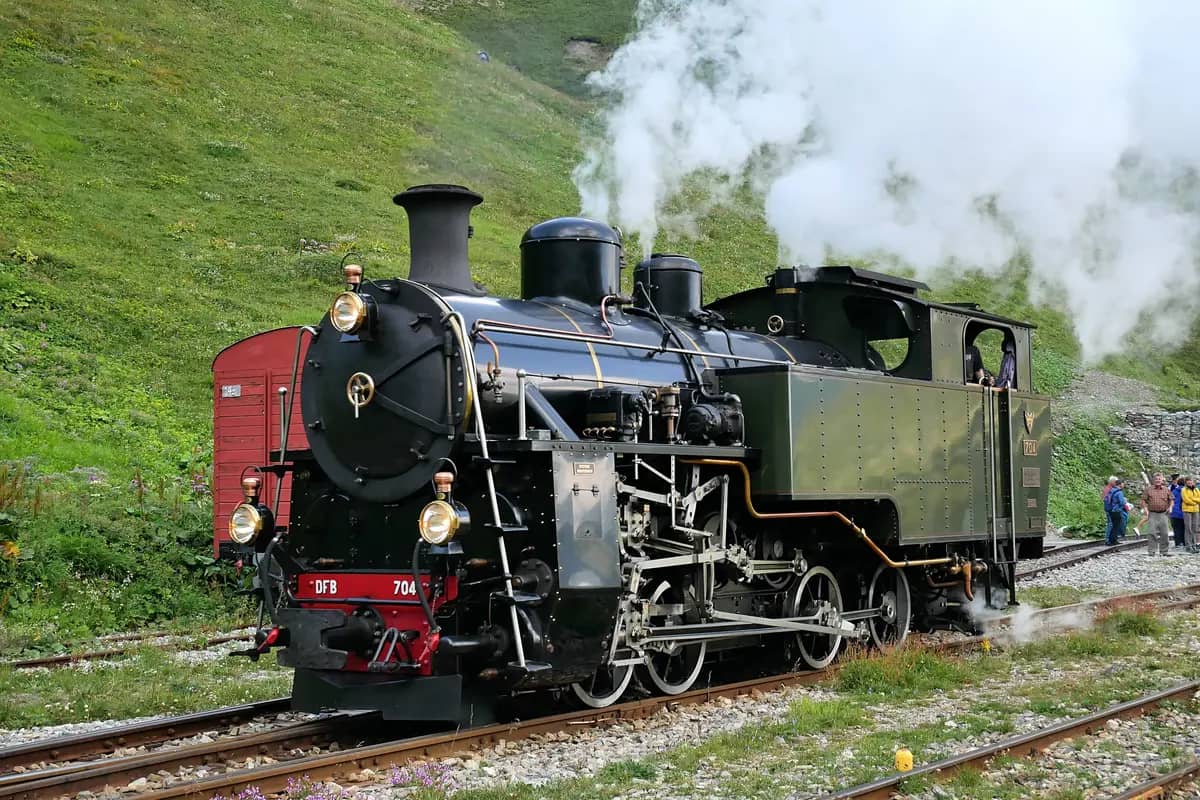
Image: Herbert Ortner / Wikimedia Commons, CC BY 4.0 Some of the Swiss-built steam engines that once climbed the rack railway up to Da Lat were taken back to Switzerland in 1990 and restored to working order.
Tuoi Tre reports that the line from Thap Cham, finished in 1932, used 16 km of rack rail, stopped in 1968, ran seven trips in 1975 and lost its rails in 1986. The Swiss Furka steam railway shipped engines 704 and 708 home in 1990; 704 got its permanent operating permit in 2018, and 708 made its debut on the Furka line in July 2025.
Source: Tuoi Tre, 5 September 2026: the Da Lat rack railway, Dampfbahn Furka-Bergstrecke (DFB), HG 4/4 Nr. 704, SRF News, 17 July 2025: Lok 708 faehrt auf der Furka, Wikipedia, Da Lat to Thap Cham railway. Checked October 2026.
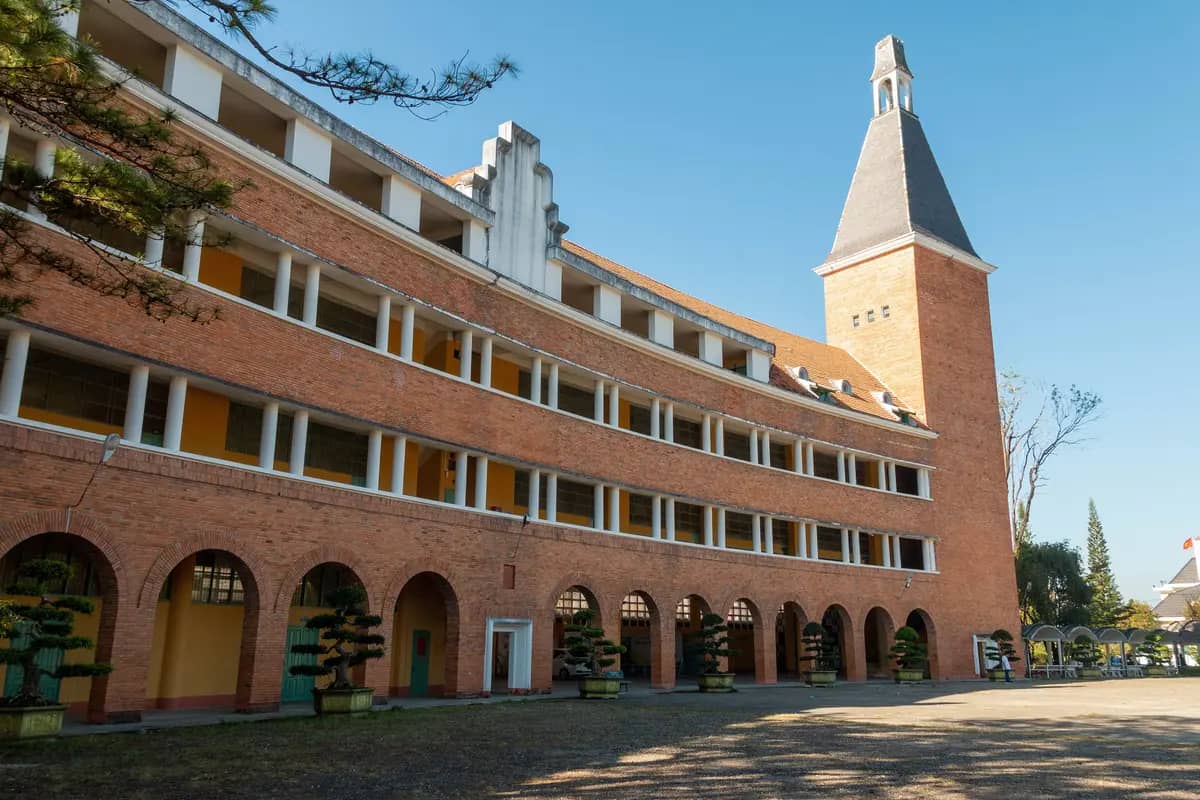
Image: MinhVN123 / Wikimedia Commons, CC BY-SA 4.0 Alexandre Yersin, the doctor who discovered the plague bacillus, reached the Lang Biang plateau above today's Da Lat in June 1893.
He proposed Dankia, more than 10 km north-west of today's Da Lat, for a hill resort, but Paul Doumer chose the present site on the advice of Dr Emile Tardif. Yersin discovered the plague bacillus on 20 June 1894, and Yersin University in Da Lat, founded on 1 October 2004, carries his name.
Source: Yersin University, About Doctor Alexandre Yersin (12 January 2018), Yersin University, Gioi thieu YersinUni (founding decision 175/2004/QD-TTg). Checked October 2026.
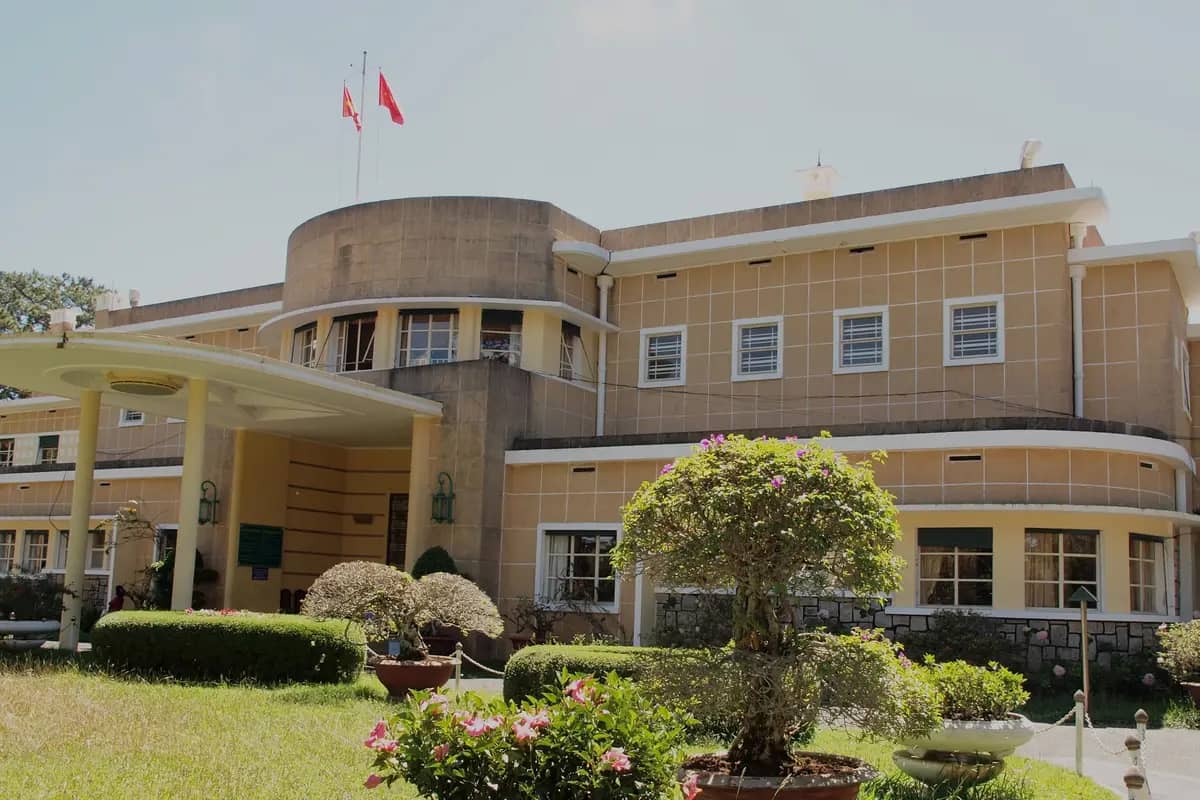
Image: Sandra Cohen-Rose and Colin Rose / Wikimedia Commons, CC BY-SA 2.0 Vietnam's last emperor, Bao Dai, spent his summers in a Da Lat palace built for him from 1933 to 1938, and visitors can walk through his family's bedrooms.
The architecture magazine Tap chi Kien truc names architect Huynh Tan Phat and a French architect as its designers. Known as Dinh III, it covers about 1,000 square metres on two floors with 26 rooms: guests were received downstairs and the bedrooms are upstairs. Bao Dai used it from 1938 to 1945 for work, summer rest and hunting.
Source: Tap chi Kien truc (Vietnam Association of Architects), 5 April 2019: Bao Dai's summer palace in Da Lat, Wikipedia, Dinh III, Wikipedia, Bao Dai. Checked October 2026.
Nature
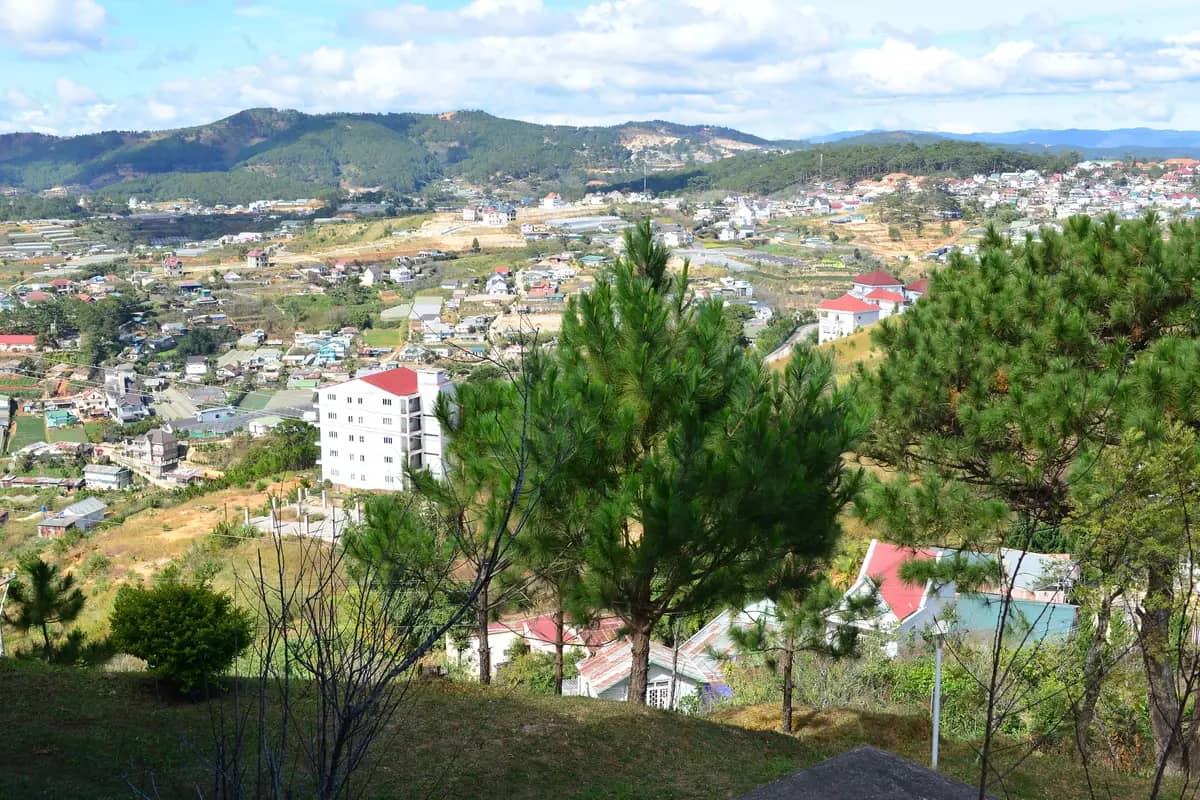
Image: Андрей Бобровский / Wikimedia Commons, CC BY 3.0 At about 1,500 m above sea level, Da Lat stays cool all year, with a long-term mean temperature of about 18 °C.
A Lam Dong provincial book on Da Lat's natural setting gives a 24-year mean of 18.3 °C. Fog comes in every month, though not often, and the book says it gives the town a look of its own, as if the city were sinking into a dream.
Source: Lam Dong provincial portal, Thien nhien Da Lat (Da Lat's natural setting): relief and climate. Checked October 2026.
Food
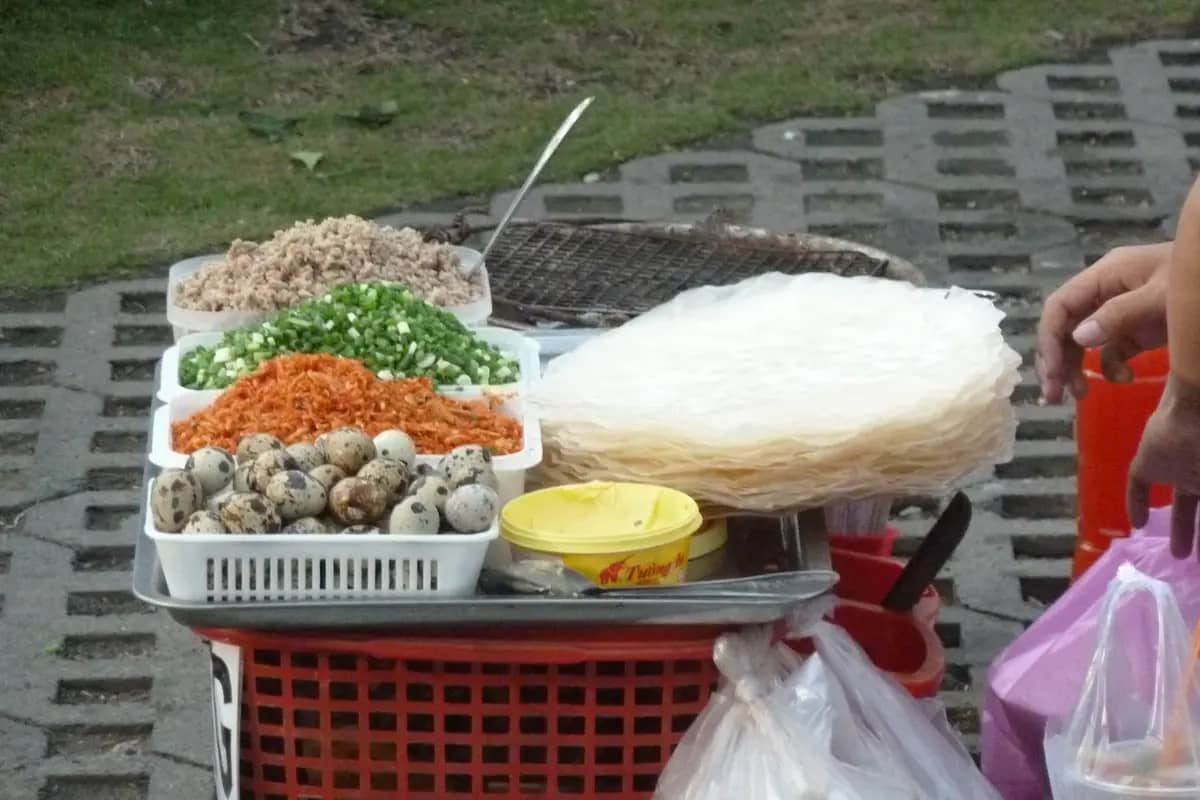
Image: Light Write / Wikimedia Commons, CC BY-SA 2.0 VnExpress traces banh trang nuong, nicknamed Vietnamese pizza, to Da Lat: a sheet of rice paper grilled over charcoal and topped with egg, dried beef, shallots and mayonnaise.
At the 'Cursing lady' stall, 61 Nguyen Van Troi Street, named for a short-tempered owner who scolds her staff, one cook sits at a single coal oven and makes them non-stop while customers wait their turn. Toppings include cheese and sausage, and in 2019 VnExpress put the price at VND25,000, about $1.
Source: VnExpress International, Five Da Lat stalls serve Vietnamese 'pizza' for less than two bucks, Wikipedia, Da Lat. Checked October 2026.
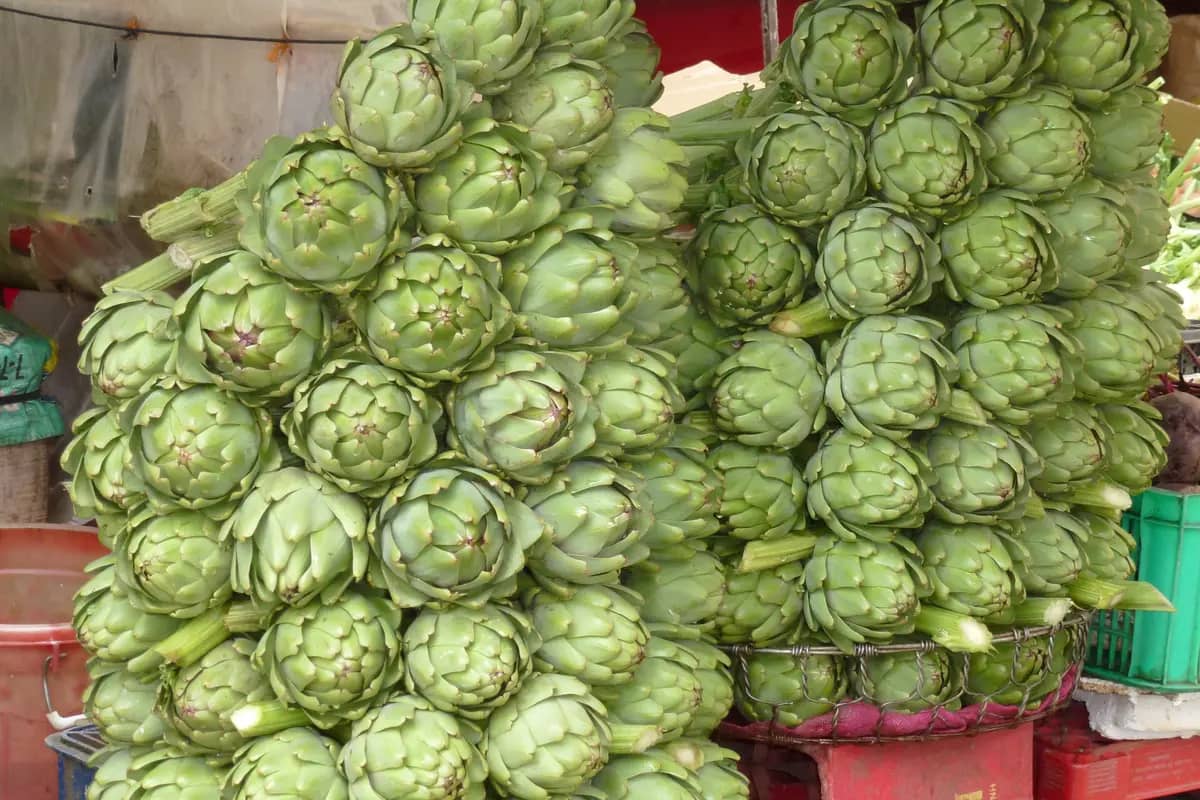
Image: Hungda / Wikimedia Commons, CC BY-SA 3.0 VietNamNet calls artichokes a symbol of Da Lat, and growers use the whole plant: about 10% is eaten fresh and the rest is dried for drinking or turned into artichoke tea and extract.
Lam Dong province grows about 162 hectares of artichokes, some 8,200 tons a year, according to VietNamNet. Stems, leaves, flowers and roots all go into products, from tea bags to tablets, made by nearly 30 local firms. Locally the drink is credited with cooling the liver and clearing bile, and artichoke tea is sold as a Da Lat product.
Source: VietNamNet, Building a production chain, bringing Da Lat artichokes to market, Wikipedia, Da Lat. Checked October 2026.
Culture
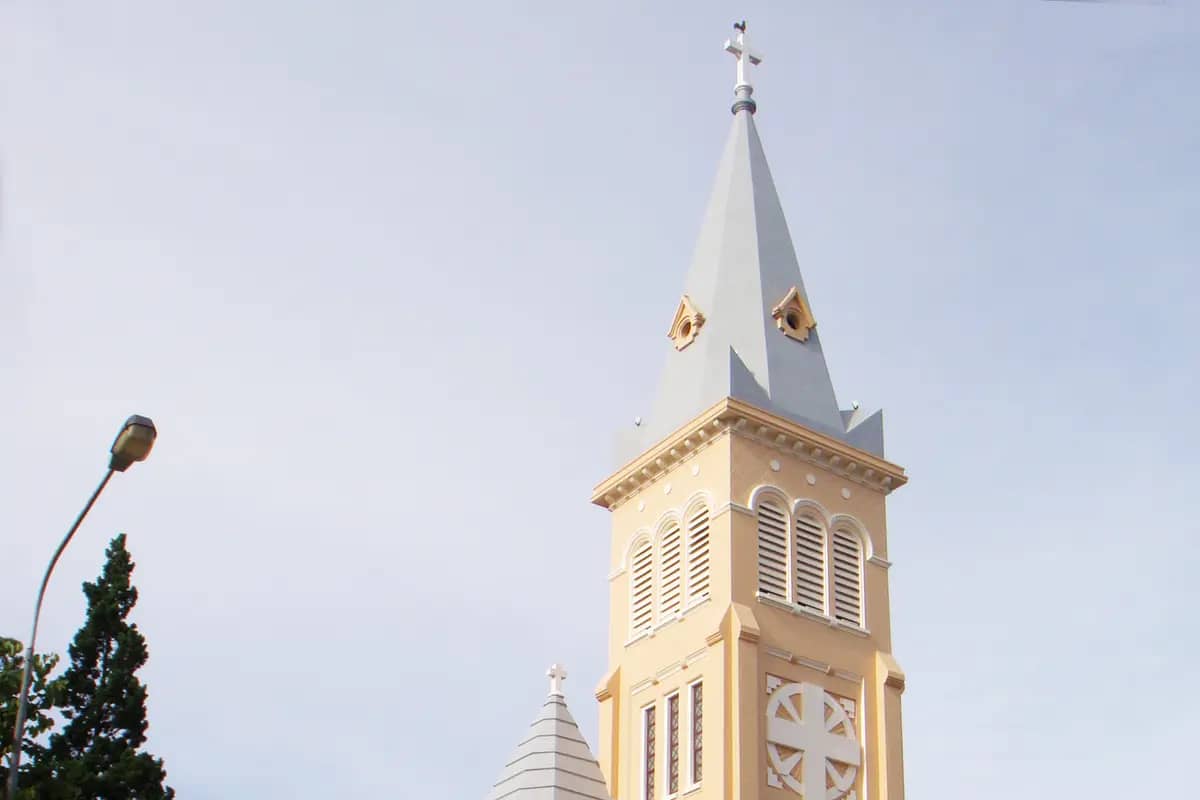
Image: The Erica Chang / Wikimedia Commons, CC BY 3.0 Da Lat's cathedral is nicknamed the Chicken Church because of the rooster statue on top of its bell tower. Look up from the street and you will see it.
VietNamNet says the bronze rooster is 66 cm tall and recalls the New Testament story of Peter denying Jesus three times before the rooster crowed, a sign of repentance. The Lam Dong provincial portal dates the cathedral to 1931 to 1942 and gives its bell tower as 47 m tall. Locals call the church Nha tho Con Ga.
Source: Lam Dong provincial portal: Da Lat Cathedral, VietNamNet, 20 April 2025: Chiem nguong kien truc chau Au gan 100 tuoi cua nha tho Con Ga, Wikipedia, St. Nicholas Cathedral, Da Lat, Wikipedia, Da Lat. Checked October 2026.
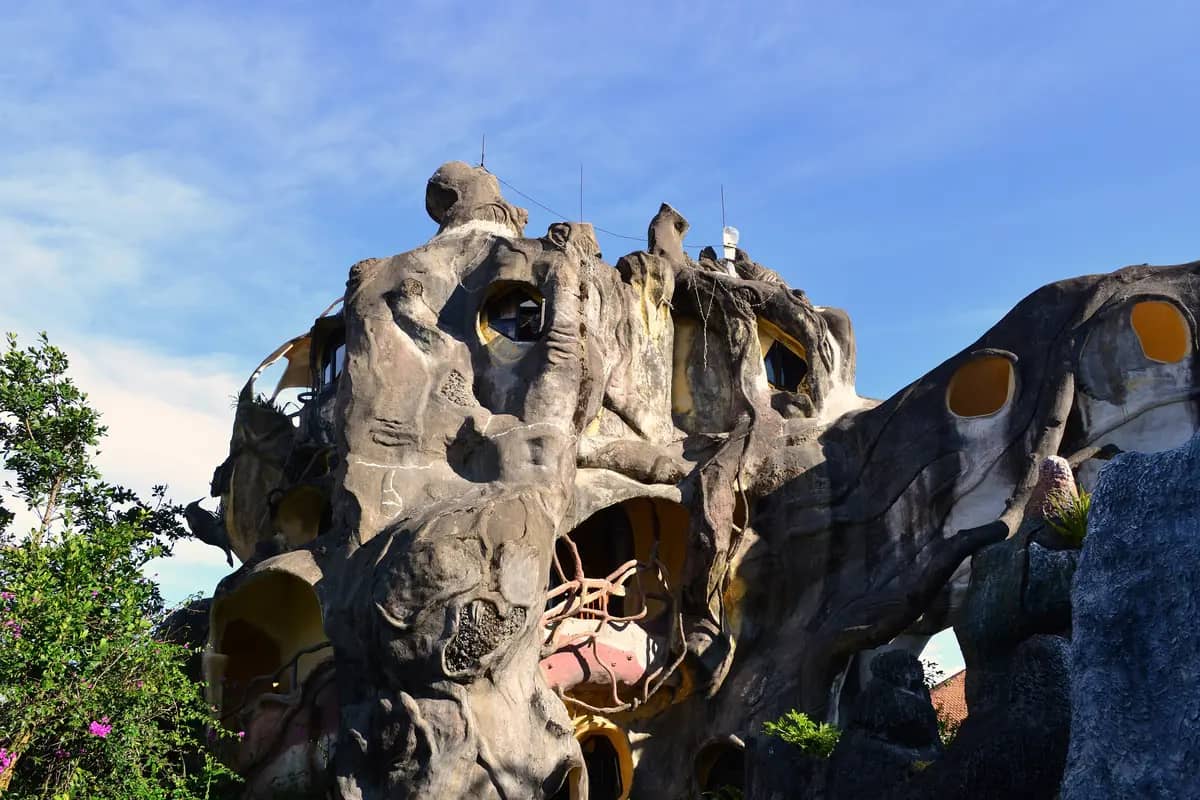
Image: Андрей Бобровский / Wikimedia Commons, CC BY 3.0 You can spend the night inside Da Lat's Crazy House, a guesthouse its architect designed in paintings rather than blueprints.
Architect Dang Viet Nga, daughter of former Communist Party leader Truong Chinh, drew up plans for it in February 1990, and it was taking guests less than a year later. It opened as Hang Nga Villa; the official site says it became the Crazy House because that name was already used by other places. Each of its 10 guest rooms is named for an animal or a plant.
Source: CNN Travel, 25 August 2019: The story behind Vietnam's 'Crazy House', Crazy House (Hang Nga Villa), official site. Checked October 2026.
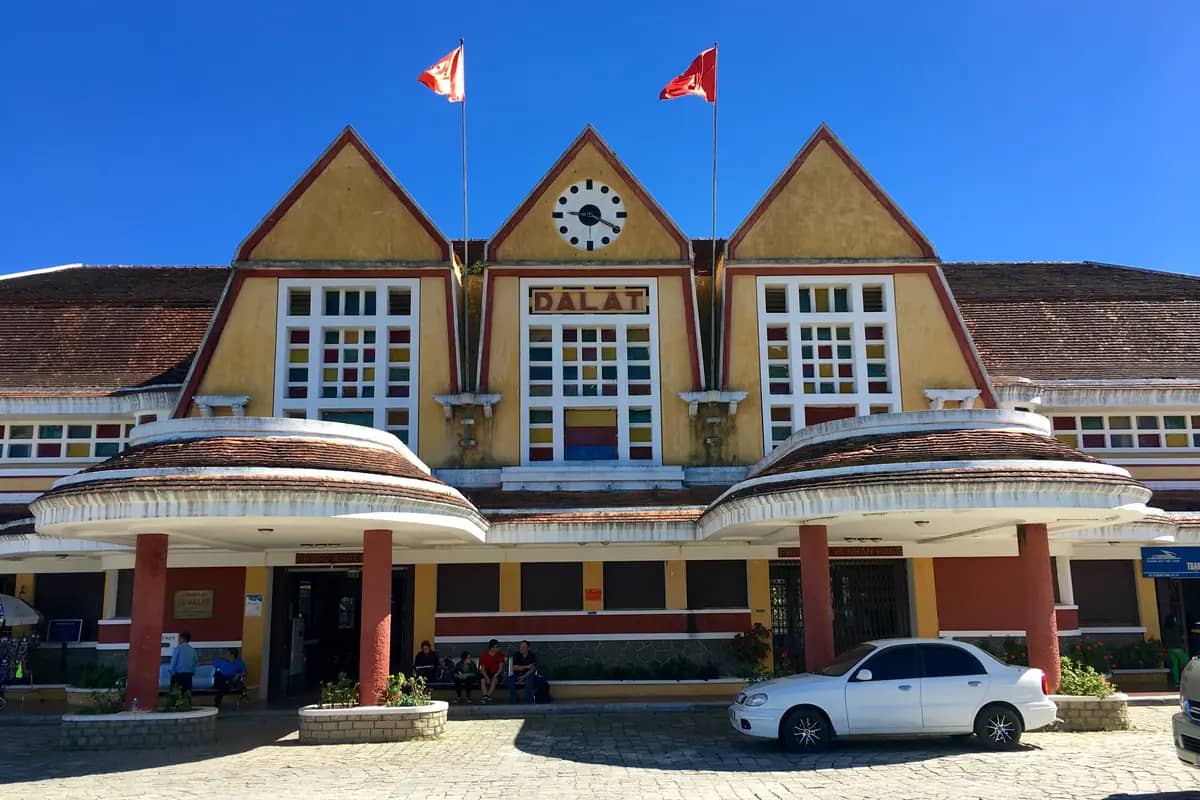
Image: Sandra Cohen-Rose and Colin Rose from Montreal, Canada / Wikimedia Commons, CC BY-SA 2.0 Da Lat's railway station, finished in 1938, has three steep pointed roofs, and a short tourist train still runs from it to Trai Mat village.
Tuoi Tre dates the building to 1932 to 1938, says the three roofs copy a station in France, and counts it among Da Lat's symbols with the Chicken Church. The rack line stopped running in 1968, apart from seven trips in 1975. Today's tourist run to Trai Mat is 7 km, on what remains of the old line.
Source: Tuoi Tre, 5 September 2026: the Da Lat rack railway, Wikipedia, Da Lat railway station. Checked October 2026.
Legend
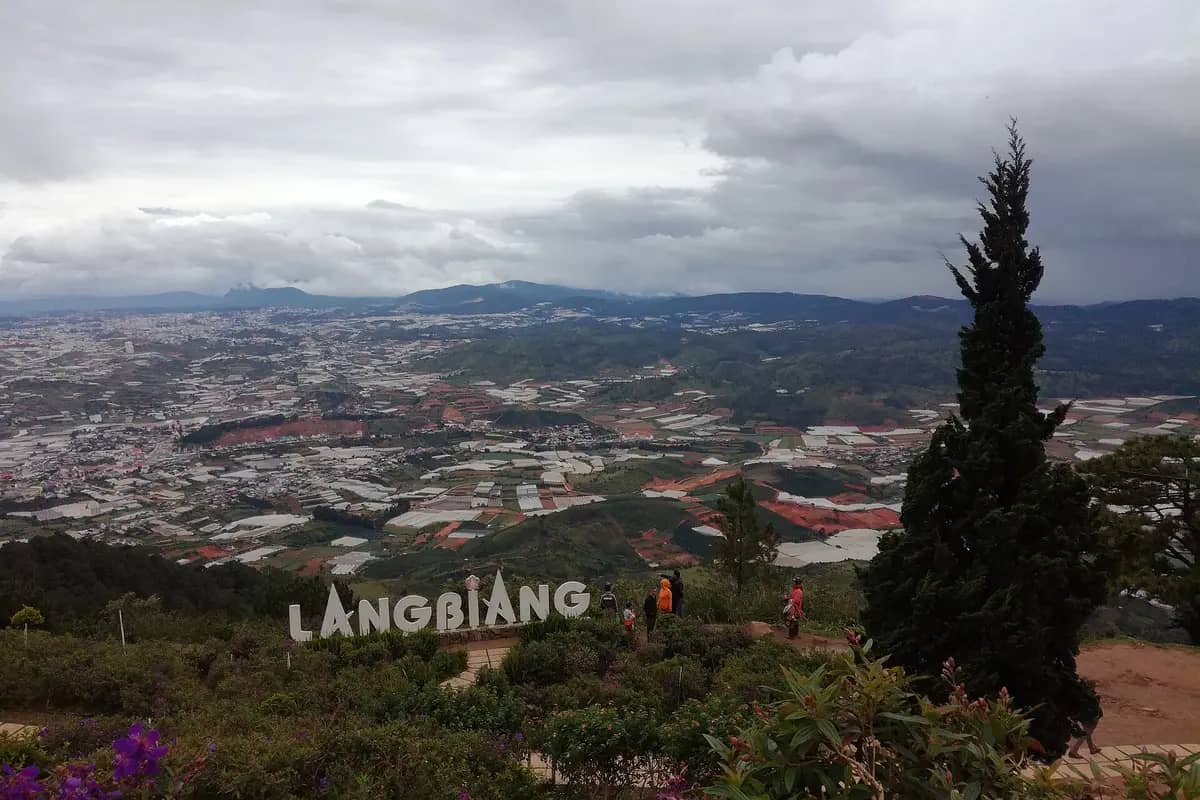
Image: Damian Vo / Wikimedia Commons, CC BY-SA 2.0 Local legend, not a verified fact
Local legend says Lang Biang mountain is named after two lovers, Lang and Biang, from rival tribes who were not allowed to marry.
In the K'Ho story told to Vietnam Pictorial, Lang was the son of the Lat chief and Biang the daughter of the Chil chief. The couple died together rather than give up their love. Their grieving fathers then united the Lat, Chil and Sre peoples as one K'Ho group, and the peak took the pair's names. Locals compare the tale to Romeo and Juliet.
Source: Vietnam Pictorial (Vietnam News Agency), Legendary Lang Biang. Checked October 2026.
Climate, airports and UNESCO status for Da Lat are on its destination page. More places are on the fun facts index.