9 fun facts about Nha Trang, Vietnam
On this page
History
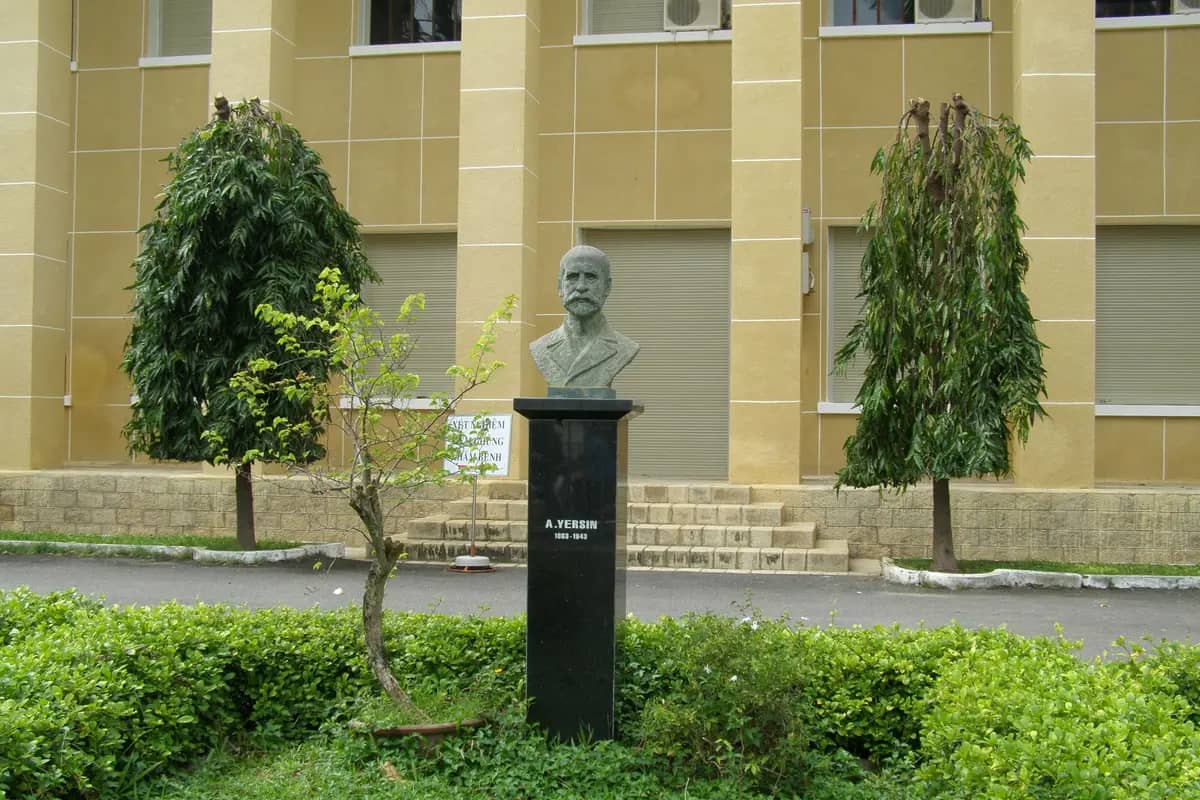
Image: RG72 / Wikimedia Commons, CC BY-SA 4.0 The plague bacterium, Yersinia pestis, is named after Alexandre Yersin, who isolated it in Hong Kong in 1894 and then made his home in Nha Trang.
He reached Hong Kong on 5 June 1894, during an outbreak that had already killed 100,000 people in Canton, and isolated the bacillus on 20 June, even though the hospital's bodies were reserved for a rival Japanese team. He founded the Pasteur Institute in Nha Trang the following year and made anti-plague serum there.
Source: Institut Pasteur, Alexandre Yersin, the man who discovered the bacterium responsible for the plague, Wikipedia, Alexandre Yersin. Checked October 2026.
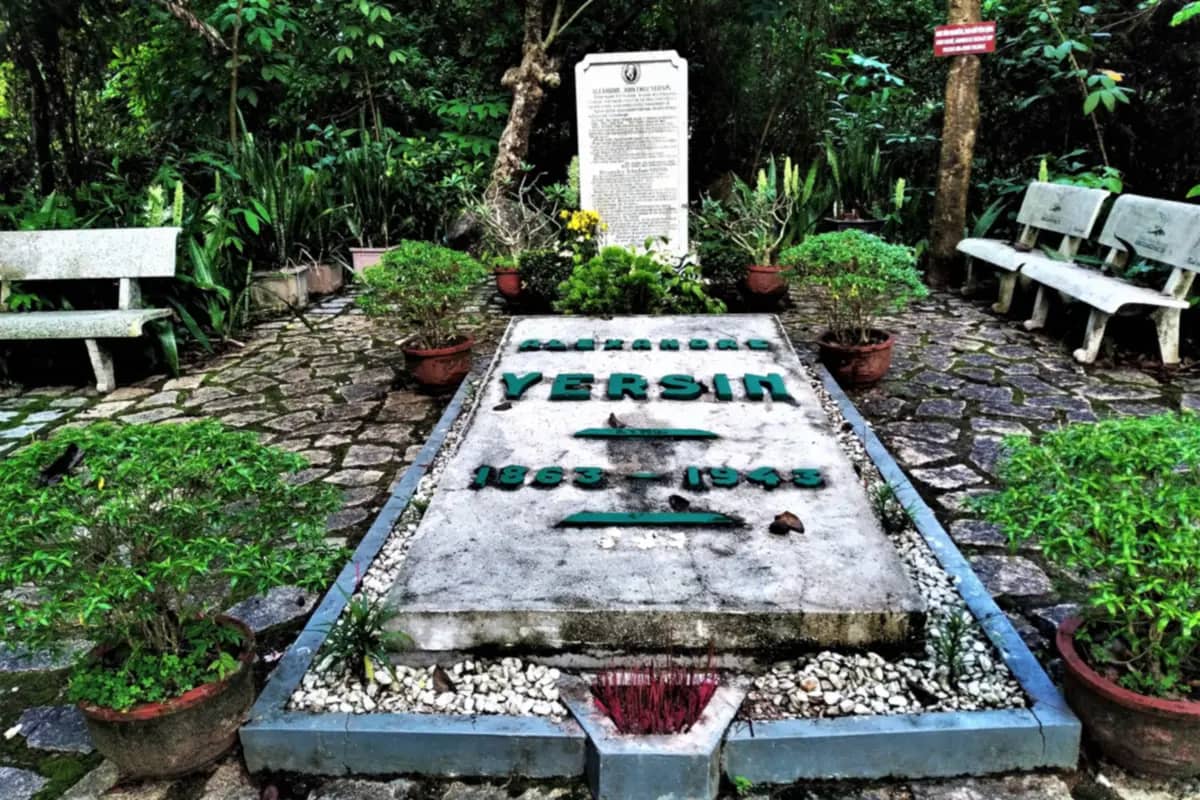
Image: Thaisk / Wikimedia Commons, CC BY-SA 4.0 Yersin is buried at Suoi Dau near Nha Trang, and beside his grave stands a small temple where people still leave flowers and burn incense for him.
Locals called him Ong Nam, Mister Five, after the five stripes of his colonel's insignia, and remembered him for treating the poorest for free. After independence, streets named after him kept their names. His house in Nha Trang is now the Yersin Museum, and his epitaph calls him a benefactor and humanist, venerated by the Vietnamese people.
Source: Institut Pasteur, Alexandre Yersin, the man who discovered the bacterium responsible for the plague, Wikipedia, Alexandre Yersin. Checked October 2026.
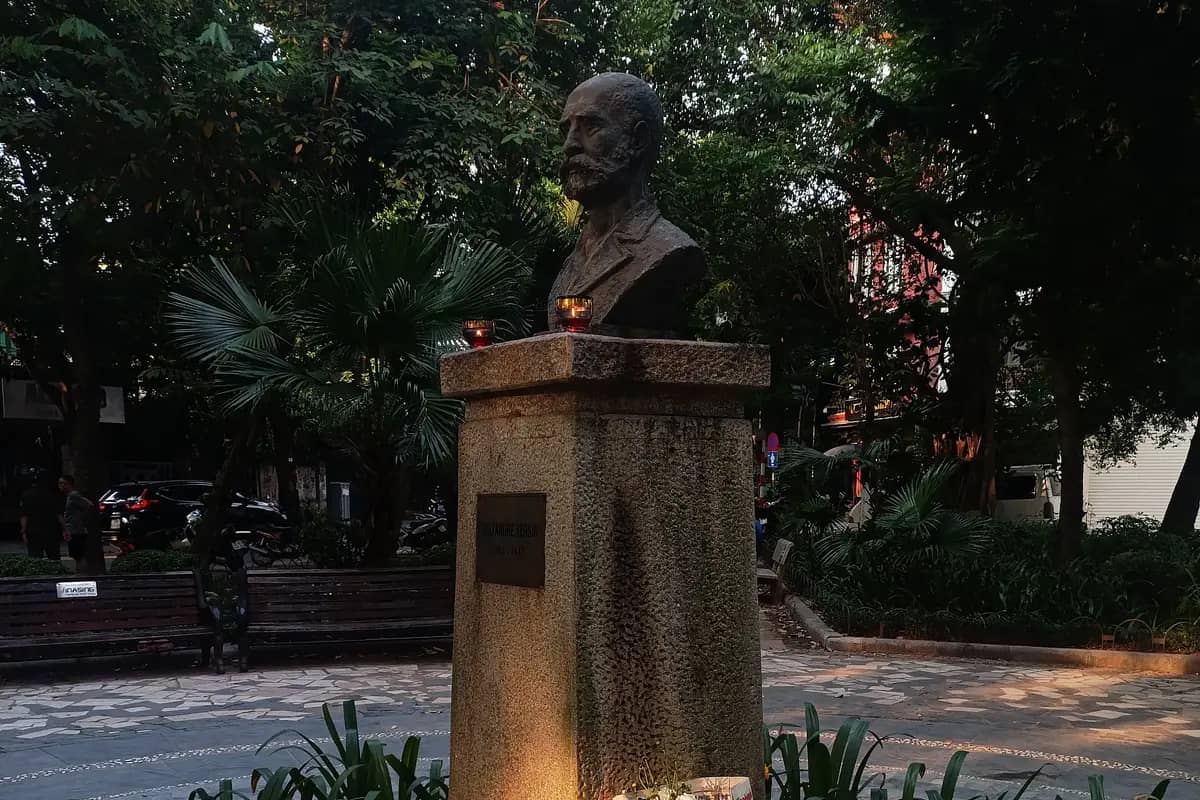
Image: carlos.lesombre.16 / Wikimedia Commons, CC BY-SA 4.0 Yersin, the plague hunter of Nha Trang, was also the first person to own a car in Hanoi.
The Institut Pasteur describes a man fascinated by everything, from bacteriology to agronomy and astrology. He studied cattle breeding for serum, grew rubber trees and planted cinchona trees at Hon Ba in 1915, which let Indochina meet its own quinine needs during the Second World War. He had just started learning Greek and Latin again when he died in 1943.
Source: Institut Pasteur, Alexandre Yersin, the man who discovered the bacterium responsible for the plague, Wikipedia, Alexandre Yersin. Checked October 2026.
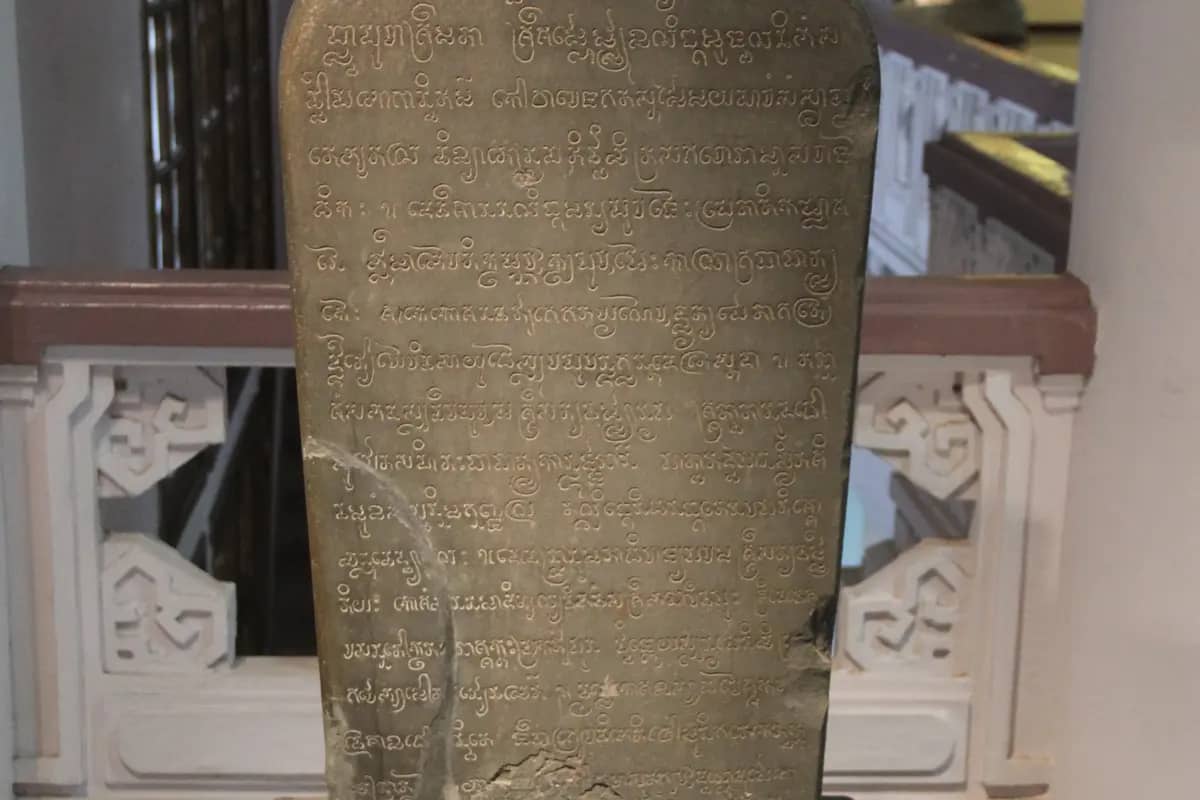
Image: Gary Todd / Wikimedia Commons, CC0 Po Nagar, the Cham temple in Nha Trang, was built over the 8th to 13th centuries, and its 23 m main tower is dedicated to the goddess Yan Po Nagar.
Four storeys of statues of the goddess and animals cover the main tower. Inside sits a black granite statue of Yan Po Nagar on a giant lotus bud against a rock shaped like a bodhi leaf; the goddess was formerly sculpted from gold and agarwood. Stone inscriptions around the towers commemorate the goddess, some listing Cham worshippers' offerings.
Source: VnExpress International, 24 November 2020: Vietnam temple Po Nagar pinnacle of Champa splendor. Checked October 2026.
By the numbers
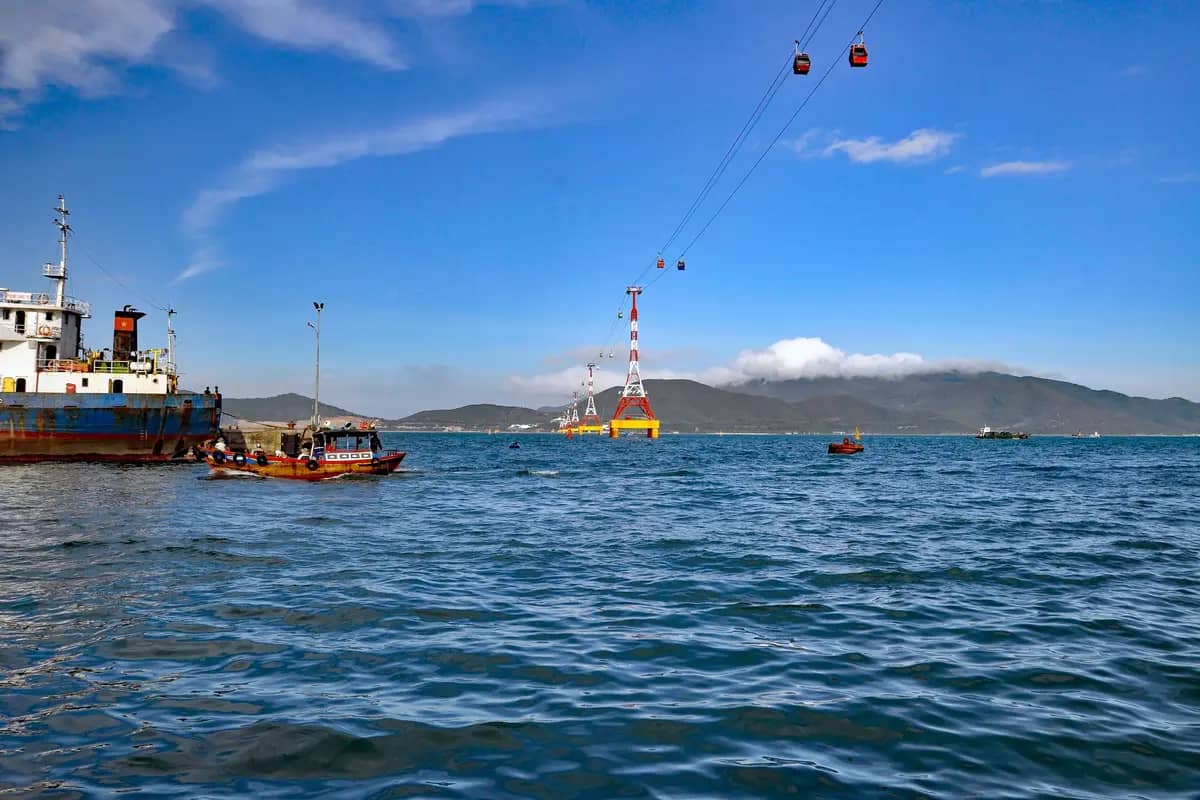
Image: P. Hughes / Wikimedia Commons, CC BY 4.0 The cable car to Hon Tre Island runs 3,320 m across Nha Trang Bay on seven towers standing in the sea, one of them 115 m high with 40 m below the water.
Each tower rests on steel piles drilled 74 to 94 m down to the bedrock. The cabins hold 12 people, and the ride to the VinWonders park on the island takes about 8 to 10 minutes each way, depending on the wind. A return ticket costs 200,000 dong, and the ride is free with a park ticket.
As of 2026. Source: VinWonders, Vinpearl cable car: location, features, tickets, Wikipedia, Vinpearl Cable Car. Checked October 2026.
Food
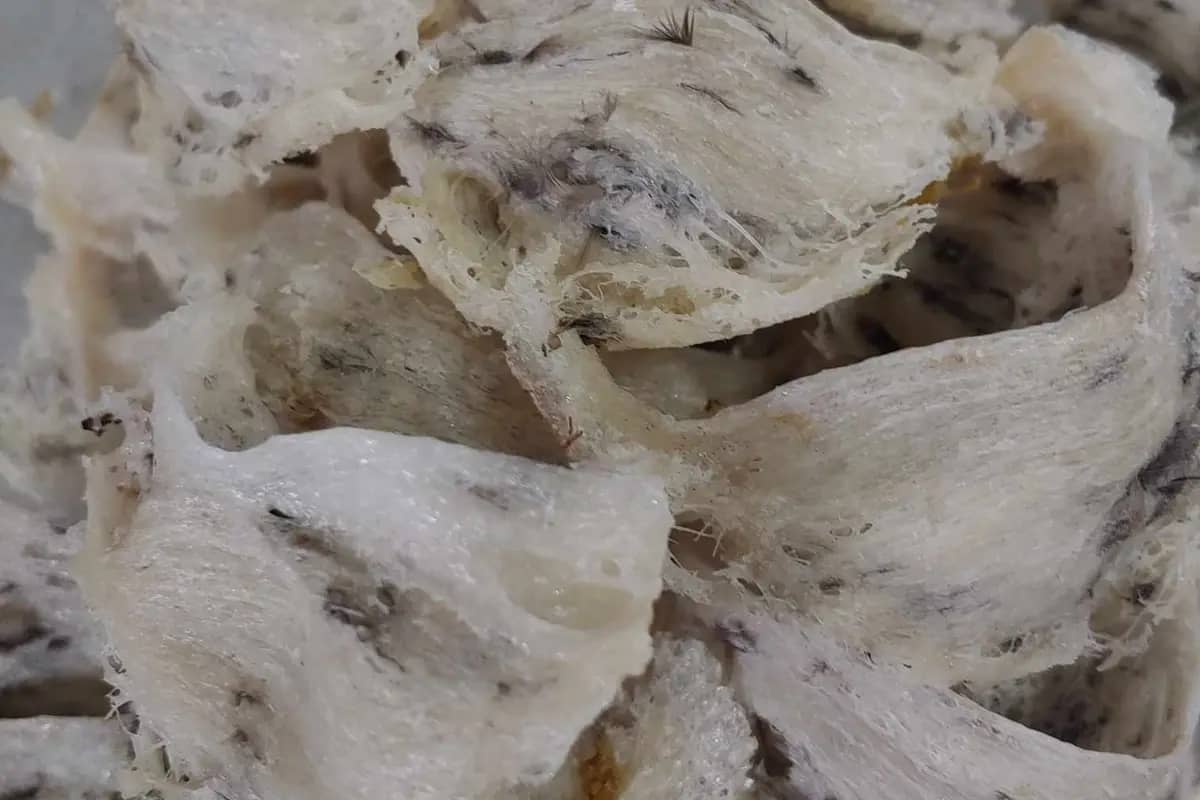
Image: Yensaolocoi / Wikimedia Commons, CC0 Workers harvest swiftlet nests from sea caves on about 30 islands around Nha Trang, climbing bamboo scaffolding or roping themselves to the cliffs to reach them.
The nests are sold as yen sao, prized in traditional medicine as a tonic. Guards in watch towers protect the caves, because the birds abandon nests that smell of people. One harvest team leader told Vietnam News Agency that three generations of his family had done the job. Red nests, called yen huyet, are very rare and prized.
Source: Vietnam News Agency, Khanh Hoa salangane nests. Checked October 2026.
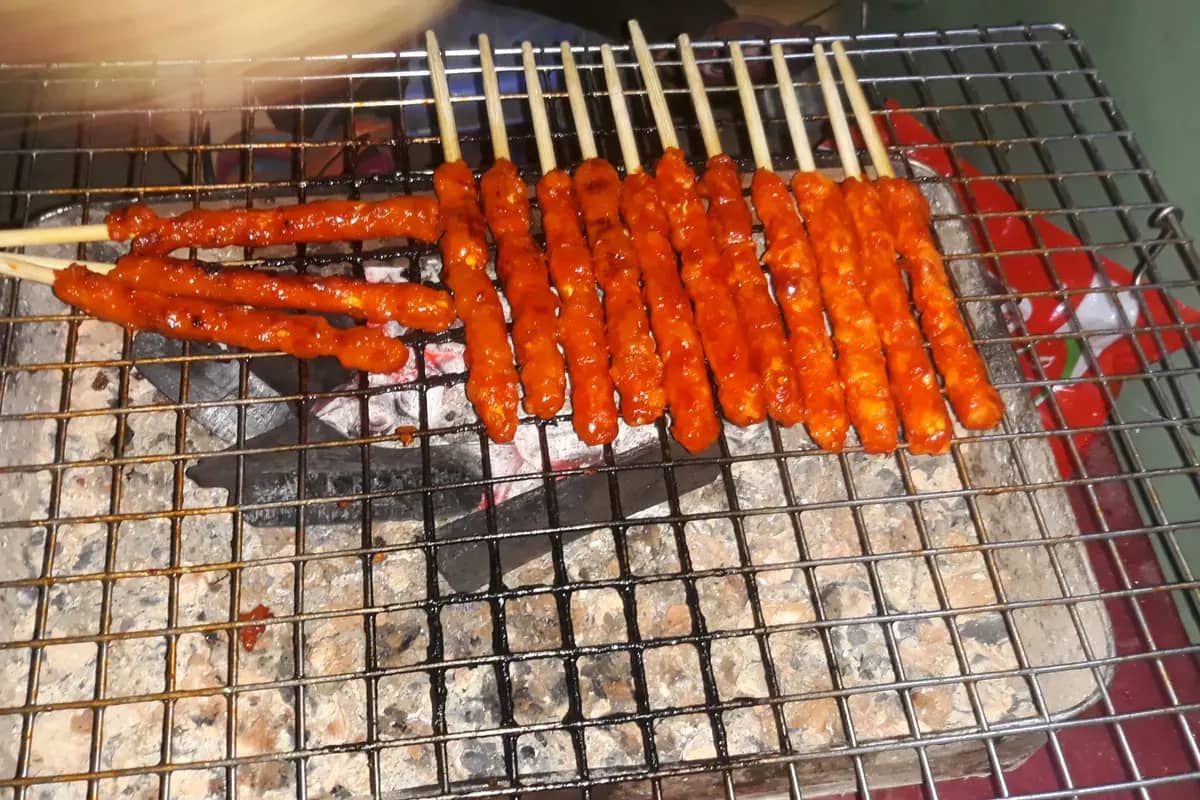
Image: Baoothersks / Wikimedia Commons, CC BY-SA 4.0 A Khanh Hoa folk song sums up the province: Nha Trang has the cool wind, and Ninh Hoa has the nem, its grilled pork rolls.
Nem nuong is lean pork ground with garlic, pepper, fish sauce and sugar, rolled onto sticks and grilled over charcoal until golden. Locals say the secret is the dipping sauce of soaked glutinous rice, pork, liver, shrimp, tomato and peanut, simmered for 5 to 6 hours. Elders say settlers from Thanh Hoa province brought the dish.
Source: Viet Nam News, Ninh Hoa grilled fermented pork recognised among top 10 specialties. Checked October 2026.
Culture
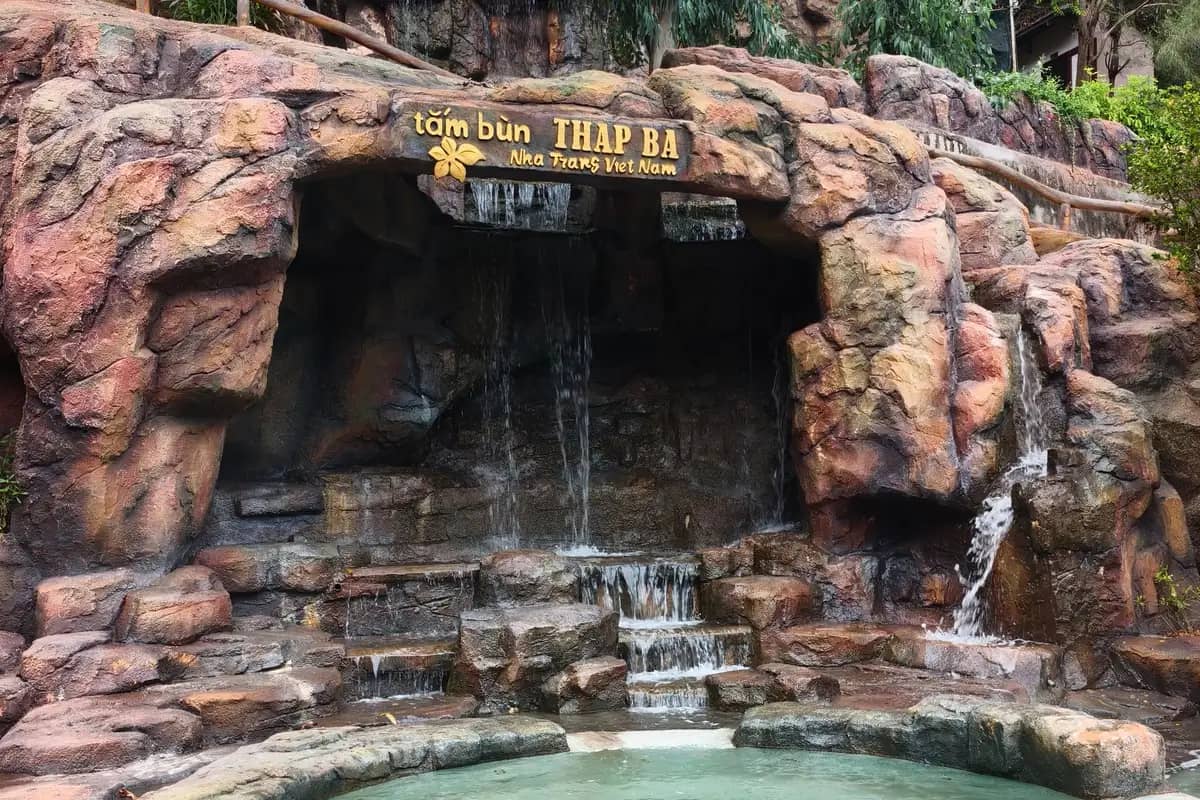
Image: Valeria Drozdova / Pexels Nha Trang's mud-bath craze started at Thap Ba in 1999, near the Po Nagar towers, where you can still sit in a communal tub of warm mineral mud.
The centre is about 4 km north of the city centre, and the operator suggests going between 8 am and 5 pm. Its advice after the mud is to rinse with nothing but plain water, because shampoo or shower gel would wash away the effect of the minerals. It also asks guests with open wounds or skin diseases to skip the mud.
Source: Thap Ba Hot Spring Center, FAQs, Thap Ba Hot Spring Center, The best spa and mud bath in Nha Trang. Checked October 2026.
Legend
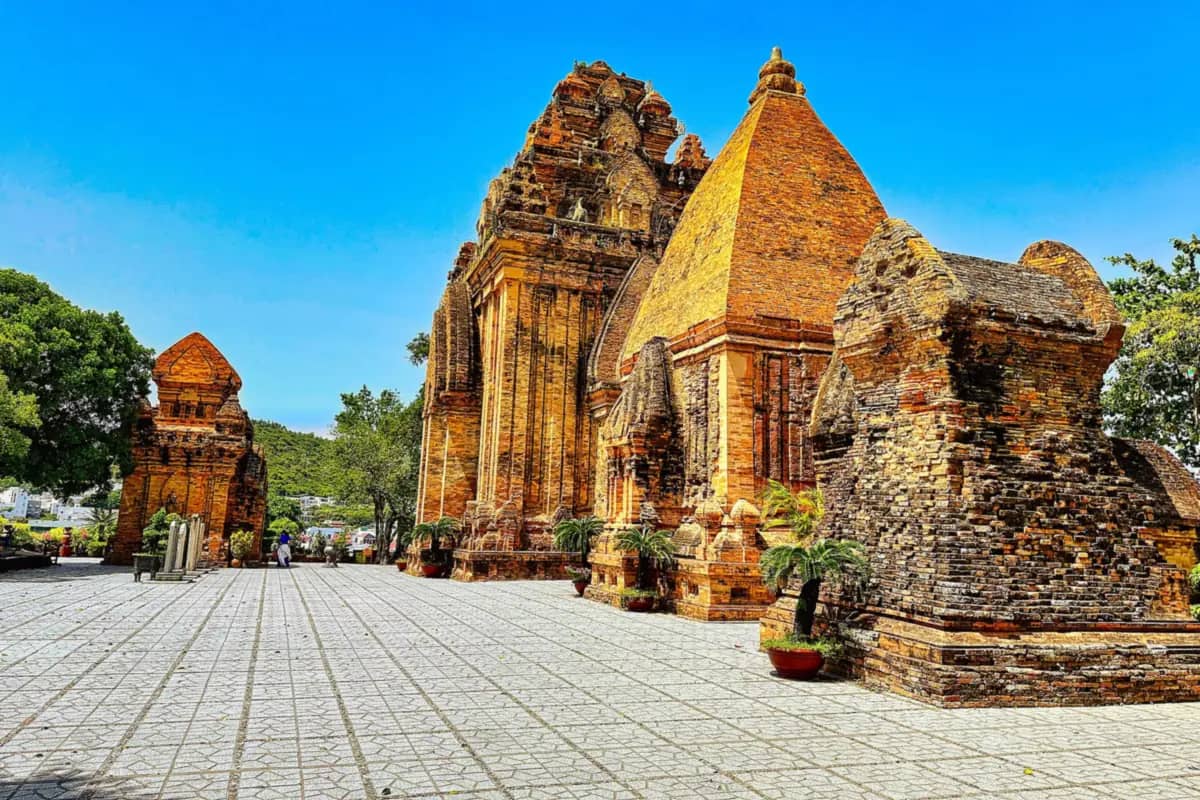
Image: Ms Sarah Welch / Wikimedia Commons, CC0 Local legend, not a verified fact
According to Cham legend, the goddess Po Nagar was born from the clouds and the foam of the sea, and taught people to grow rice.
In the tale, she took form in a piece of eaglewood floating on the waves and created the earth, eaglewood and rice. The Vietnamese later took her in as Thien Y A Na. The Po Nagar Festival in the third lunar month still honours her as the goddess who taught farming and crafts. Read it as a story; the towers themselves date from the Cham kingdom.
Source: Wikipedia, Thien Y A Na, Vietnam Tourism, Po Nagar Tower. Checked October 2026.
Climate, airports and UNESCO status for Nha Trang are on its destination page. More places are on the fun facts index.