Caves and karst in Vietnam
Sights
Sights with a page of their own, with hours and fees from official sources. Not ranked.
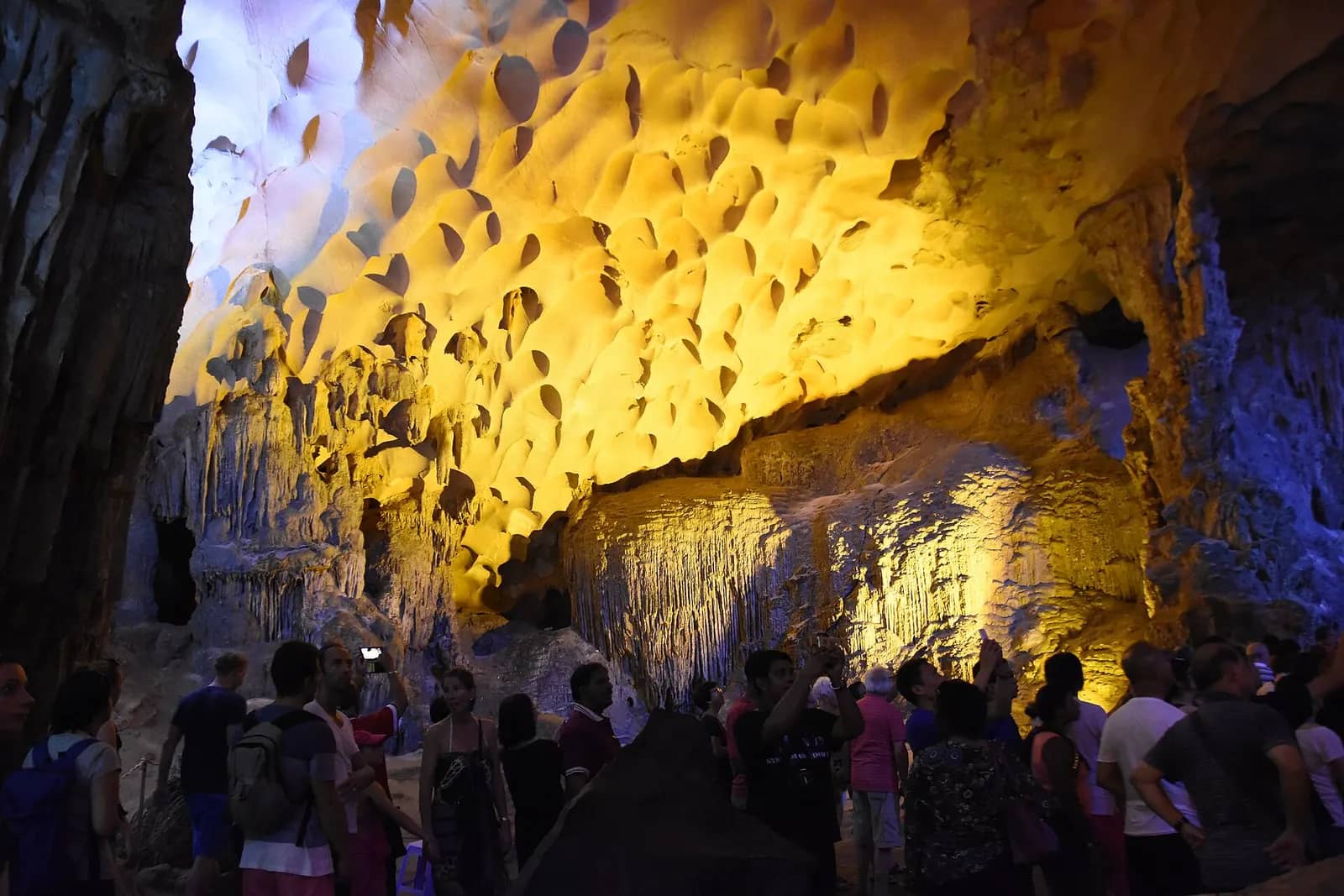 Sung Sot CaveHa Long Bay. A large floodlit cave in mid-Ha Long Bay, on the board's VHL2 boat route.
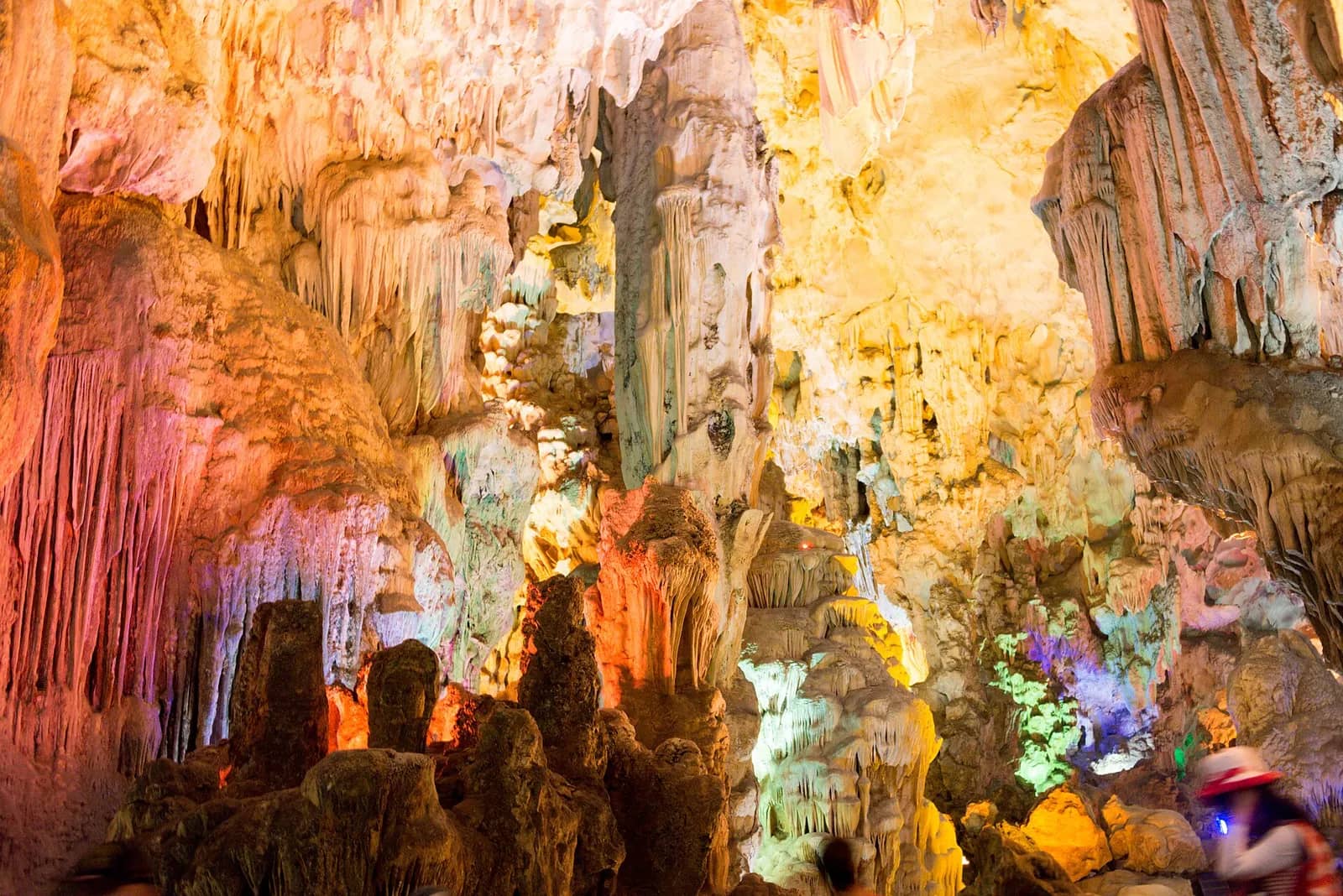 Thien Cung CaveHa Long Bay. The Heavenly Palace cave, closest of Ha Long Bay's big show caves to port.
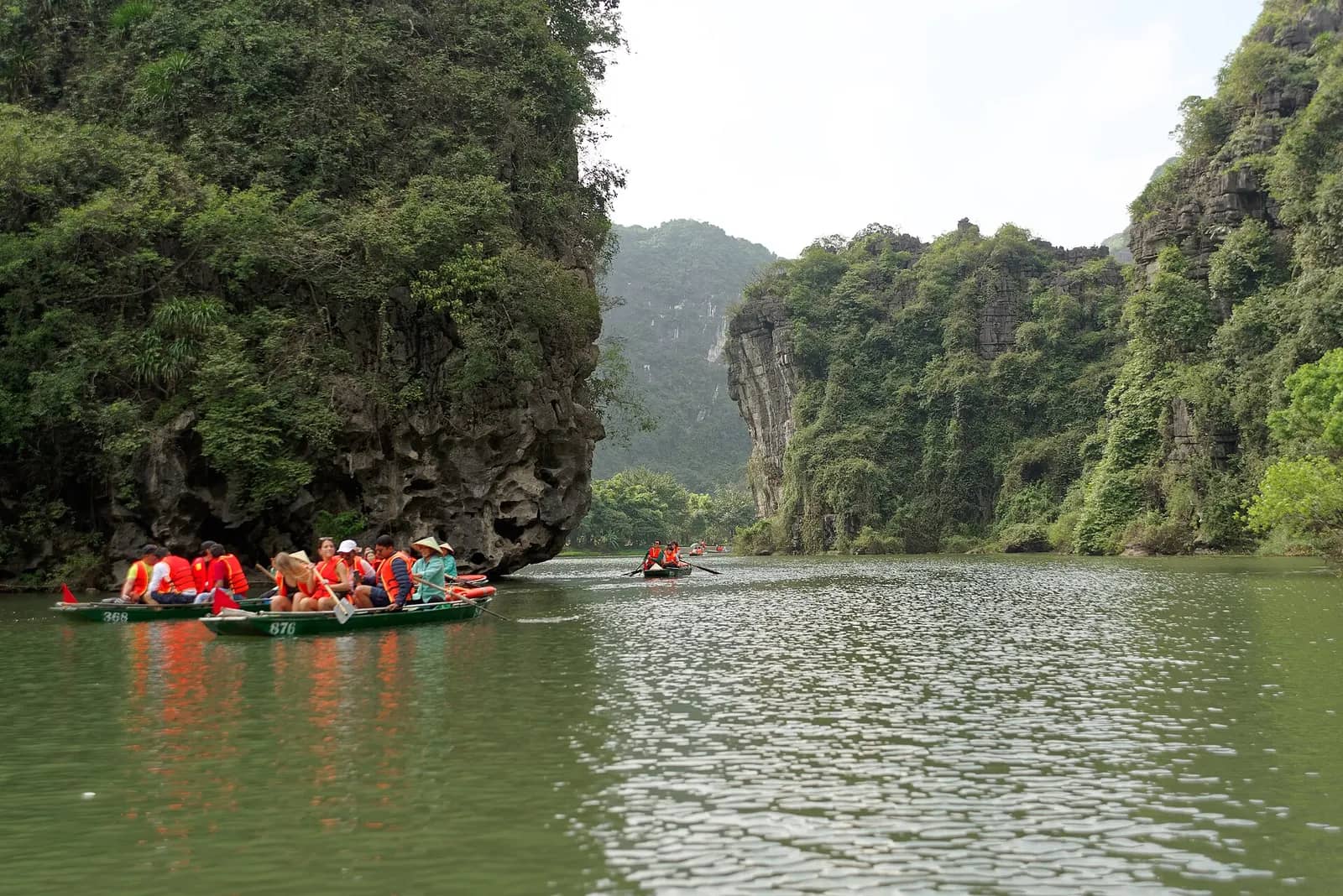 Trang AnNinh Binh. Rowing-boat routes through flooded limestone valleys and caves, Ninh Binh's World Heritage core.
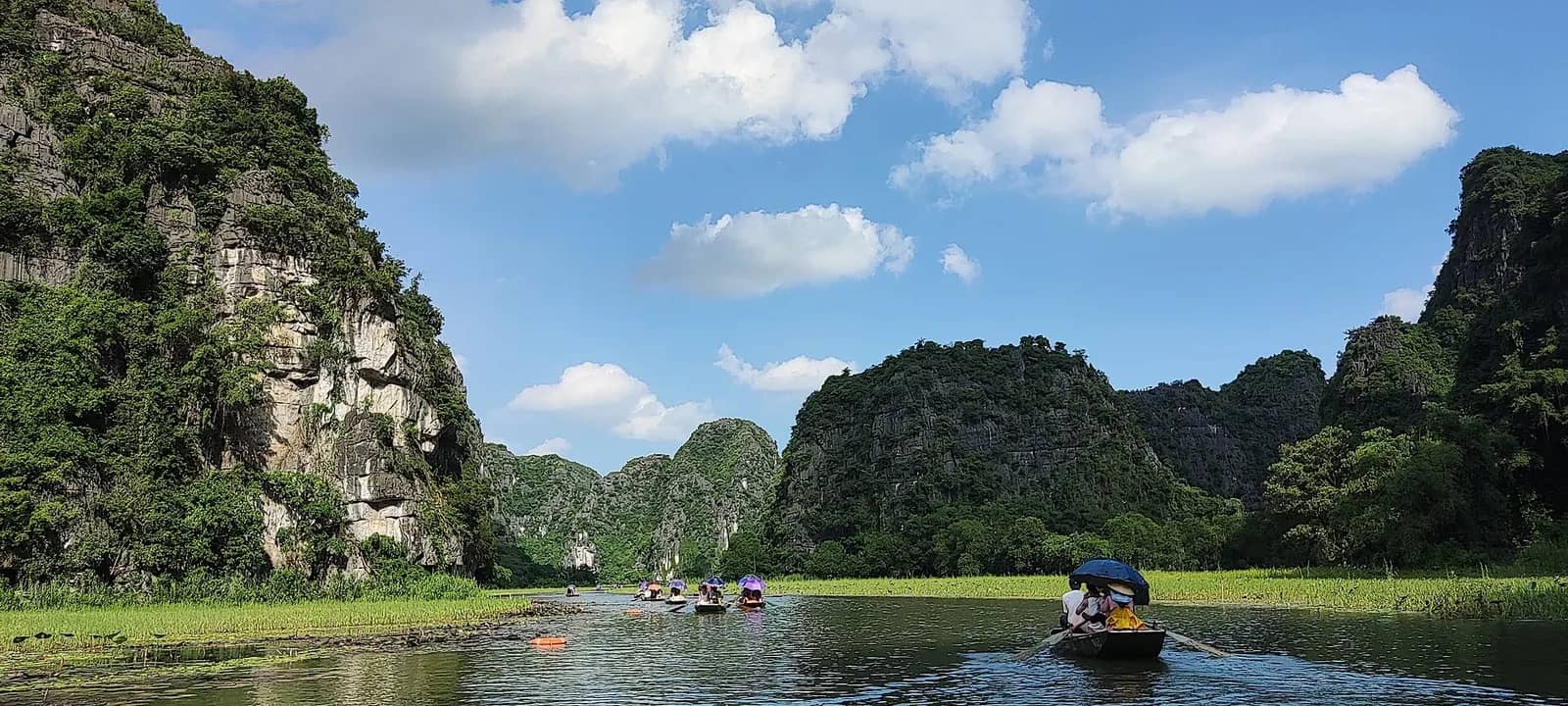 Tam CocNinh Binh. A rowing-boat route through three caves, the oldest boat trip in Ninh Binh.
The facts
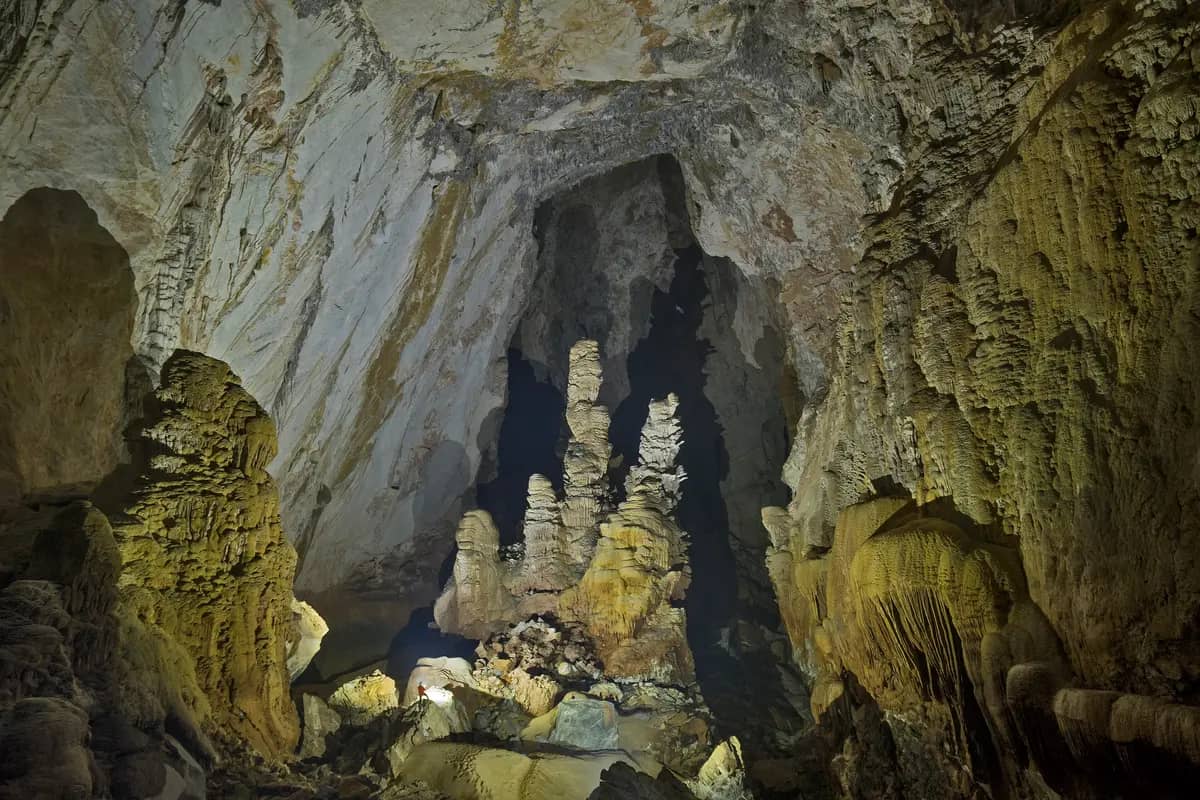
Image: Dave Bunnell / Wikimedia Commons, CC BY-SA 4.0 Phong Nha
Son Doong's main passage is so large that a 40-storey skyscraper could stand inside it and a Boeing 747 could fly through.
The comparison comes from Oxalis, the company that runs trips into the cave, for the stretch called the Hope and Vision Passage. NBC News, reporting on the 2009 survey, put it another way: a half-mile block of 40-story buildings could fit inside. The British and Vietnamese team measured the main passage at more than 5 km long and 200 m high.
Source: Oxalis Adventure, Son Doong Cave, NBC News, World's largest cave passage explored in Vietnam, Wikipedia, Hang Son Doong. Checked October 2026.
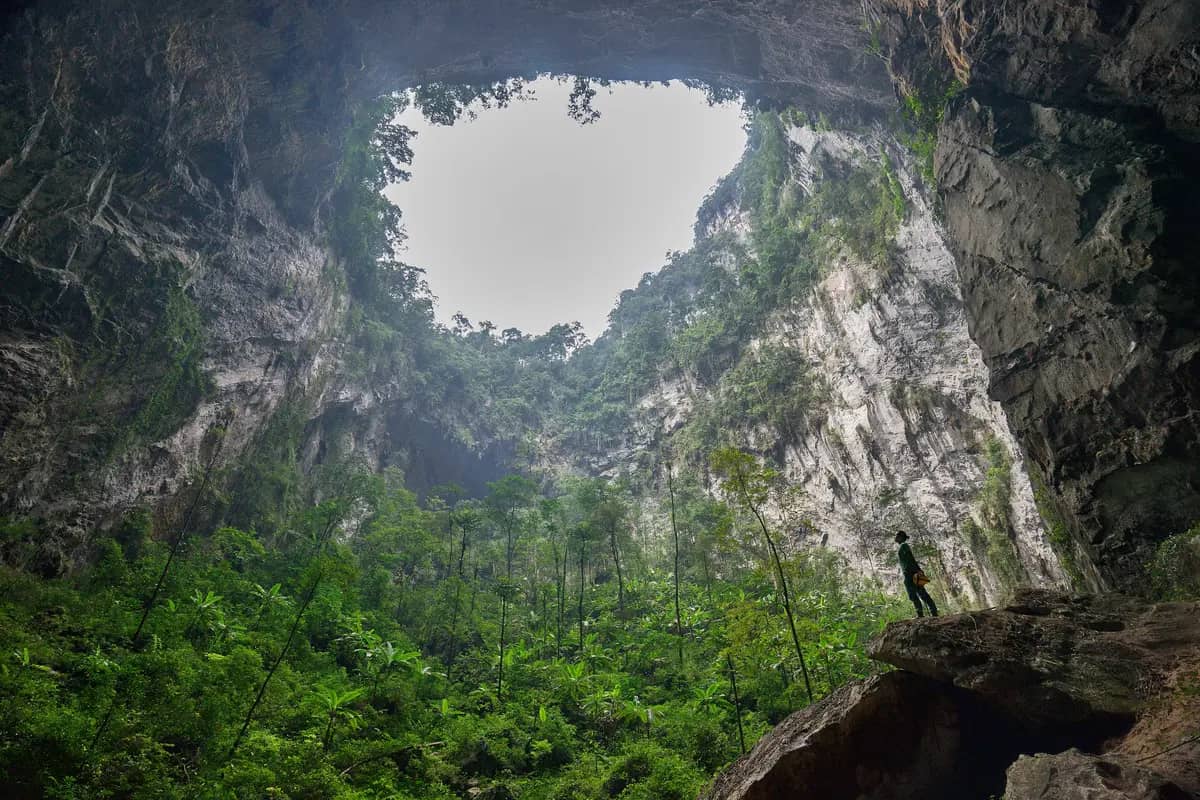
Image: Dave Bunnell / Wikimedia Commons, CC BY-SA 4.0 Phong Nha
Son Doong has its own jungle and its own clouds: two sections of roof have collapsed, letting in enough sunlight for trees to grow on the cave floor.
The two skylights are called dolines. Between June and August, Oxalis says, heat coming in through them meets the underground river and makes steam and drifting clouds, often seen looking toward Doline 1 and Doline 2. The cave also holds stalagmites up to 80 m tall and cave pearls the size of baseballs.
Source: Oxalis Adventure, Weather and climate inside Son Doong Cave, Wikipedia, Hang Son Doong. Checked October 2026.
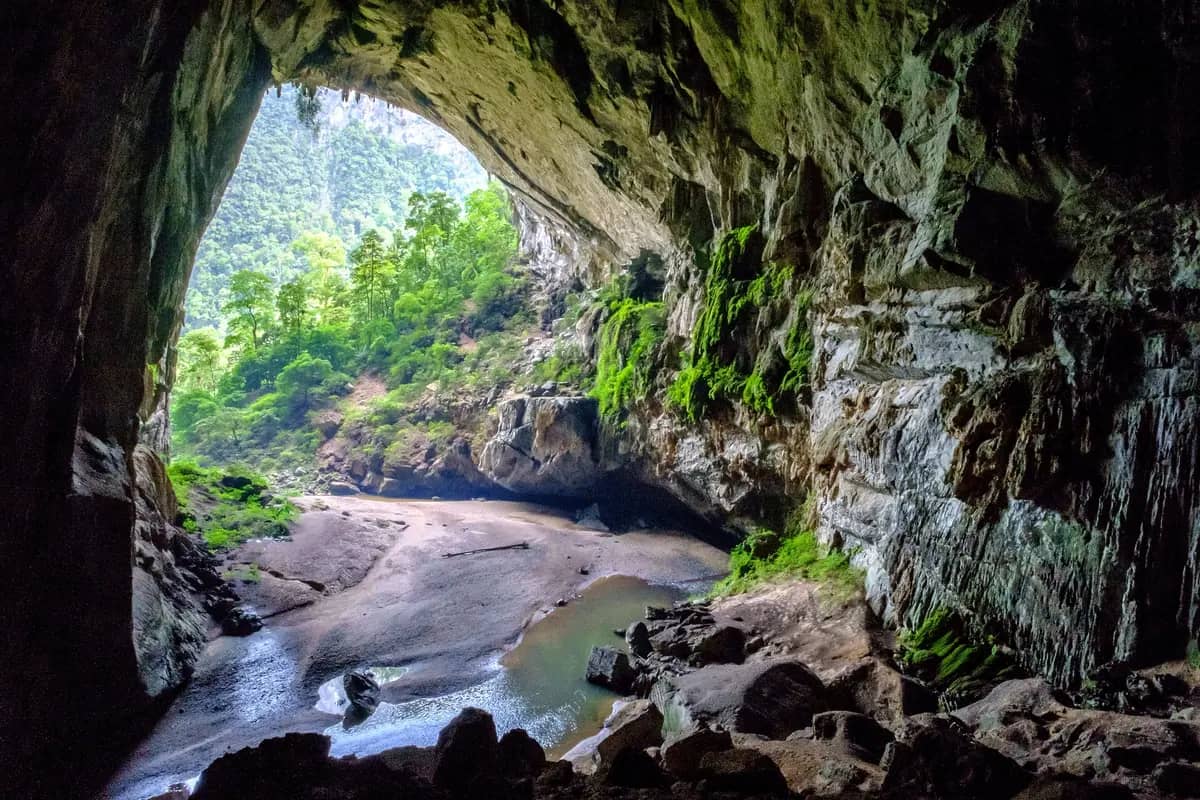
Image: Jérémie B. / Wikimedia Commons, CC BY-SA 4.0 Phong Nha
Son Doong is just one of 472 caves the park's management board has recorded, with more than 259 km (161 miles) of passages between them.
That is the board's count of caves surveyed so far. Older figures still in circulation are smaller: about 300 caves, and about 126 km of cave passage, the length a 2009 survey by British and Vietnamese explorers had reached. That 2009 survey is the same one that found Son Doong Cave.
Source: Phong Nha-Ke Bang National Park management board: tourism in Phong Nha-Ke Bang (Vietnamese), Wikipedia, Phong Nha-Ke Bang National Park. Checked October 2026.
Image: shankar s. / Wikimedia Commons, CC BY 2.0 Ha Long Bay
Sung Sot means Surprising, and the bay's managers say the cave earned the name from visitors' reactions; it is the largest typical karst cave found in Ha Long Bay.
It sits on Bo Hon Island, about 14 km from Tuan Chau marina and 11 km from the Ha Long passenger port. Deep inside, stalactites and stalagmites form strange shapes in a dreamlike hall. Thien Cung, Dau Go and Trinh Nu are other caves on the bay's sightseeing routes, and several come with their own folk tales.
Source: Ha Long Bay Management Board, Sung Sot Cave, Ha Long Bay Management Board, Ha Long Bay: a world natural heritage masterpiece. Checked October 2026.
Image: Jakub Hałun / Wikimedia Commons, CC BY 4.0 Ninh Binh
Trang An was the first place in Southeast Asia listed by UNESCO for both its nature and its culture, and its caves hold traces of people from more than 30,000 years ago.
It was inscribed in 2014 and joins three protected areas: the Hoa Lu Ancient Capital, the Trang An-Tam Coc-Bich Dong Scenic Landscape and the Hoa Lu Special-Use Forest. The cave finds show how early people adapted from the height of the last ice age through its end, among the most extreme climate shifts in the planet's recent history.
Source: Vietnam National Authority of Tourism, Virtual travel to Trang An Landscape Complex, UNEP-WCMC World Heritage Datasheet, Trang An Landscape Complex, VnExpress International, Kong: Skull Island film set to be removed from world heritage site. Checked October 2026.
Guides
Photo credits
- Sung Sot Cave: shankar s., CC BY 2.0
- Thien Cung Cave: xiquinhosilva, CC BY 2.0
- Trang An: Jakub Hałun, CC BY 4.0
- Tam Coc: Shyamal, CC BY-SA 4.0