Local legends in Vietnam
The stories
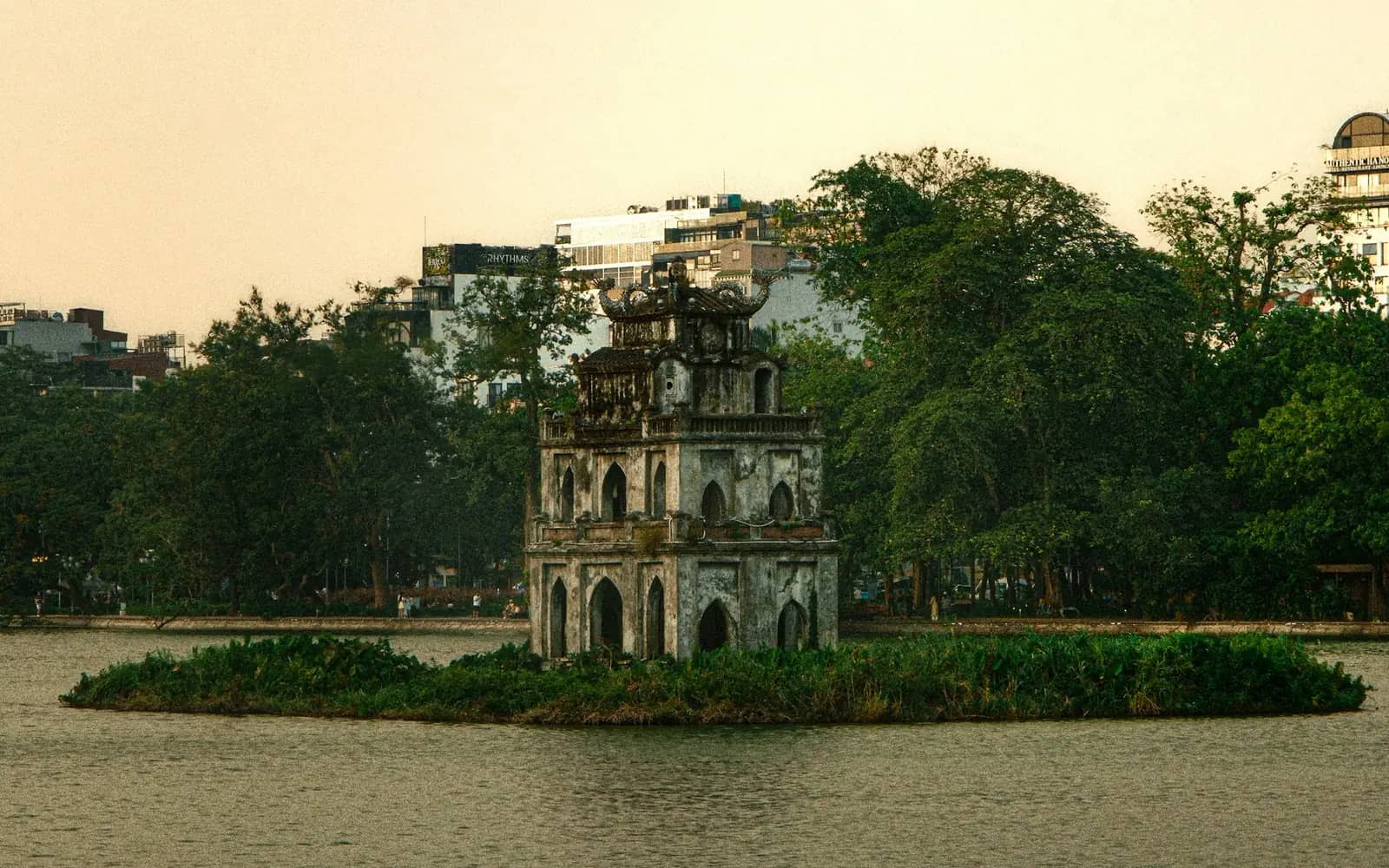
Image: Harrisun S / Unsplash Hanoi
Local legend, not a verified fact
According to legend, a golden turtle rose from Hoan Kiem Lake to take back the magic sword Le Loi had used against the Ming, and the lake was named for the returned sword.
In the story, Le Loi was boating on the lake after beating the Ming when Kim Quy, the Golden Turtle God, surfaced and asked for the sword the Dragon King had given him. The lake, once called Luc Thuy, or Green Water, was renamed, and the Turtle Tower on its islet is linked to the tale. The last known giant soft-shell turtle in the lake was found dead in 2016.
Source: Wikipedia, Hoan Kiem Lake, Wikipedia, Hoan Kiem turtle. Checked October 2026.
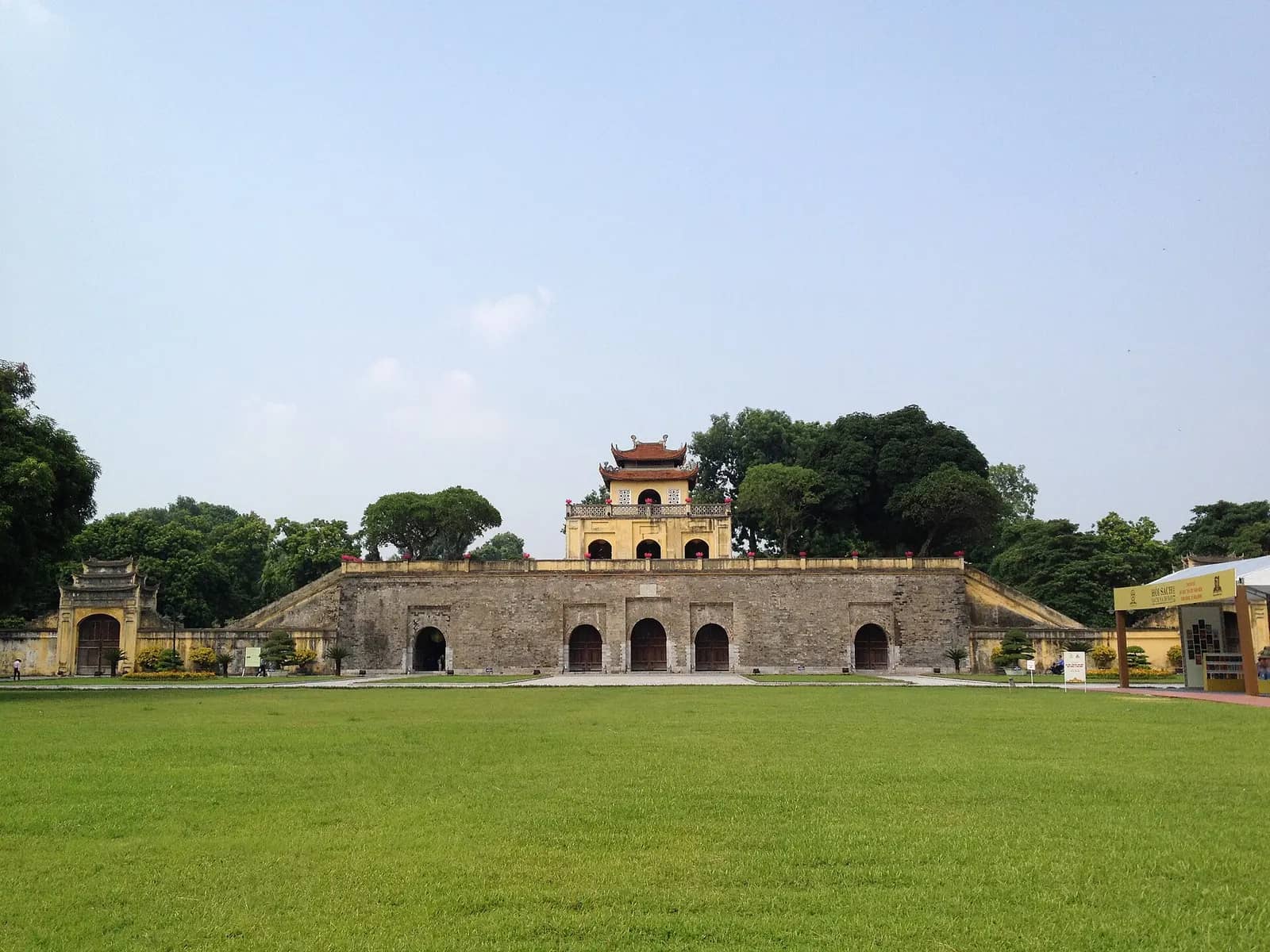
Image: Phan Minh Tuấn / Wikimedia Commons, CC BY-SA 4.0 Hanoi
Local legend, not a verified fact
According to legend, as Ly Thai To's boat docked at his new capital in 1010, a dragon soared overhead, so he named the city Thang Long, ascending dragon.
The story says the king took the dragon, a symbol of royal power, as a good omen. The history is firmer: that year he moved the court from Hoa Lu to the old Dai La citadel, and in an edict praised the site as a place where the coiling dragon and crouching tiger lie. Thang Long stayed the capital until 1397.
Visit Imperial Citadel of Thang Long
Source: Wikipedia, Ly Thai To, Wikipedia, Hanoi, Wikipedia, Edict on the Transfer of the Capital. Checked October 2026.

Image: Vivu Vietnam / Unsplash Ha Long Bay
Local legend, not a verified fact
Local legend says dragons sent by the gods spat jewels that became the bay's islands. The mother dragon came down at Ha Long, which means descending dragon.
In the legend, the gods sent a family of dragons to help the Vietnamese defend their land. The jewels and jade the dragons spat became islands that linked into a wall, and invaders' ships struck the rocks. Wikipedia says this version was reinforced by nationalism in the 1800s, so read it as a story, not as history.
Source: Wikipedia, Ha Long Bay. Checked October 2026.
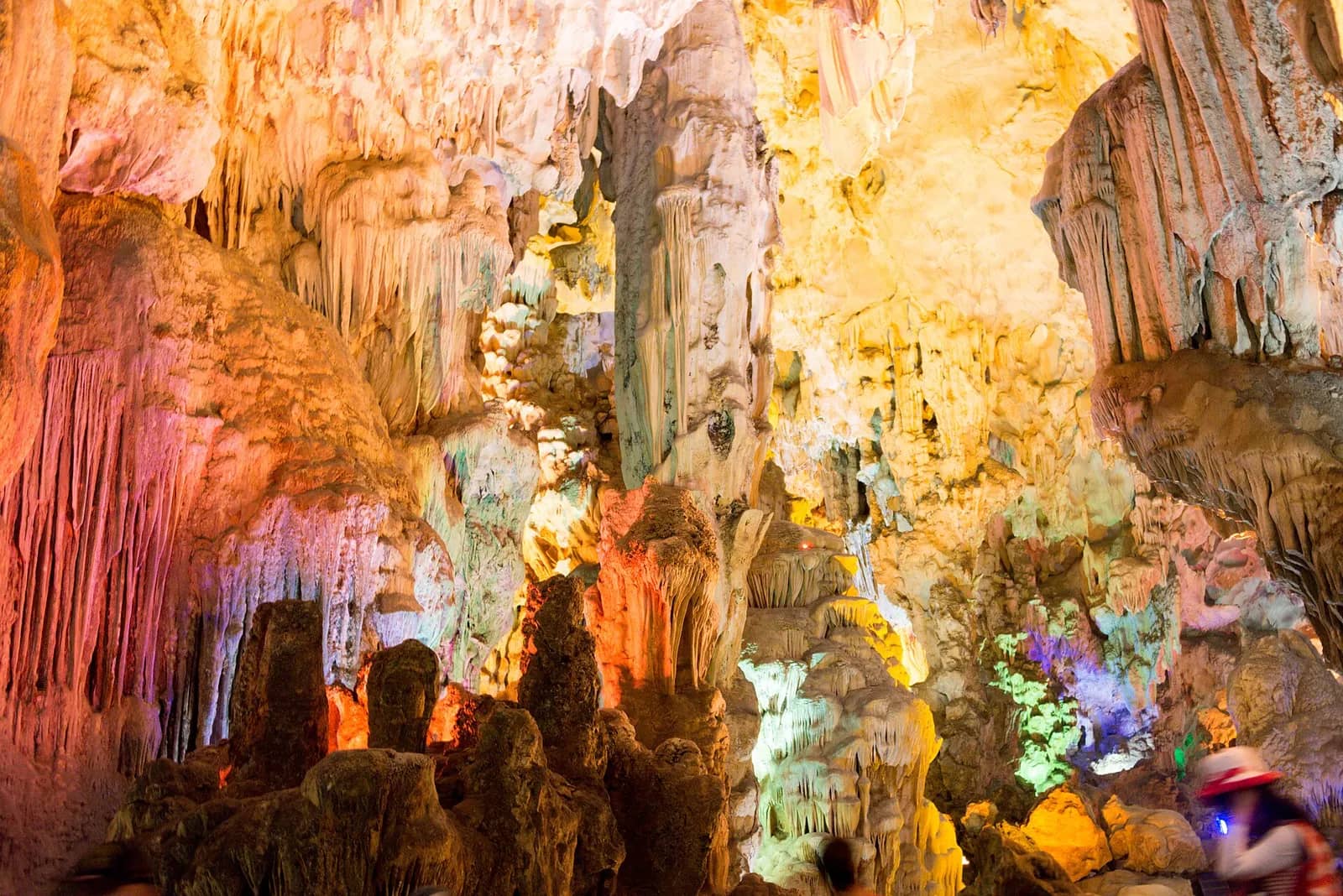
Image: xiquinhosilva / Wikimedia Commons, CC BY 2.0 Ha Long Bay
Local legend, not a verified fact
Local legend says Thien Cung Cave hosted the wedding of the Dragon Prince and a girl called May, a feast that lasted 7 days and 7 nights.
In the tale, a drought struck after the Dragon King returned to his cave, and a young couple braved the journey to find him; their daughter May later won the Dragon Prince's heart. The rock shapes are said to show dragons, elephants and lions dancing at the feast, and the pools to be where May bathed her 100 children. This is folklore, not history.
Source: VietnamPlus (Vietnam News Agency), Thien Cung Cave, Quang Ninh Tourism Association, Thien Cung Cave. Checked October 2026.
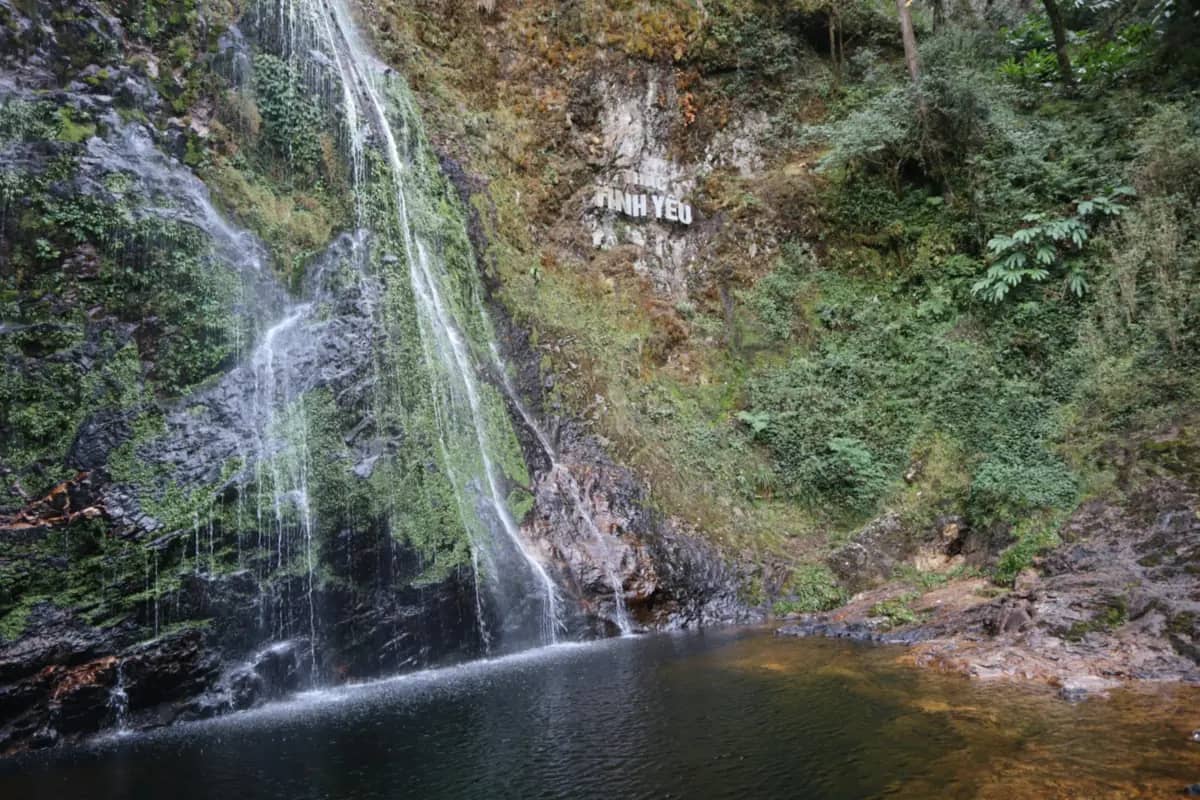
Image: Shaye Anne / Unsplash Sa Pa
Local legend, not a verified fact
Local legend says a fairy who bathed at Love Waterfall fell for a woodcutter's flute music, and when heaven kept her away she became a yellow bird crying O Quy Ho.
In the story told by Sa Pa people, fairies came down to bathe at the falls, and the seventh fairy stayed listening to a woodcutter's bamboo flute by his fire until dawn. O Quy Ho is also the name of the pass above, on the road to Lai Chau. The falls, more than 100 m high, lie inside Hoang Lien National Park.
Source: Hoang Lien National Park, Love Waterfall. Checked October 2026.
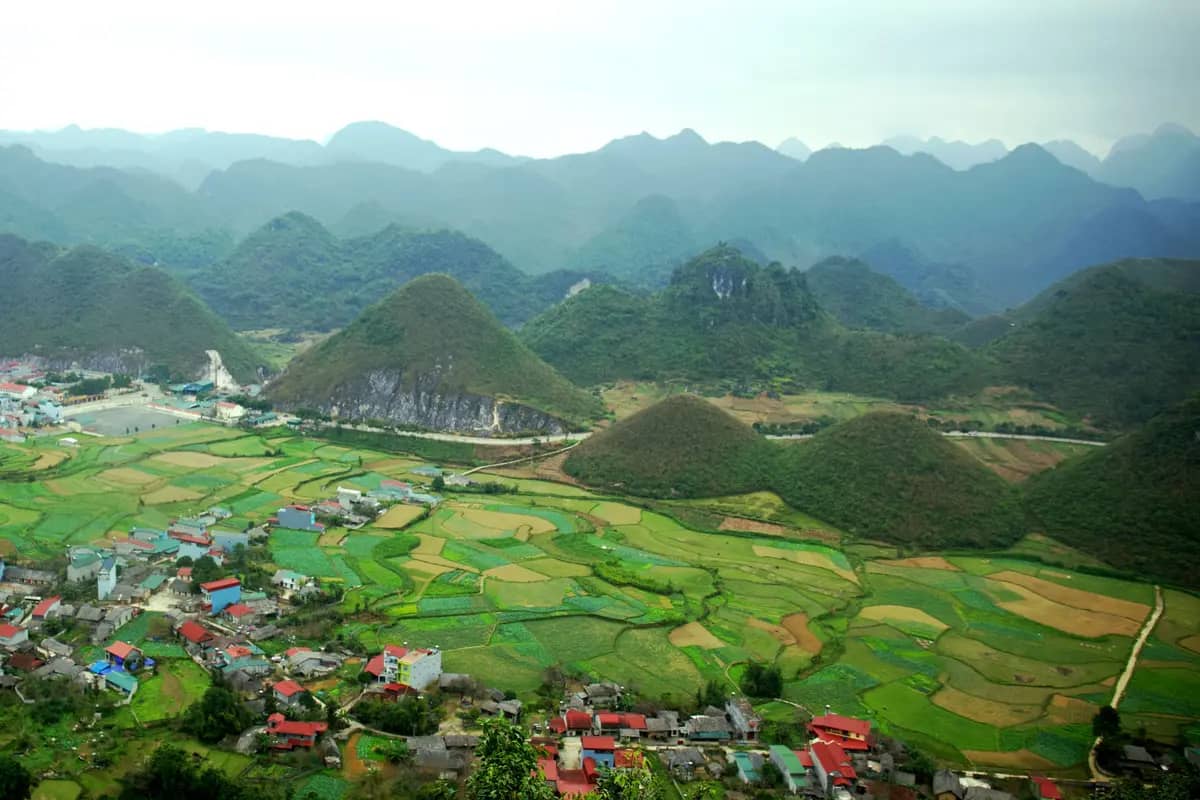
Image: Anh Khac / Pexels Ha Giang Loop
Local legend, not a verified fact
Local legend says the Quan Ba Twin Mountains are the breasts a fairy left behind to feed her baby son when she was called back to heaven.
In the story, the peach blossom fairy Hoa Dao fell for a young Hmong man famed for playing the jaw harp, came down to marry him and bore a son, until the Jade Emperor ordered her home. The Mien River nearby is told as her tears. In 2010 the culture ministry listed the hills as a national scenic site.
Source: Tuyen Quang province, Quan Ba Twin Mountains. Checked October 2026.
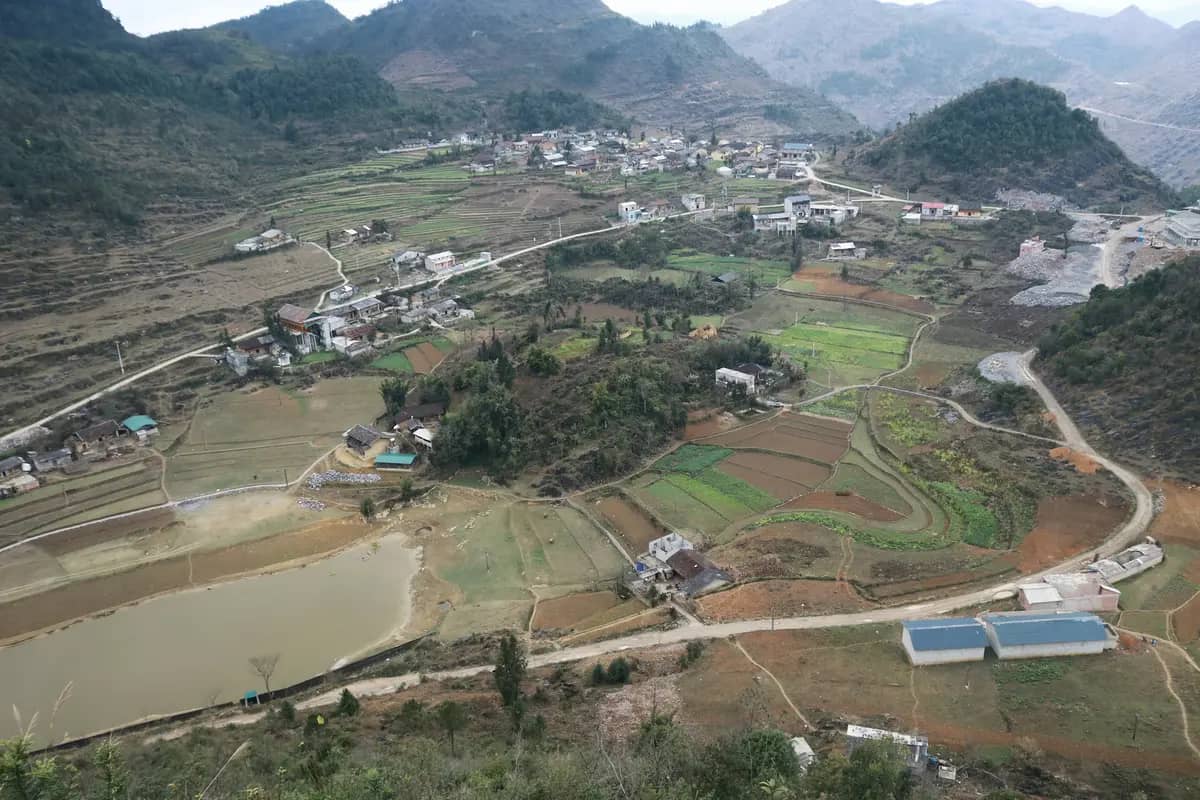
Image: Phương Anh Nguyễn / Unsplash Ha Giang Loop
Local legend, not a verified fact
Local legend says a fairy dragon that rested on Dragon Mountain at Lung Cu left its two eyes behind as two ponds, so the villages below would have water.
The story says the dragon pitied the villagers' shortage of water before flying back to heaven. One pond belongs to Then Pa, a Hmong village, and one to a Lo Lo village, and they are said never to dry up. The Lo Lo call the place Long Cu, where the dragon lives; the national flag tower now stands on the peak.
Source: VietnamPlus (Vietnam News Agency), Lung Cu Flag Tower, Wikipedia (Vietnamese), Lung Cu Flag Tower. Checked October 2026.
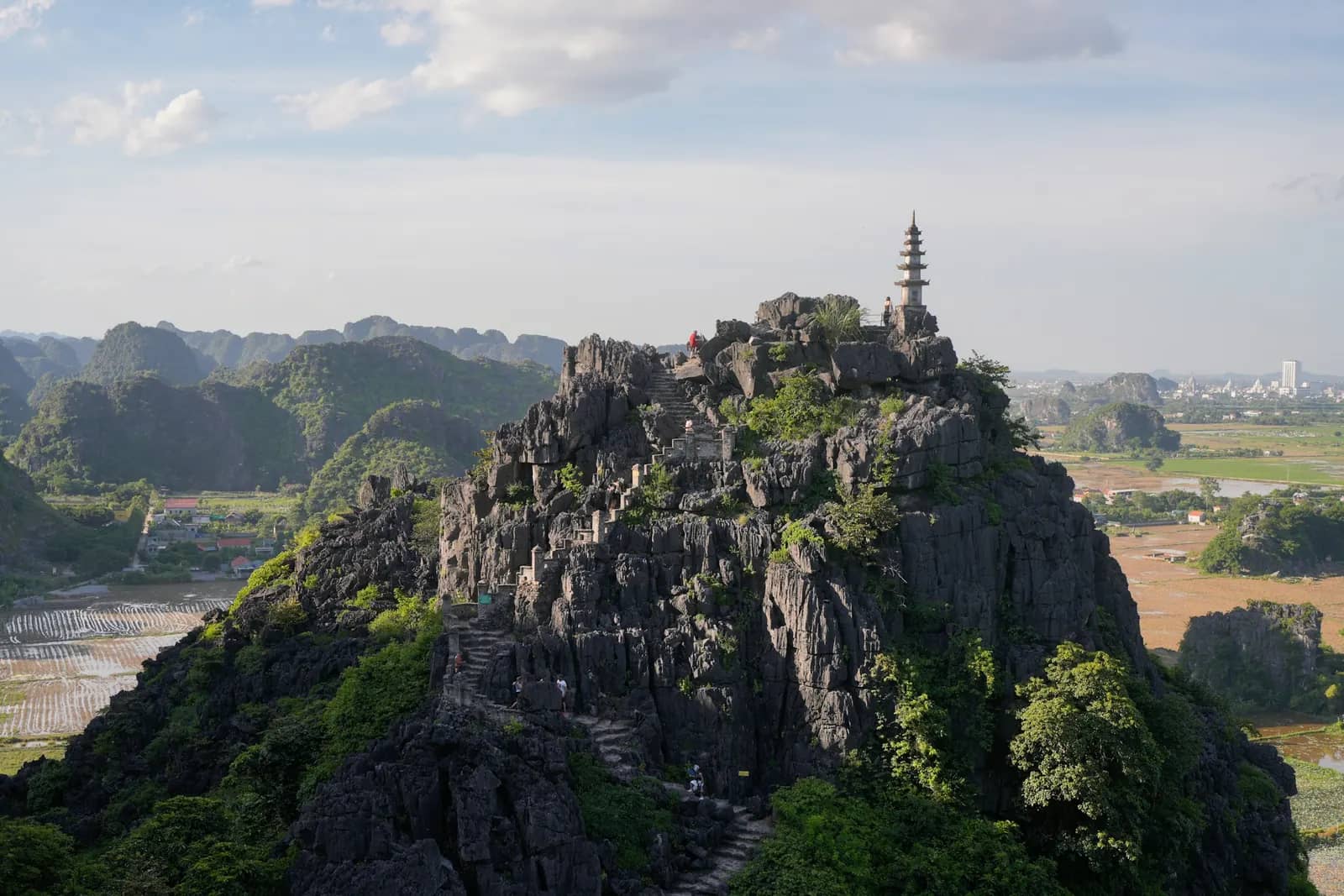
Image: Laszlo Oveges / Unsplash Ninh Binh
Local legend, not a verified fact
According to legend, Hang Mua, Dance Cave, got its name because King Tran Thai Tong often came to the cave to watch his concubines sing and dance.
The folk story places the visits in the 13th century, when the king returned to Hoa Lu to found a small temple, Am Thai Vi. The cave sits at the foot of Mua Mountain, and 486 stone steps carved with dragons and phoenixes in the Tran style lead to a viewpoint over Tam Coc and the Ngo Dong River.
Source: Vietnam National Authority of Tourism, Hang Mua, Ninh Binh tourism portal, Mua Cave. Checked October 2026.
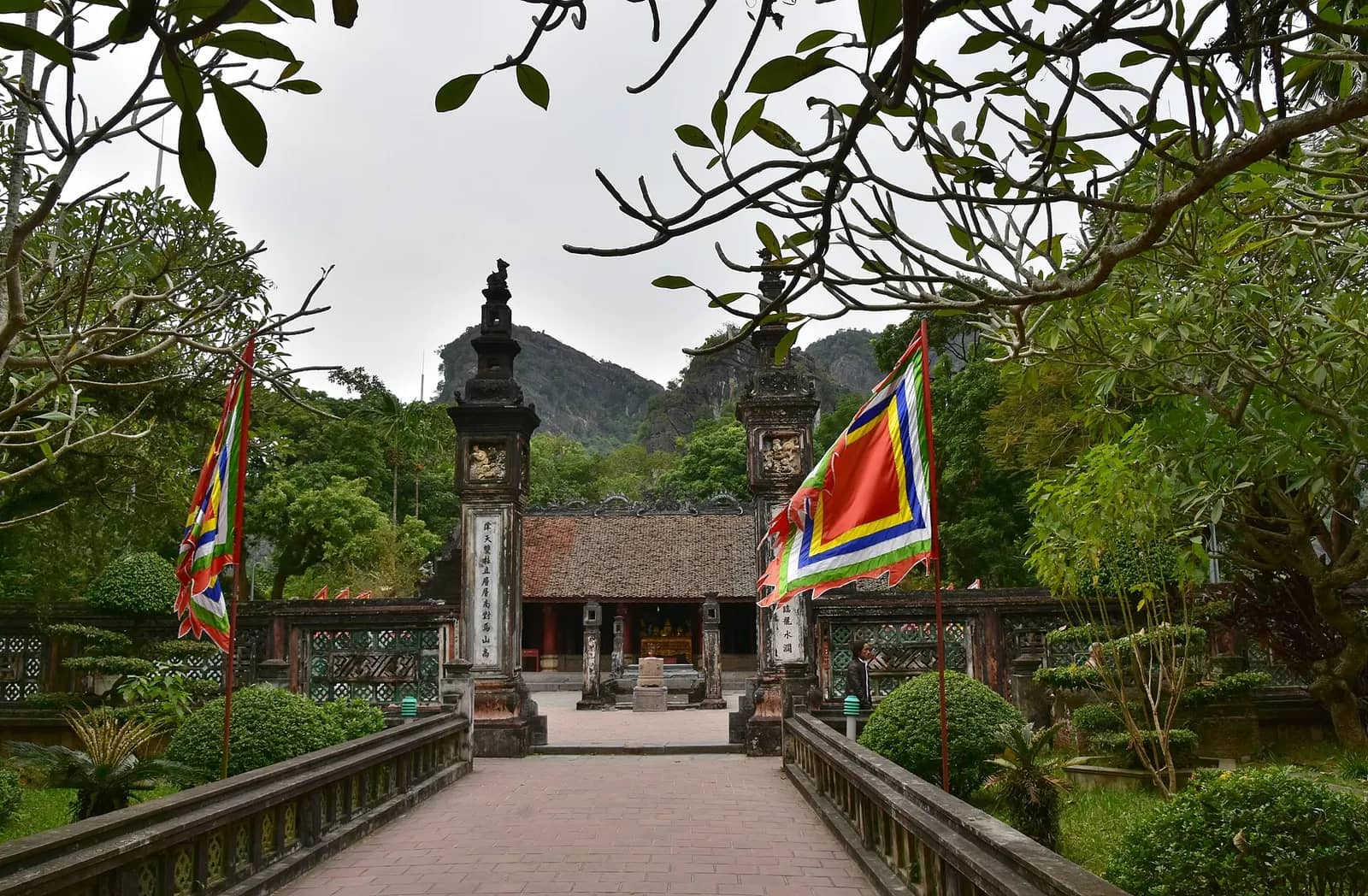
Image: Richard Mortel from Riyadh, Saudi Arabia / Wikimedia Commons, CC BY 2.0 Ninh Binh
Local legend, not a verified fact
Local legend says the boy Dinh Bo Linh, later the emperor who ruled from Hoa Lu, led buffalo herders in mock battles, using reed flowers as flags.
The tale is recorded in the old royal chronicle Dai Viet Su Ky Toan Thu, which says the children carried him like a king, with reed flowers as royal banners. The history is that he united the country in 968 and made Hoa Lu his capital. Each spring the Hoa Lu festival opens with boys dressed as cowherds holding reed flags.
Source: Ministry of Culture, Sports and Tourism, Hoa Lu Ancient Capital Festival, Wikipedia, Hoa Lu Ancient Capital, Wikipedia (Vietnamese), Dinh Tien Hoang. Checked October 2026.
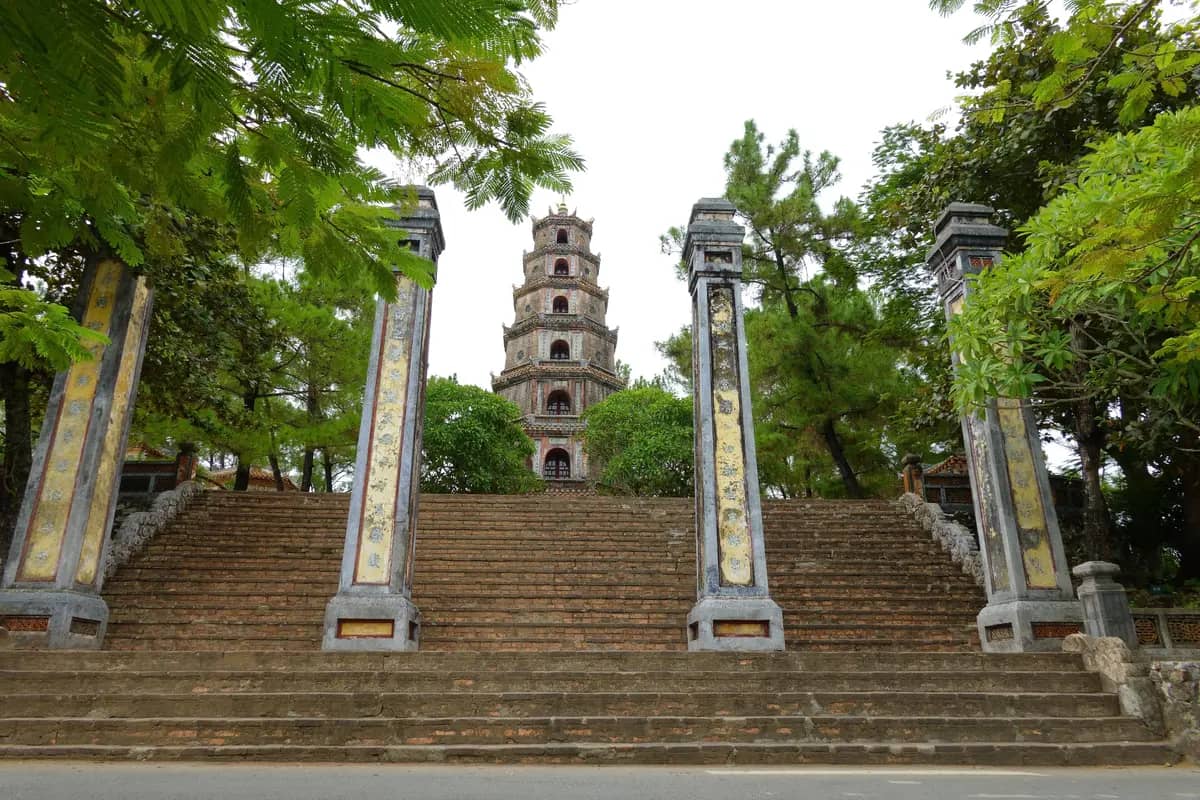
Image: Gaodanielbo / Wikimedia Commons, CC BY 4.0 Hue
Local legend, not a verified fact
Local legend says an old woman appeared on the hill where Thien Mu Pagoda stands and foretold that a lord would build a pagoda there.
Thien Mu means celestial lady. In the story recorded in the royal annals, she sat on the hill dressed in red and blue, rubbing her cheeks, made her prophecy and vanished. Lord Nguyen Hoang heard the tale and had a pagoda built on the spot in 1601. The seven-storey Phuoc Duyen tower came much later, between 1844 and 1846.
Source: UNESCO World Heritage Centre, Complex of the Celestial Lady (Thien Mu), Wikipedia, Thien Mu Temple. Checked October 2026.
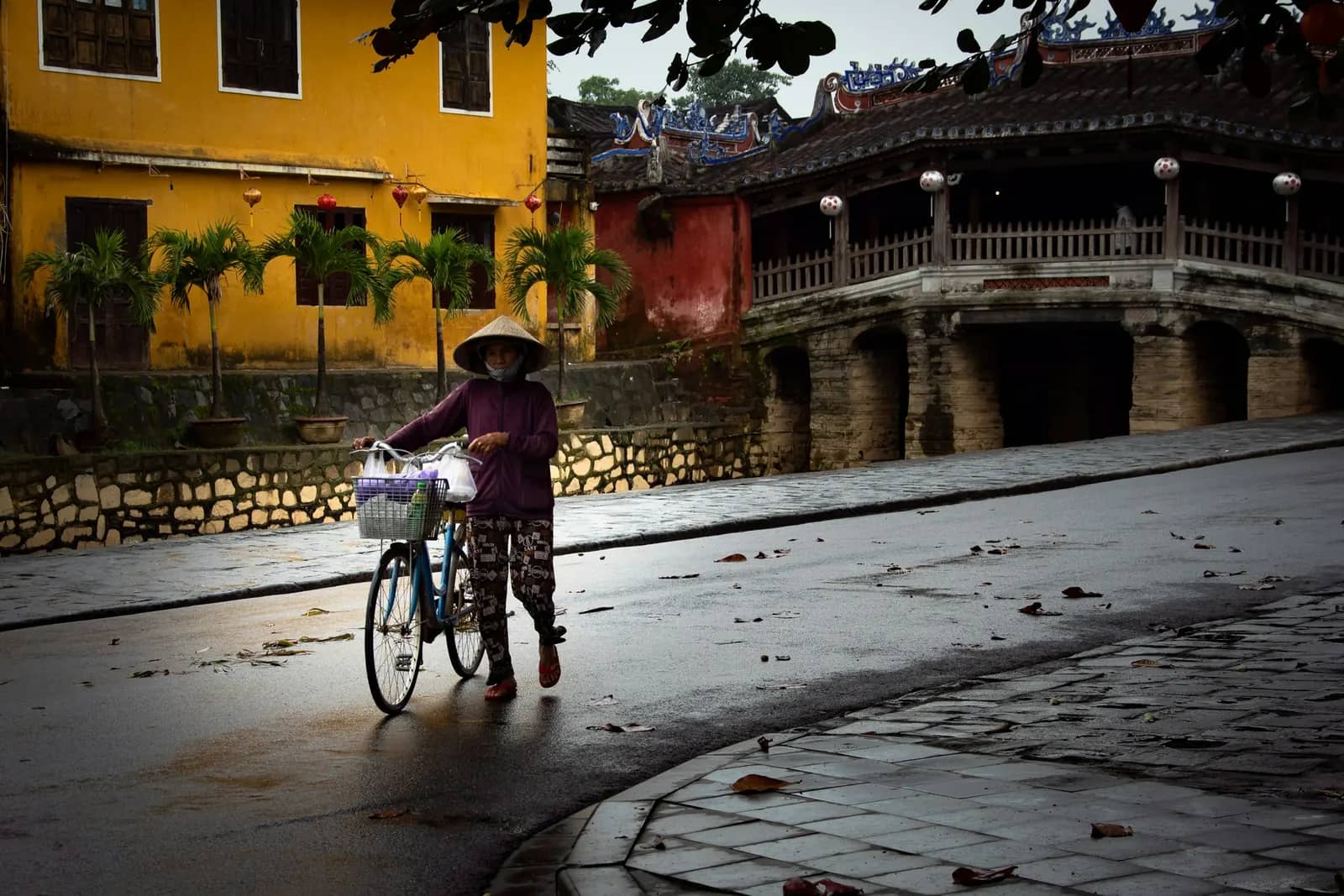
Image: Stewart Campbell / Unsplash Hoi An & Da Nang
Local legend, not a verified fact
According to legend, Japanese residents built a temple on top of the covered bridge in 1653 to calm Namazu, the earthquake monster of Japanese folklore.
Namazu is the monster that Japanese folklore blames for earthquakes. According to the legend, the temple was built to calm it, and the monkey and dog statues on the bridge refer to the two gods who control it. Japanese merchants later withdrew from Hoi An in the 17th century, yet the bridge and its neighbourhood stayed relatively preserved.
Source: Wikipedia, Japanese Covered Bridge. Checked October 2026.
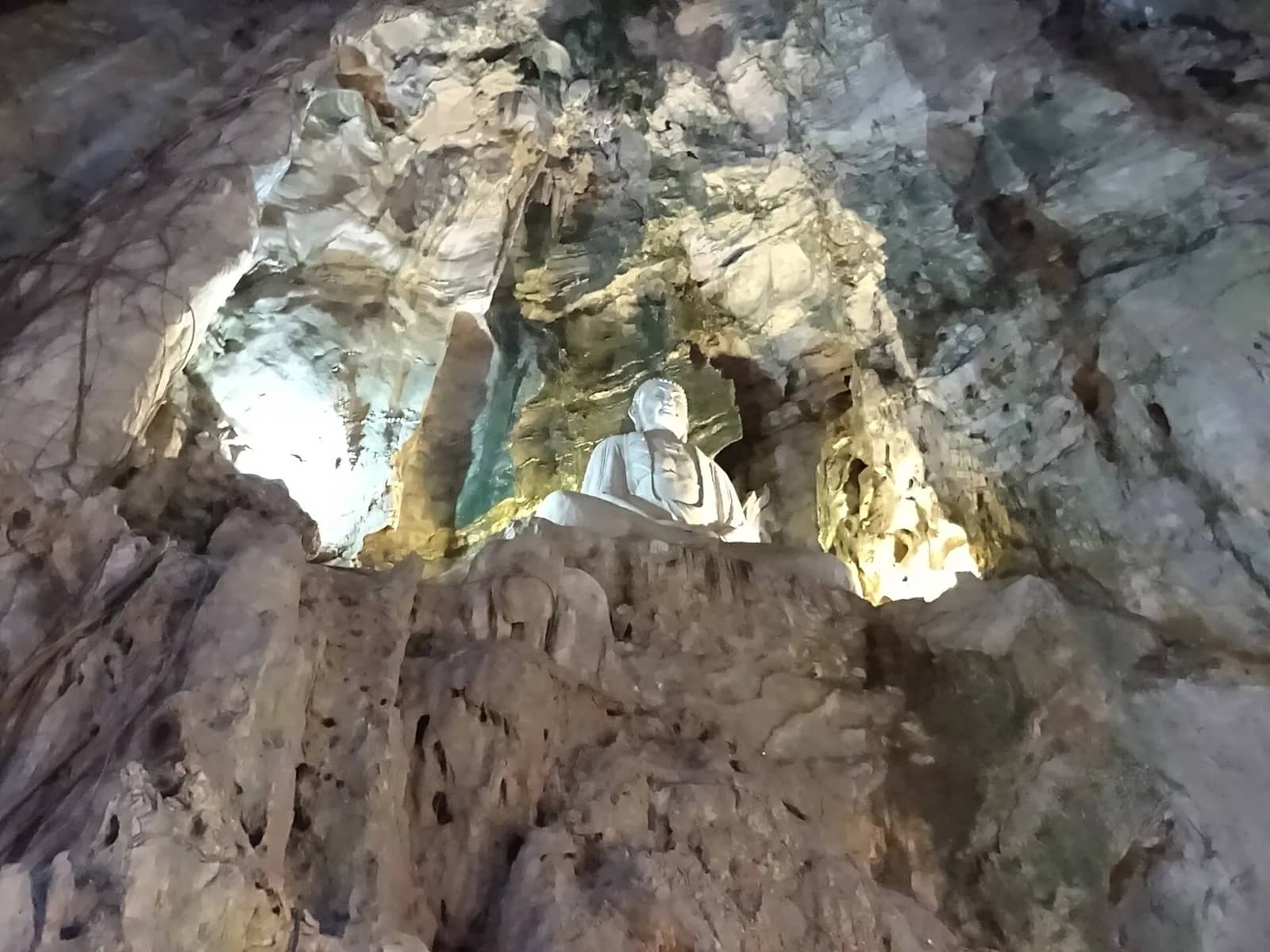
Image: Christophe95 / Wikimedia Commons, CC BY-SA 4.0 Hoi An & Da Nang
Local legend, not a verified fact
Local legend says the Marble Mountains formed from the five pieces of a dragon's eggshell, after a girl hatched from an egg laid on the Da Nang shore.
In the story told by Vietnam's national tourism authority, an old fisherman saw a dragon rise from the sea and lay an egg. A golden turtle named Kim Quy buried it, gave him one of its toenails and told him to guard it from hawks. The shell broke as the girl hatched, and each piece became a mountain. It is a tale; the peaks are limestone.
Visit Marble Mountains (Ngu Hanh Son)
Source: Vietnam National Authority of Tourism, Marble Mountains: icon of Da Nang tourism. Checked October 2026.
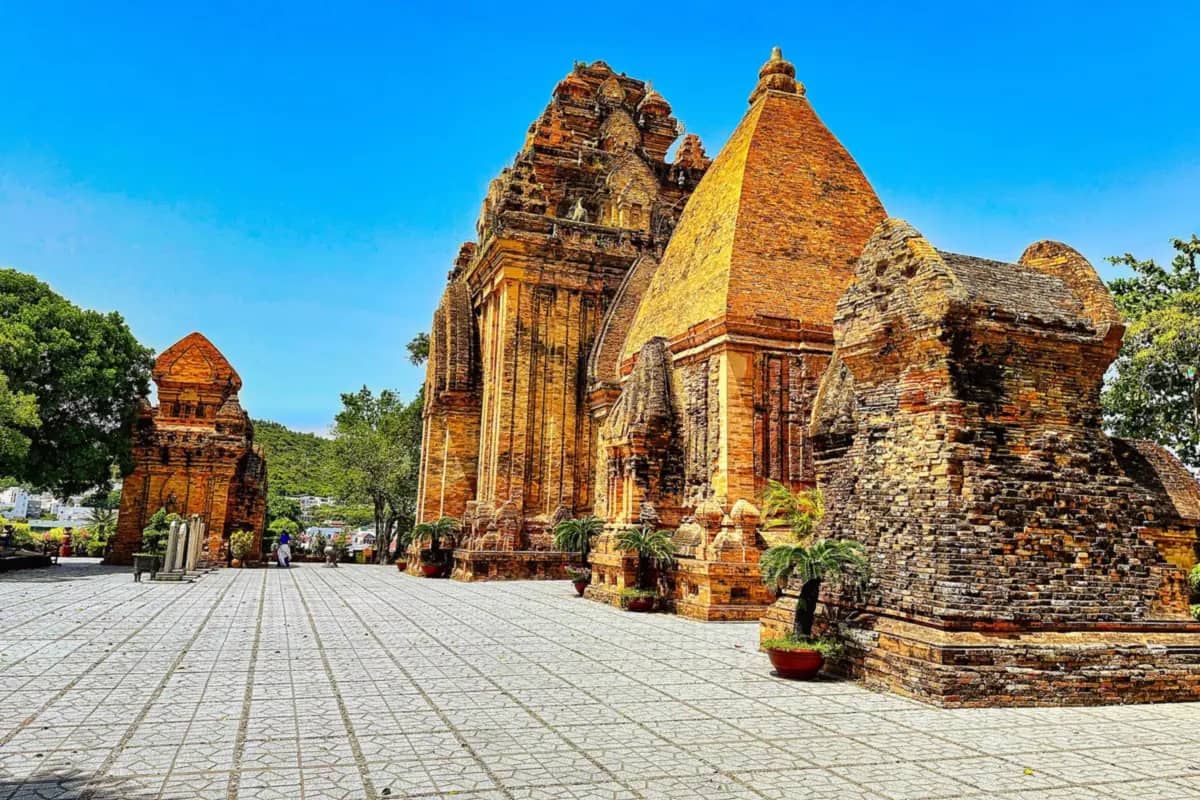
Image: Ms Sarah Welch / Wikimedia Commons, CC0 Nha Trang
Local legend, not a verified fact
According to Cham legend, the goddess Po Nagar was born from the clouds and the foam of the sea, and taught people to grow rice.
In the tale, she took form in a piece of eaglewood floating on the waves and created the earth, eaglewood and rice. The Vietnamese later took her in as Thien Y A Na. The Po Nagar Festival in the third lunar month still honours her as the goddess who taught farming and crafts. Read it as a story; the towers themselves date from the Cham kingdom.
Source: Wikipedia, Thien Y A Na, Vietnam Tourism, Po Nagar Tower. Checked October 2026.
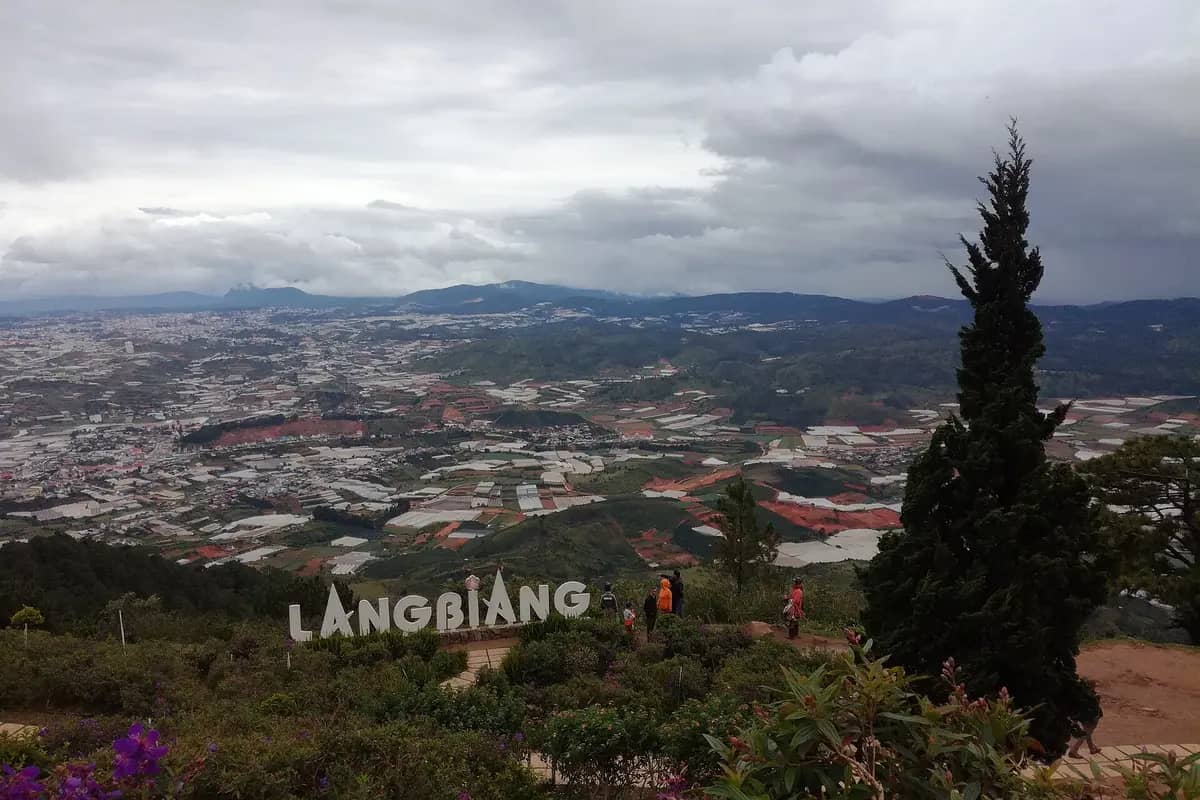
Image: Damian Vo / Wikimedia Commons, CC BY-SA 2.0 Da Lat
Local legend, not a verified fact
Local legend says Lang Biang mountain is named after two lovers, Lang and Biang, from rival tribes who were not allowed to marry.
In the K'Ho story told to Vietnam Pictorial, Lang was the son of the Lat chief and Biang the daughter of the Chil chief. The couple died together rather than give up their love. Their grieving fathers then joined the Lat, Chil and Sre into the K'Ho group, and the peak took the pair's names. Locals compare the tale to Romeo and Juliet.
Source: Vietnam Pictorial (Vietnam News Agency), Legendary Lang Biang. Checked October 2026.
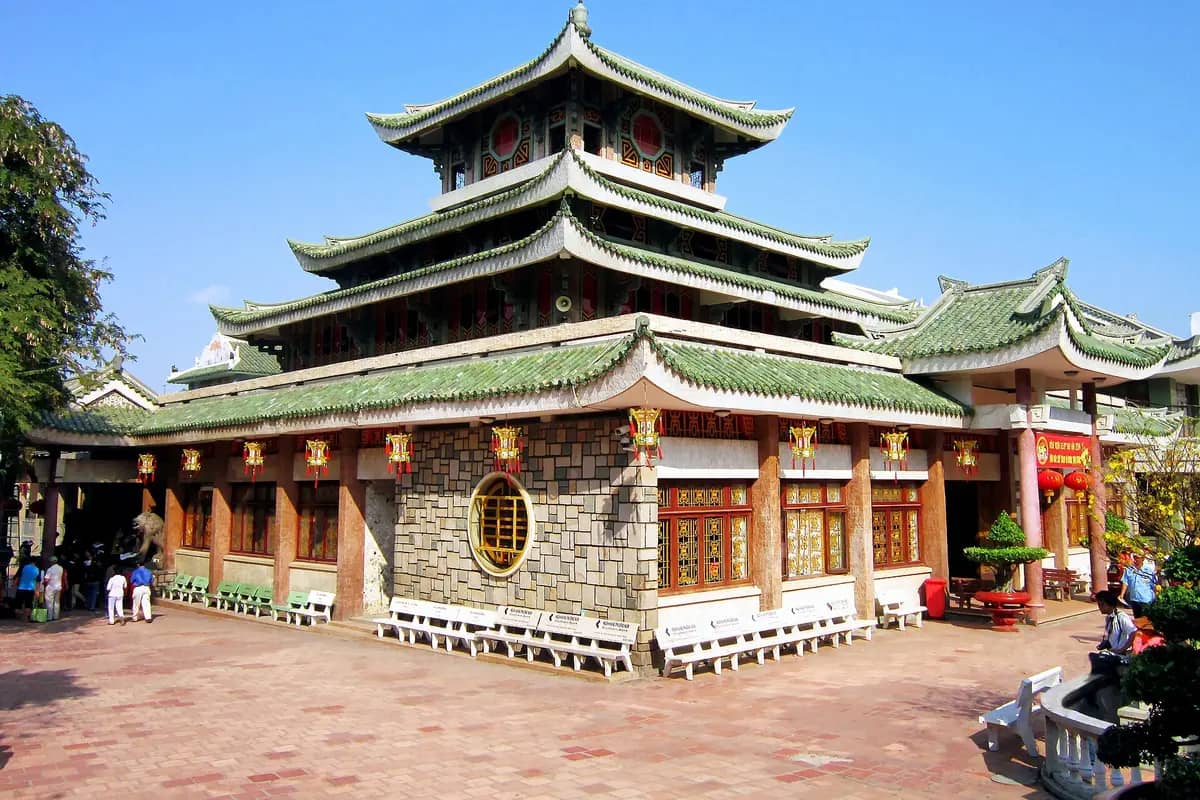
Image: Bui Thuy Dao Nguyen / Wikimedia Commons, CC BY-SA 3.0 Mekong Delta
Local legend, not a verified fact
Local legend says strong men could not lift the Ba Chua Xu statue on Sam Mountain near Chau Doc, yet nine young girls carried it down.
The An Giang provincial portal tells the story as the temple board gives it: villagers found the statue on the summit over 200 years ago. A girl in a trance told them to choose nine virgins to carry it. At the foot of the mountain it grew too heavy to move, so they built a shrine there, which became today's temple. It is a legend, not recorded history.
Source: An Giang Province portal, Sam Mountain Goddess Veneration Festival, Wikipedia, Ba Chua Xu. Checked October 2026.