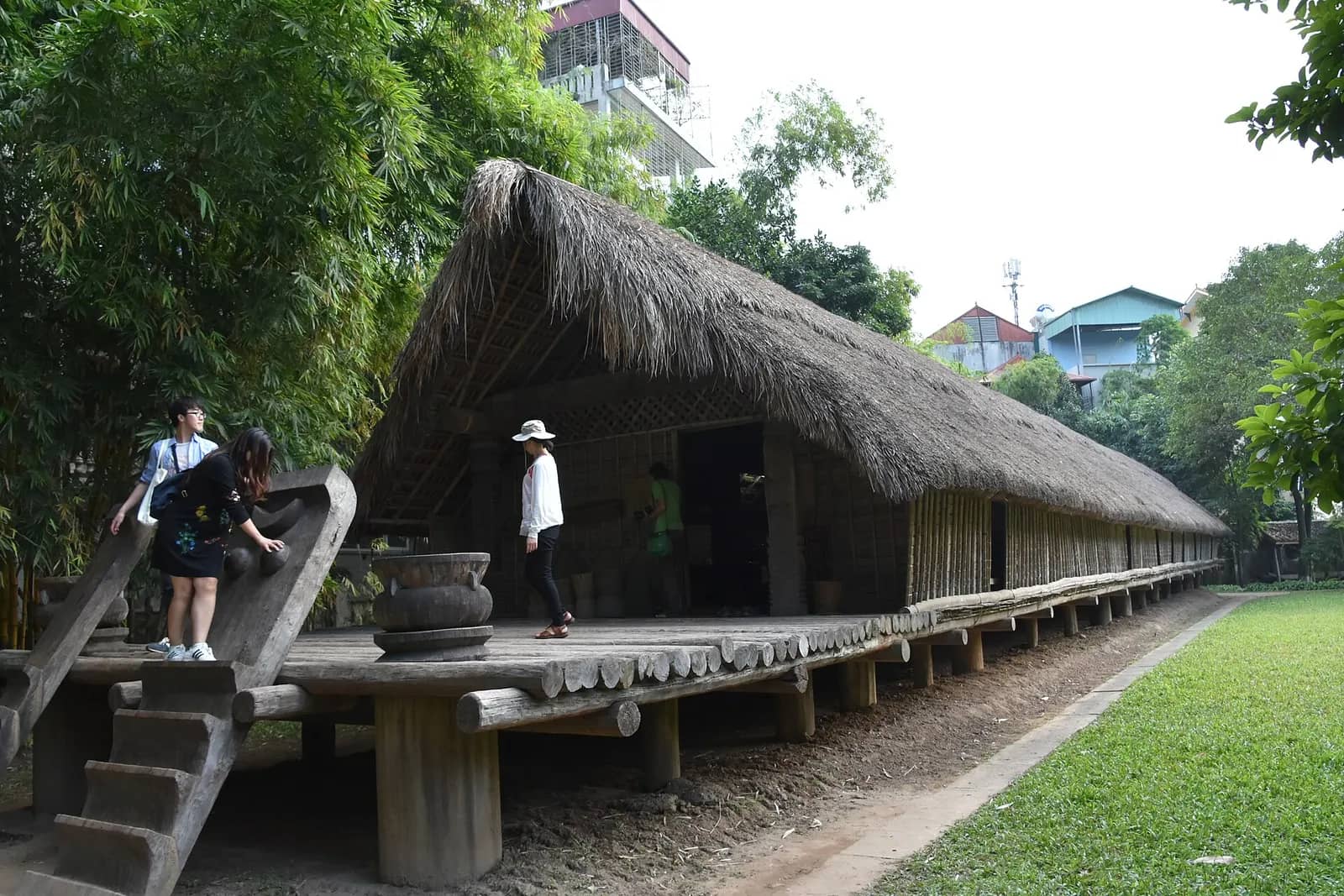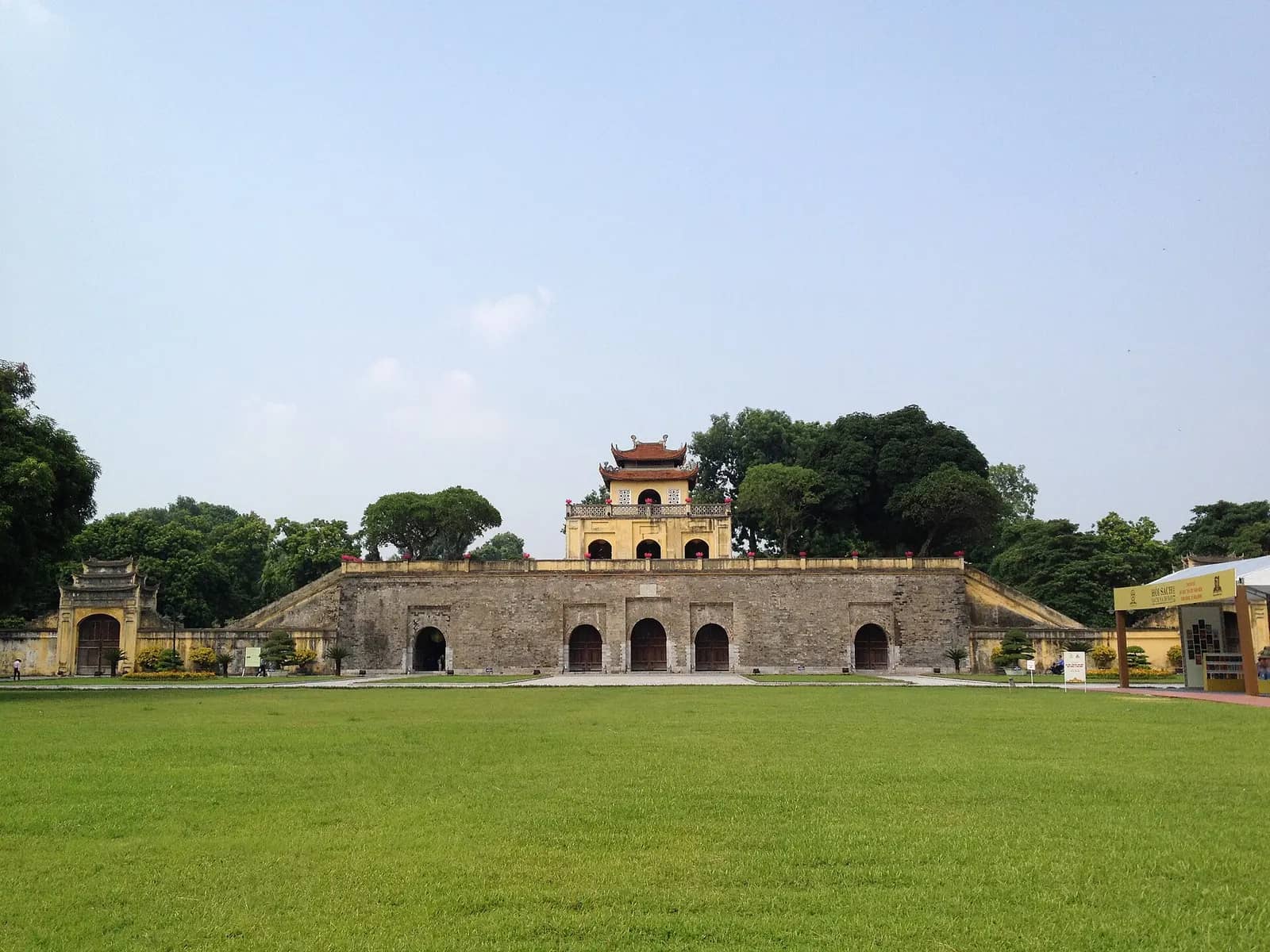
The Imperial Citadel of Thang Long was the most important part of the old capital of Dai Viet, the seat of power under the Ly, Tran and Le dynasties from the 11th to the 18th centuries, according to the heritage centre that runs it. It became one of Vietnam's special national heritage sites in 2009, and UNESCO inscribed it on the World Heritage List in 2010.
The city's old name, which the citadel still carries, comes with a legend. Wikipedia's article on Ly Thai To, citing the historian Keith Taylor, says that when the king's boat docked at his new capital in 1010, a dragon reportedly soared above his head, and he renamed the place Thang Long, the "ascending dragon".
Nic, a solo traveller who writes The Winged Bone, almost didn't go in. It was a school day shortly before Lunar New Year 2023, the entrance was crowded with small children and minders chasing the ones who wandered off, and her jet-lagged head was still throbbing. She bet the compound was big enough to escape them. It was busy for a reason: teams of workers were decorating it for Tet, and young women in áo dài posed for photos. What stayed with her was the 20th-century layer, the army's meeting rooms, break rooms and underground bunker at D67, where she couldn't stop giggling at the thermos used during meetings. She met few other foreign tourists and called the citadel one of her highlights of Hanoi. At one point a schoolgirl asked to take her photo: "so I was the attraction!"
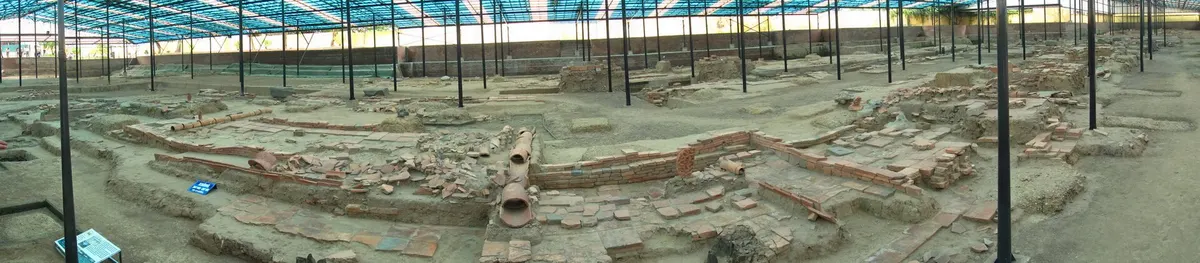
The site has two parts. One is the central axis of the Nguyen dynasty's Hanoi citadel, where the buildings still standing are the Flag Tower, the South Gate (Doan Mon), the foundation of Kinh Thien Palace, the Princess's Pagoda (Hau Lau) and the North Gate (Bac Mon). The other is the archaeological site at 18 Hoang Dieu Street, about 100 metres west of the Kinh Thien foundation, where excavated layers run from the Dai La period to the Nguyen dynasty.
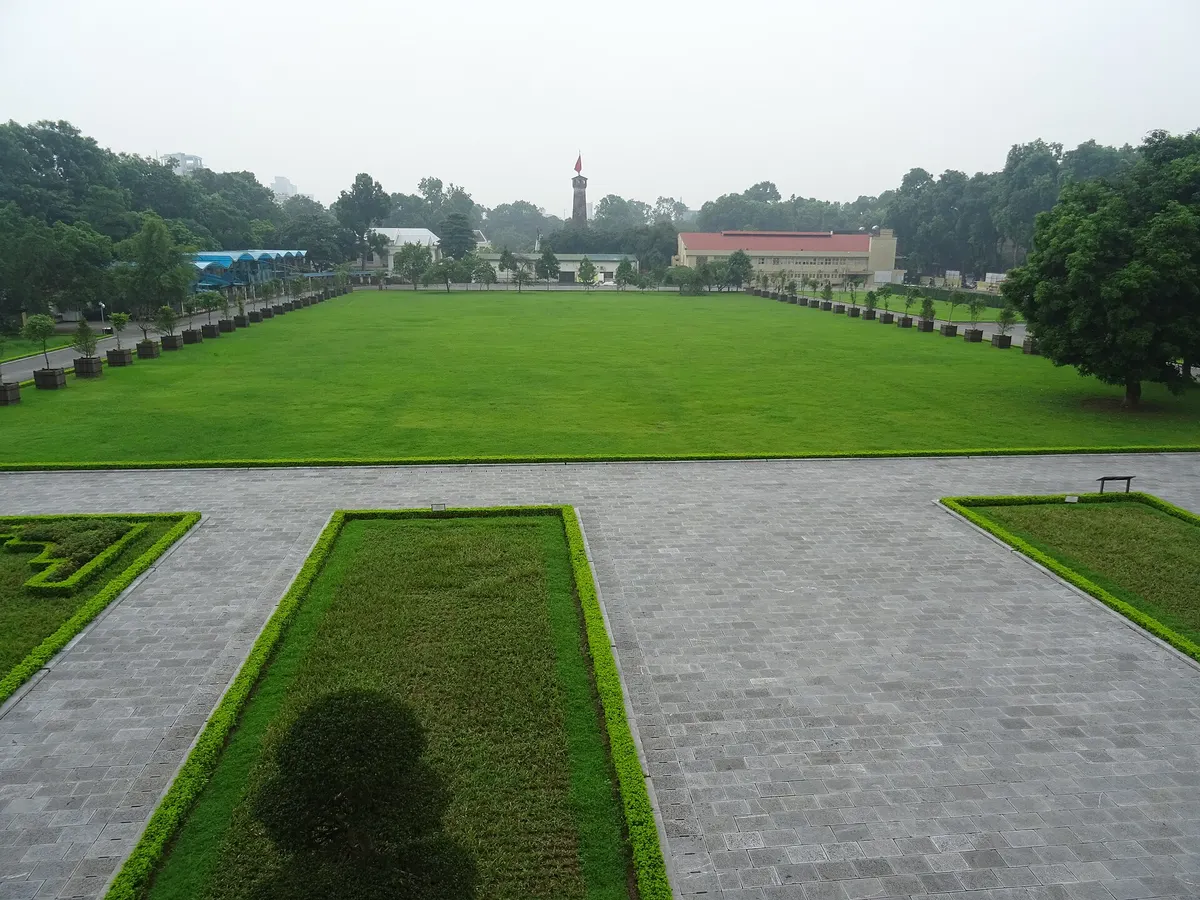
The centre also notes a more recent layer: the compound was the headquarters of the North Vietnamese government and army from 1954 to 1975.
Work on Kinh Thien Palace itself started on 29 September 2026. VnExpress reports the restoration project runs from 2026 to 2030 and follows 15 years of research, so expect construction around the palace foundation during that period.
Vietnam News Agency (VNA) put the citadel's centuries as a capital into a short film in July 2026:

Inside the Imperial Citadel, south to north
The buildings line up along one axis, so the simplest visit is a walk from the south gate to the north gate. The centre's own pages describe each stop.
Doan Mon. You enter the old Forbidden City through this south gate, built with five doorways. Archaeologists found a paved royal road here that once linked it to Kinh Thien Palace.
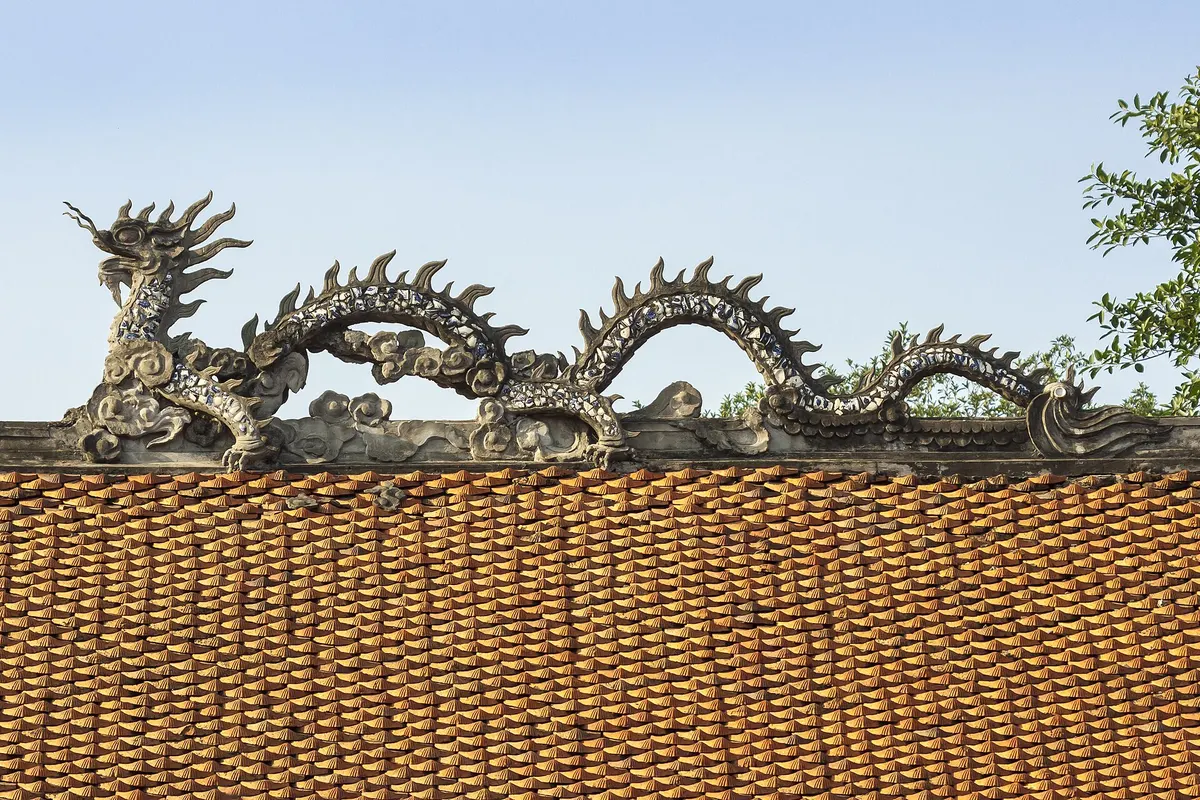
Kinh Thien Palace foundation. This was the hall for the court's most solemn rituals and for receiving foreign envoys. The palace itself was destroyed in 1886, and French soldiers put up an artillery headquarters on the foundation, known as the Dragon House for the stone dragons in front and behind. Look at the front steps: the two stone dragons on them were carved in 1467.
House D67 and its bunker. Behind the Dragon House is the meeting room of the Politburo and the Central Military Commission, built in 1967 as the American air raids on Hanoi grew fiercer. Only inside do you see that it was built for war: walls 0.6 m thick, sound insulation and double doors with an outer layer of steel. Underneath is a bunker 9 m deep whose stairs run up to both buildings.
Hau Lau. The tower known as the Princess's Pagoda, once Tinh Bac Lau, stood in the quarters of the queen and the royal concubines.
Bac Mon. The north gate stands on Phan Dinh Phung Street. It is the only gate of the Nguyen-era Hanoi citadel still standing, and on its outer wall you can still see two marks believed to come from French cannonballs fired when the French took the citadel in 1882. Inside is a memorial to Nguyen Tri Phuong, who led its defence against the French attack of 1873, and Hoang Dieu, the governor who took his own life when it fell.
The excavation at 18 Hoang Dieu is a separate stop west of the palace foundation; see the start of this page.
Rules on site
The centre's visiting rules, posted in 2013 and still on its site, ask you to follow the site map, dress neatly, stay off the grass and not climb the trees. Drones are banned, and any filming or video recording needs the management board's permission first. Cars, motorbikes and bicycles park at 19C Hoang Dieu, the ticket office address, and guides are booked through the centre's Guide and Interpretation Department.
Getting there
The ticket office address is 19C Hoang Dieu Street in Ba Dinh. Measured in a straight line on map coordinates, the citadel is about 0.9 km from Hanoi railway station and about 1.4 km from Hoan Kiem Lake. Noi Bai International Airport is about 21 km away in a straight line; the road is longer.
Transerco, Hanoi's state bus company, lists the Imperial Citadel of Thang Long among the stops its hop-on hop-off City Tour passes. We could not read a current City Tour fare from the operator, so we do not quote one.
Hours and fees
| When | Hours |
|---|---|
| Every day of the week | 8:00 AM to 5:00 PM |
| Ticket | Price |
|---|---|
| Vietnamese and international visitors, from 1 January 2025 | VND 100,000 |
| Half price: people with severe disabilities, Vietnamese citizens aged 60 and over, students aged 16 and over with a card from a school in Vietnam, people covered by cultural-access policies | VND 50,000 |
| Children under 16 (under 1.3 m tall if they have no papers), people with special severe disabilities | Free |
| Vietnam Cultural Heritage Day, 23 November | No fee charged |
The VND 100,000 price is on the centre's English ticket page. The discount and free categories come from its Vietnamese fee page, which was written when the price was VND 70,000. VND 50,000 is our arithmetic: half of the current price. The older-visitor discount names Vietnamese citizens, so foreign visitors should not count on it.
The centre also runs a night tour, booked on its own line (+84 848455222). The only night tour price we found on its site is from 2022, so we do not quote it.
Nearby
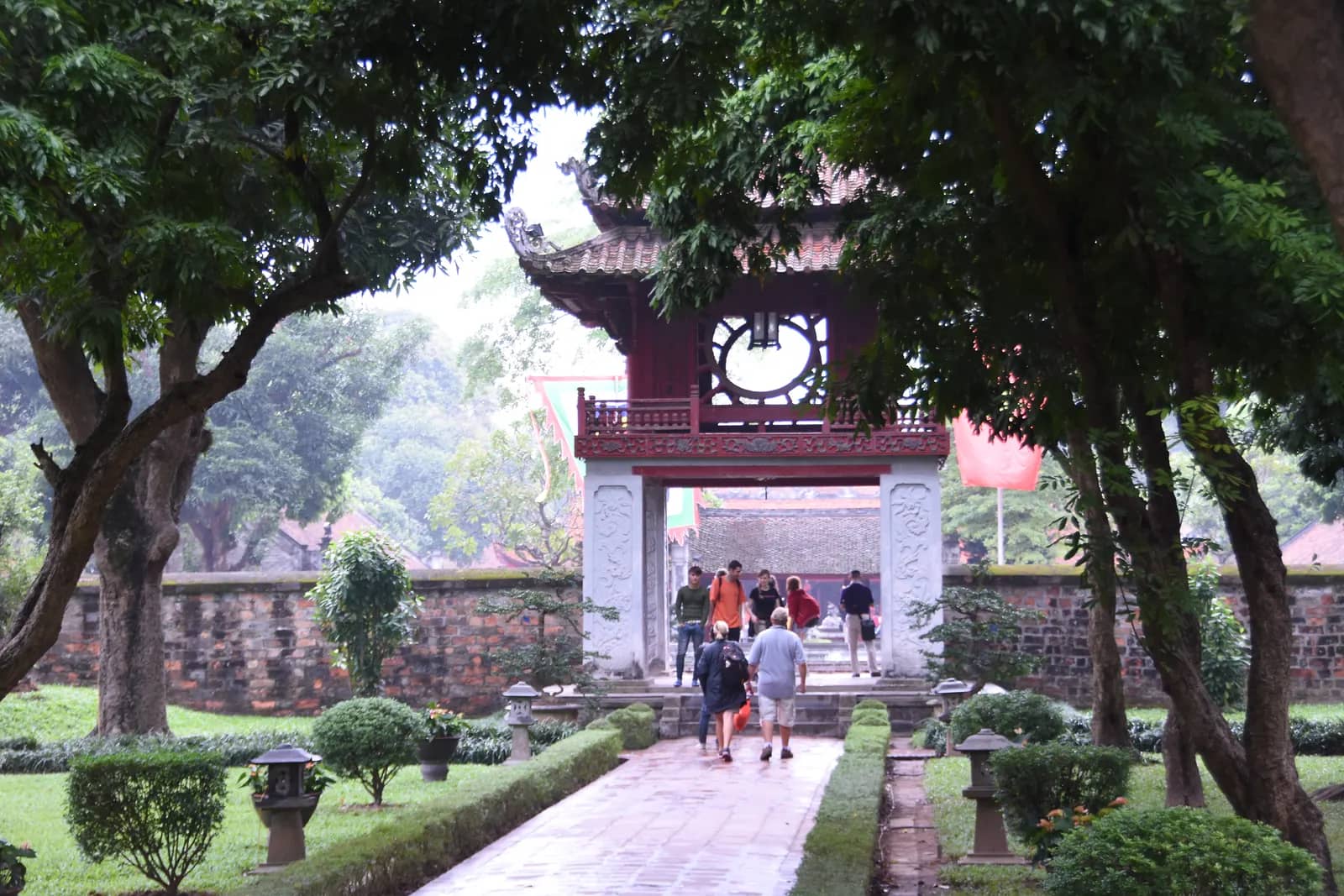
- Temple of Literature: about 0.6 km in a straight line.
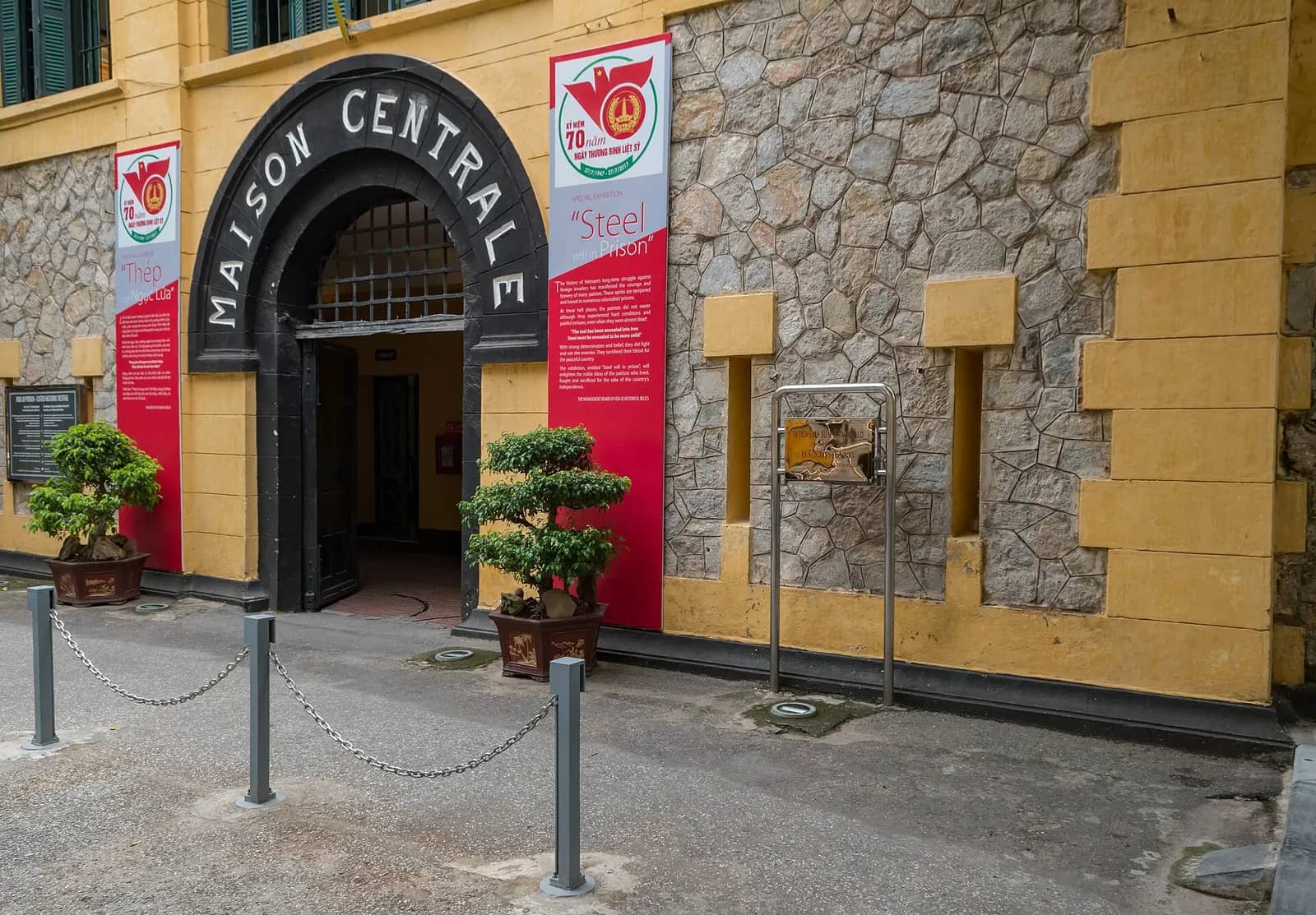
- Hoa Lo Prison: about 1.1 km in a straight line.
Questions travelers ask
These come from a Reddit thread about the Kinh Thien Palace plans.
Is the rebuilt palace just made up? Some commenters asked why Hanoi would rebuild something that has been gone for a long time. One reply:
"It's based on history research and relic excavation, all based on actual components of the former palace found under the ground."
u/Lua-Ma on r/VietNam
Is it related to the Hue Imperial City restoration? Another commenter answered:
"Different imperial city restorations are handled by different provinces. Kinh Thien palace is being funded and managed by the Hanoi administration, unrelated to Hue imperial city."
u/BleazkTheBobberman on r/VietNam