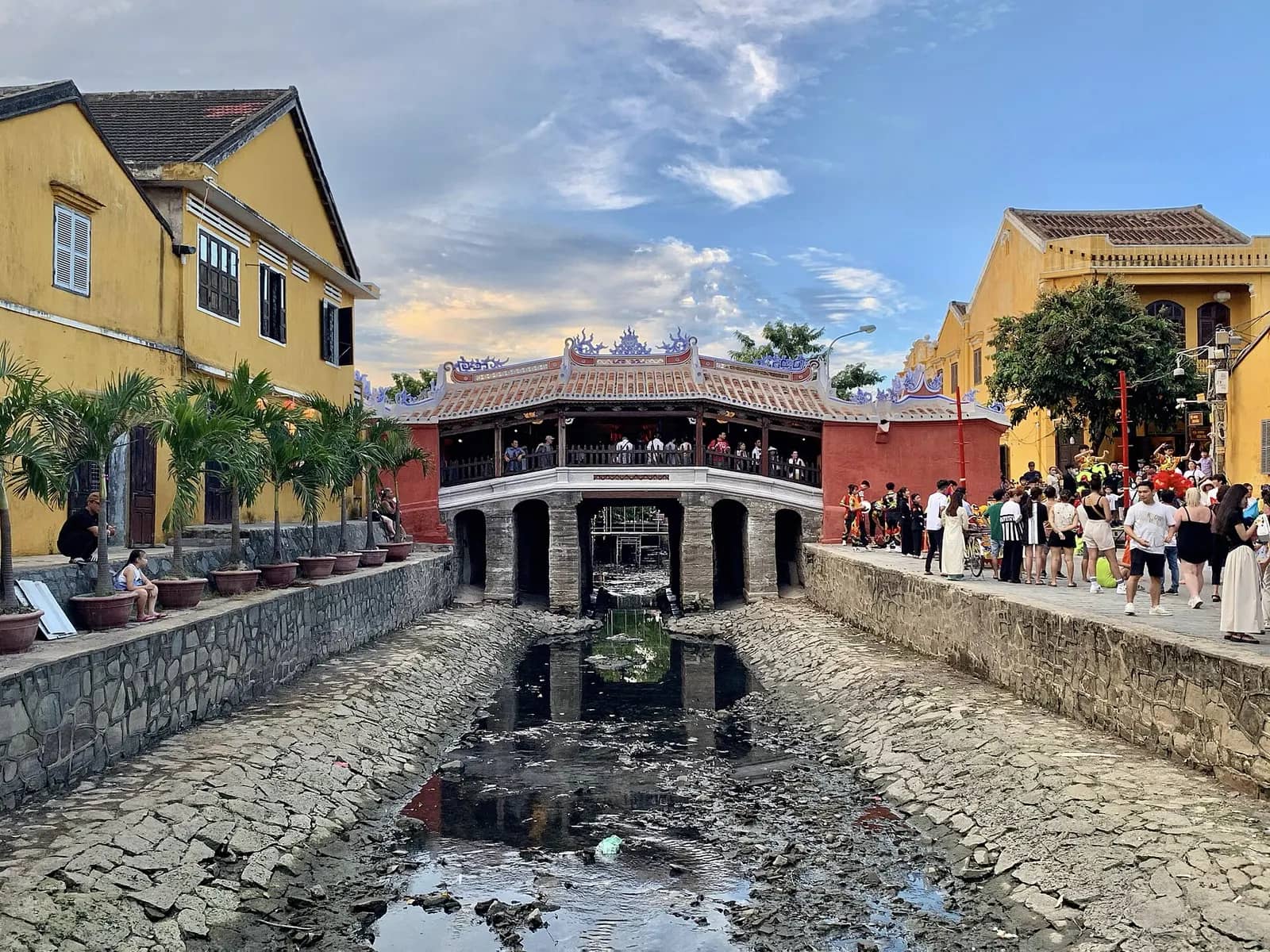
The Japanese Covered Bridge, Chua Cau in Vietnamese, is a short roofed bridge over a creek in Hoi An Ancient Town. A research article on the Hoi An heritage center's site says old records have it built by the Japanese in the early 17th century. Researchers think the Japanese put it across the creek to make trade with the Chinese merchants easier.
The same article gives the name it still carries. In 1719 Lord Nguyen Phuc Chu named it Lai Vien Kieu, meant as a reminder of friends who came from far away. It also records a Japanese legend that the bridge pinned down Namazu, a monster whose squirming was said to cause earthquakes.
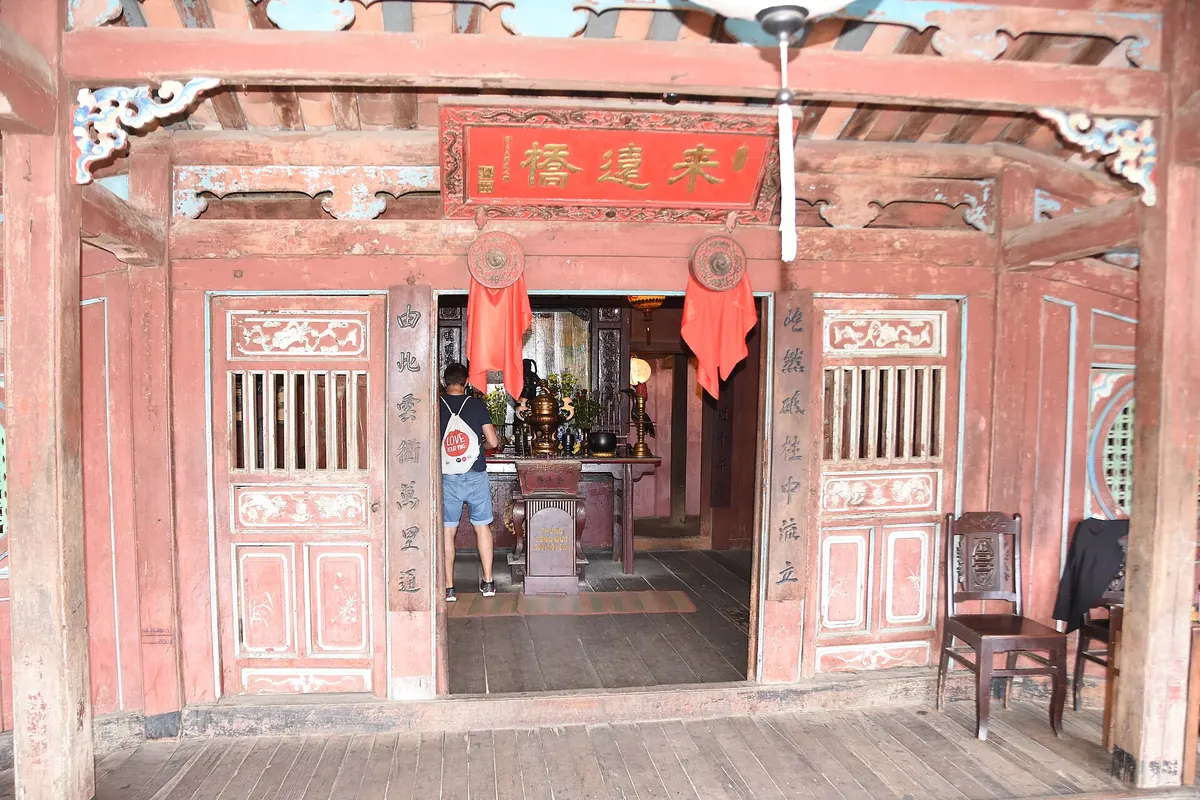
Hoi An gave the bridge a major restoration in 2022 to 2024. The newspaper Bao Van Hoa reported that work started on 28 December 2022 and the city held the opening ceremony on the afternoon of 3 August 2024, after 19 months. The same report said Japanese conservation experts were among those who advised on it.
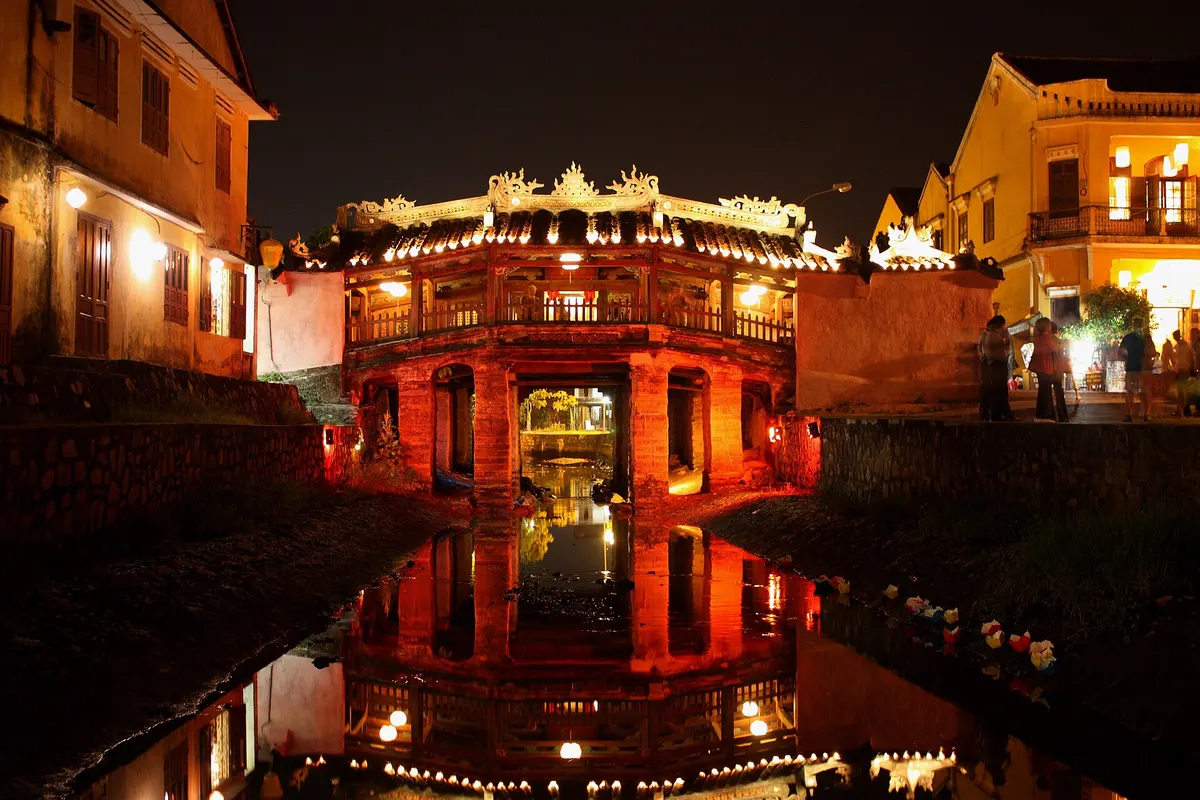
Getting there
The bridge is inside Hoi An Ancient Town, about 0.3 km in a straight line from the point Wikidata gives for the Ancient Town, so you reach it on foot. Da Nang's international airport is about 23 km away in a straight line; the road is longer. Our closest airport to Hoi An article compares the options.
Hours and fees
There is no separate bridge ticket. Two official sources give different prices for getting in:
| Source | Price | Bridge included? |
|---|---|---|
| Da Nang city council, Resolution 98/2026/NQ-HĐND, from 10 August 2026 | VND 20,000 per person per building | Yes: the fee is charged for each building you enter in the Ancient Town, the same for Vietnamese and foreign visitors |
| Heritage center ticket notice, still posted on 24 October 2026 | VND 80,000 | Yes, as your choice of the Japanese Covered Bridge or Quan Cong Temple, plus two other monuments |
| Heritage center ticket notice, still posted on 24 October 2026 | VND 120,000 | Yes, the same choice, plus one museum and three other monuments |
The city's portal and the newspaper Nhan Dan both reported the resolution, but neither says whether the two ticket bundles are still sold. Ask at the booth which price applies. On the center's English notice, one ticket is valid throughout your stay, up to three days. The Hoi An ancient town ticket article compares the official pages in full.
The notices give no opening hours for the bridge itself. The streets around it are closed to motor vehicles from 09:00 to 21:30 in summer and 09:00 to 21:00 in winter.
Nearby
- Hoi An Ancient Town: about 0.3 km in a straight line.
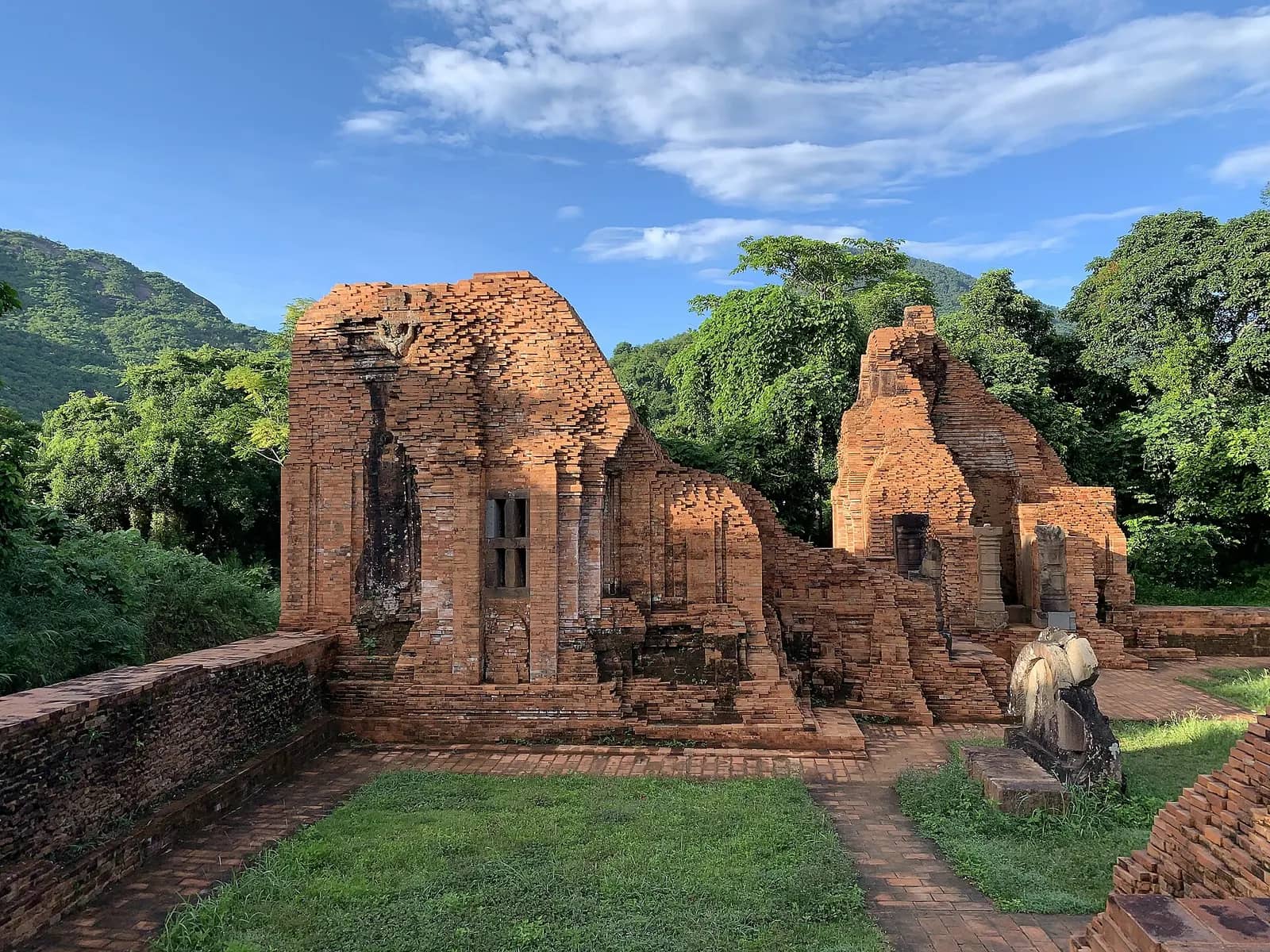
- My Son Sanctuary: about 25 km in a straight line.
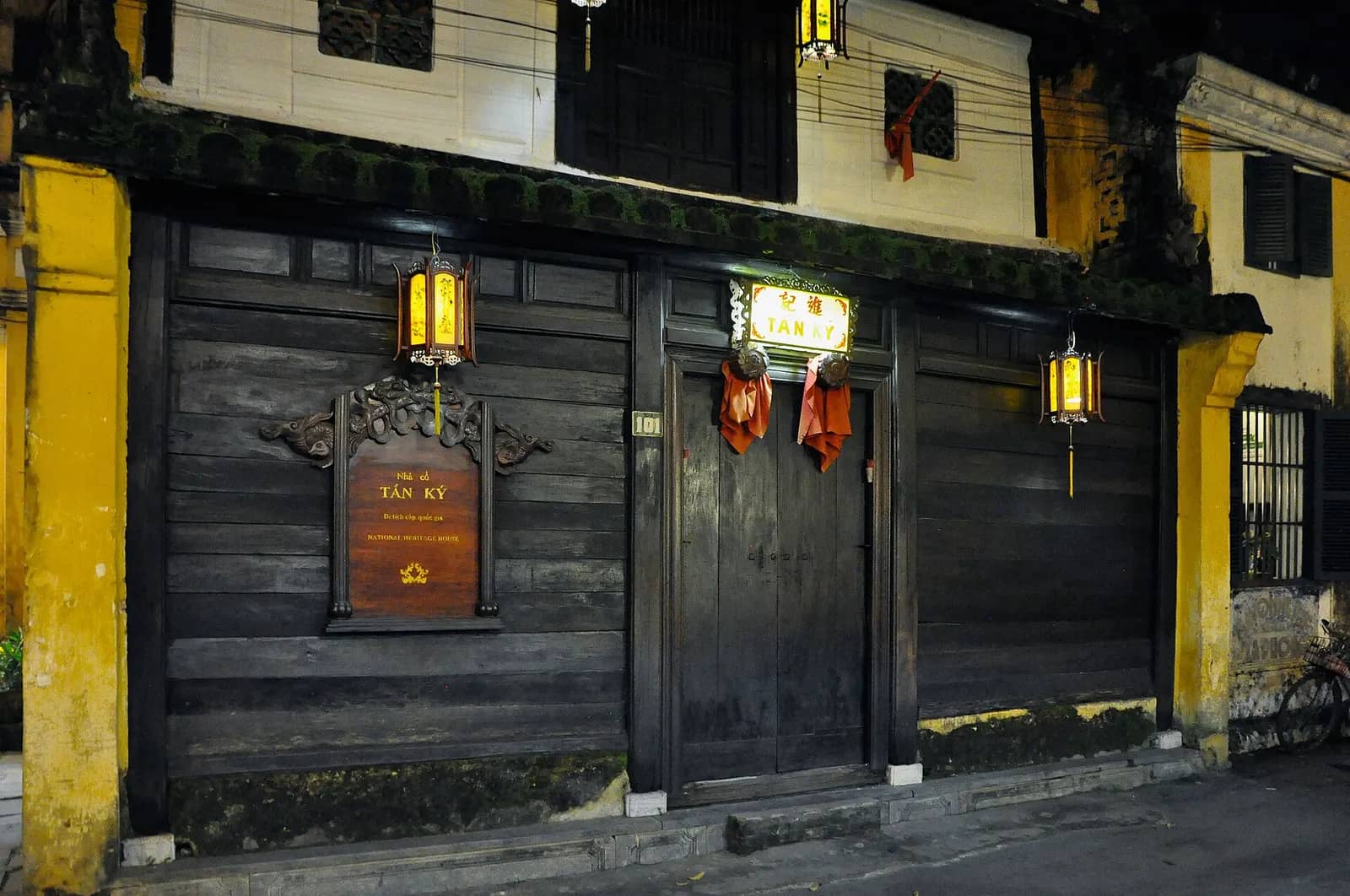
- Tan Ky Old House: about 0.2 km in a straight line.
- Hoi An Museums: the Sa Huynh Culture museum is about 0.05 km in a straight line.
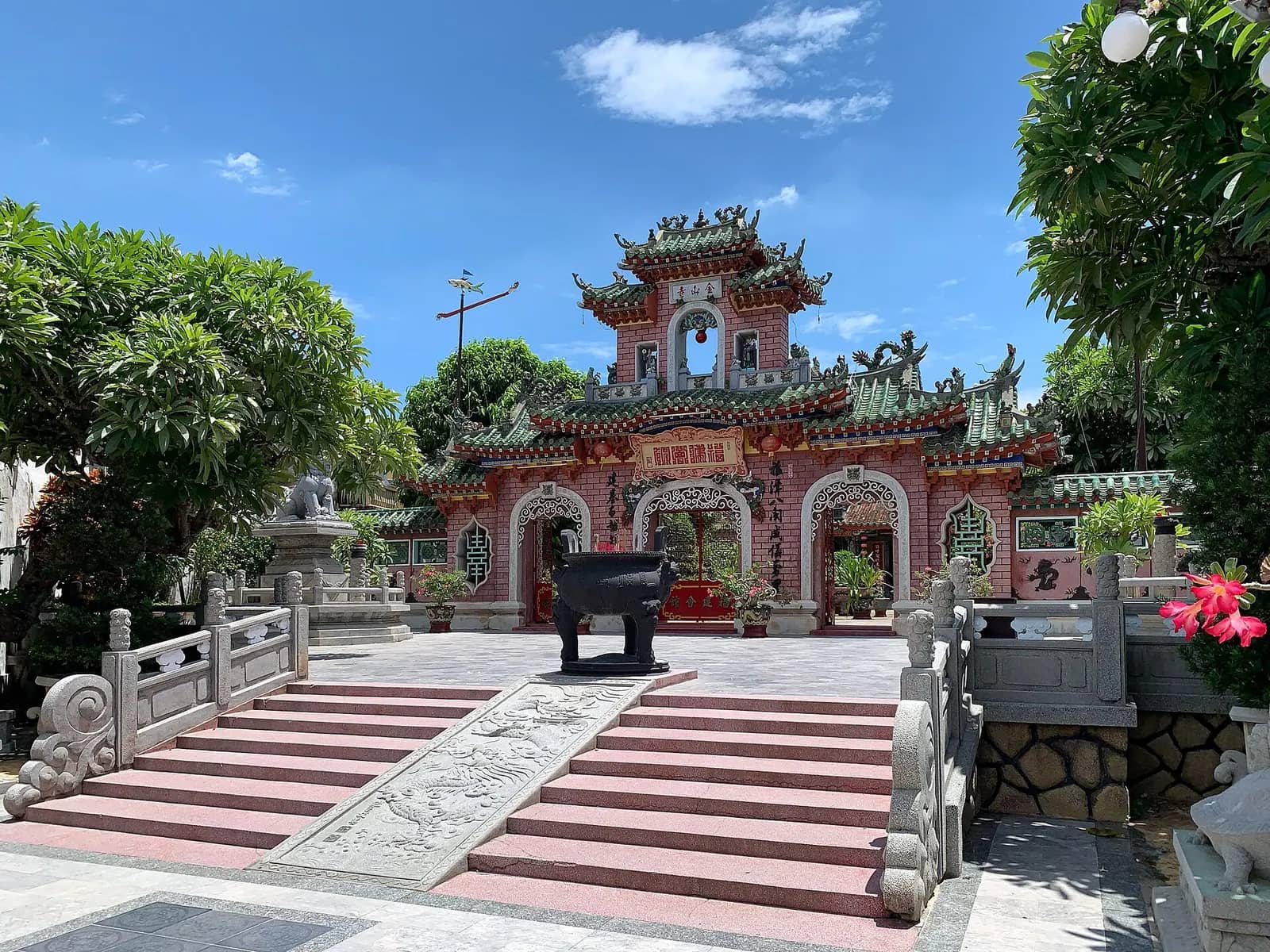
- Phuc Kien Assembly Hall: about 0.6 km in a straight line.
- Hoi An Memories Show: about 1.5 km in a straight line.
- Thanh Ha Pottery Village: about 2.9 km in a straight line.
Questions travelers ask
Has the old town around the bridge changed? A Vietnamese visitor returning after many years wrote on r/VietNam:
"It used to be just the one street up to the bridge that was the key attraction with real old houses of architectural significance but it has now expanded into an area of “old houses”."
u/No-Gur-8666 on r/VietNam
When is it least crowded? In a thread asking about the appeal of Hoi An, one user who had been before and after the pandemic suggested a weekday:
"I think a day trip is still nice during a weekday to see the place when it is not really crowded"
u/ESRRo33o on r/VietNam