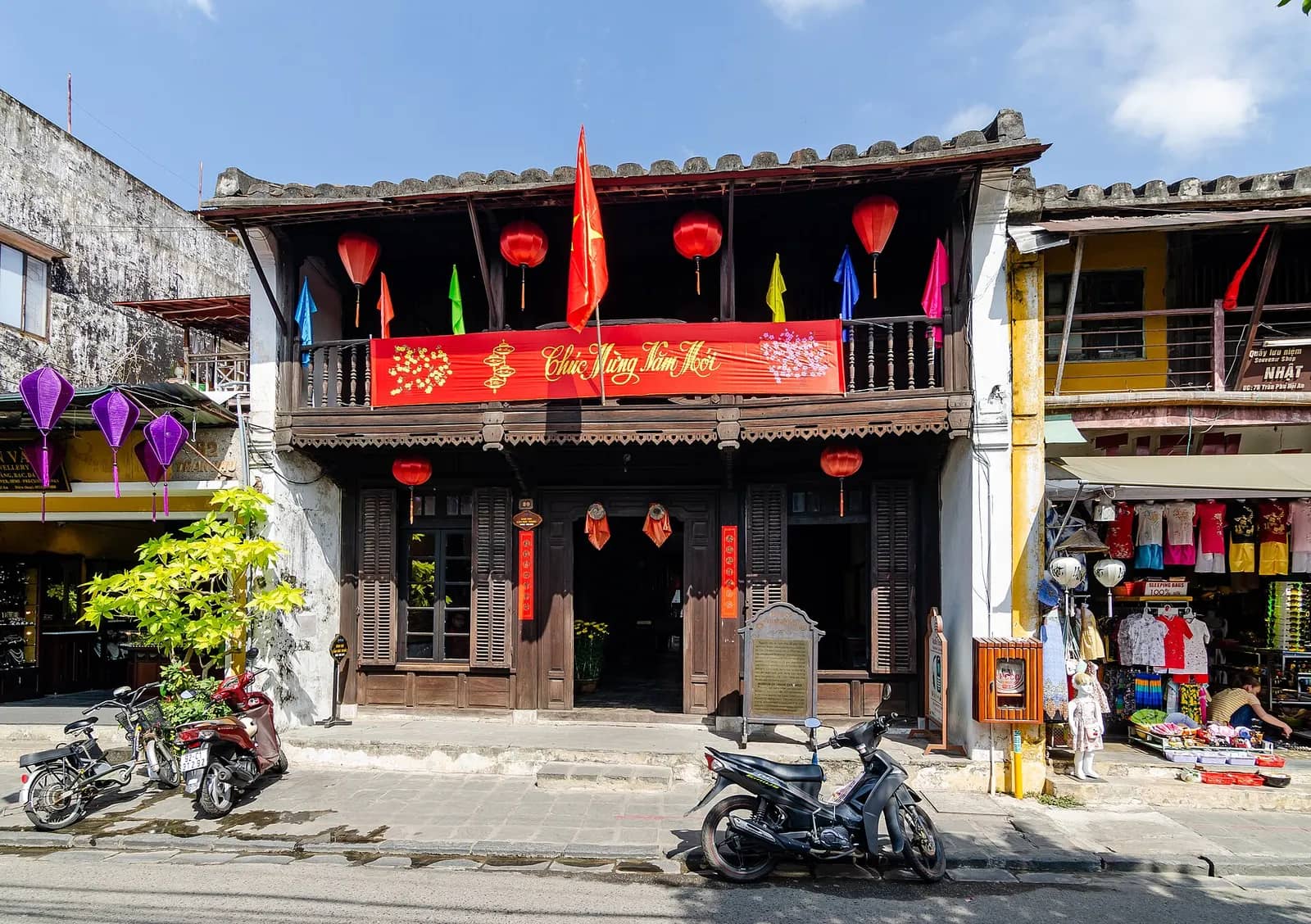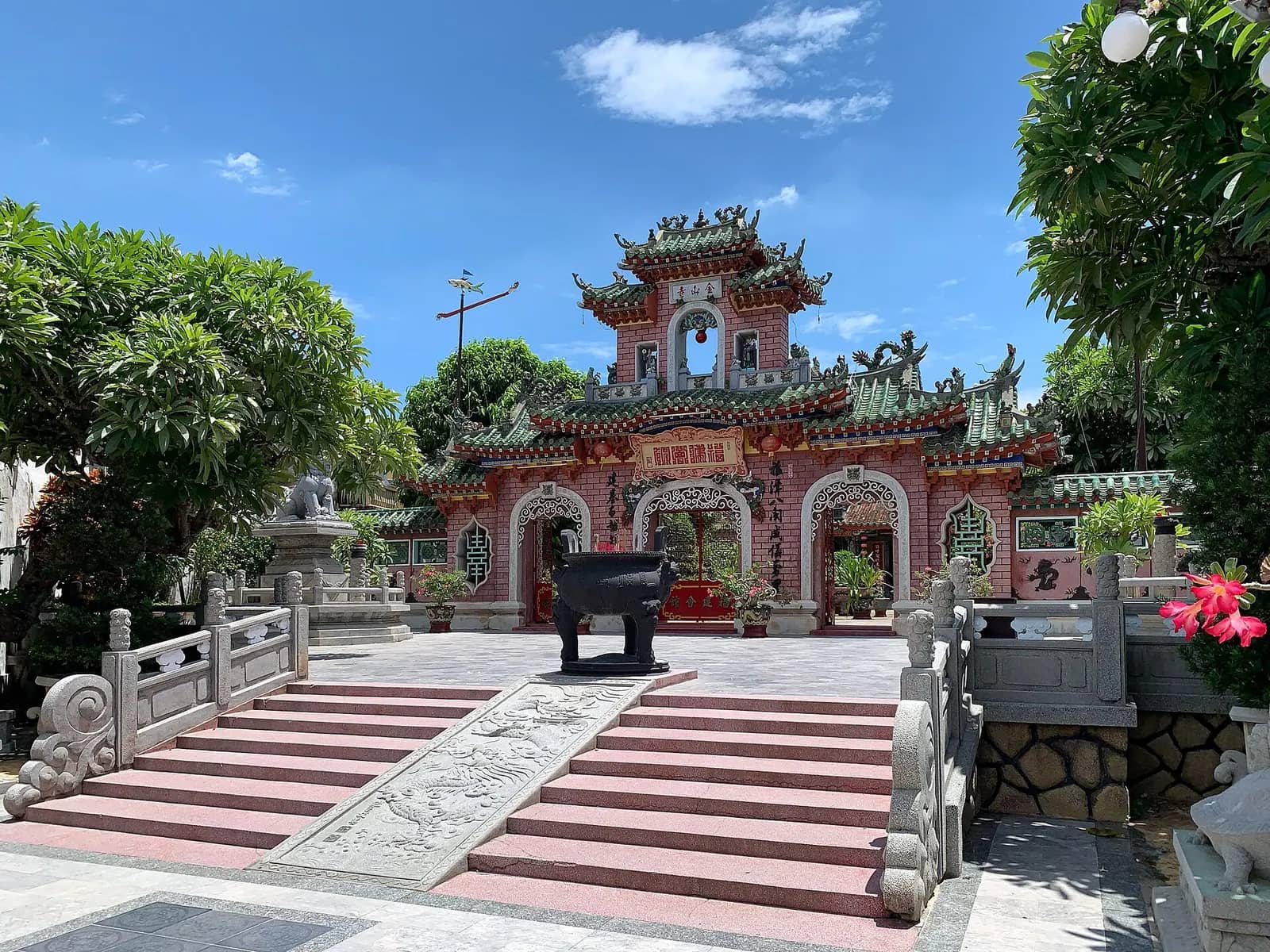
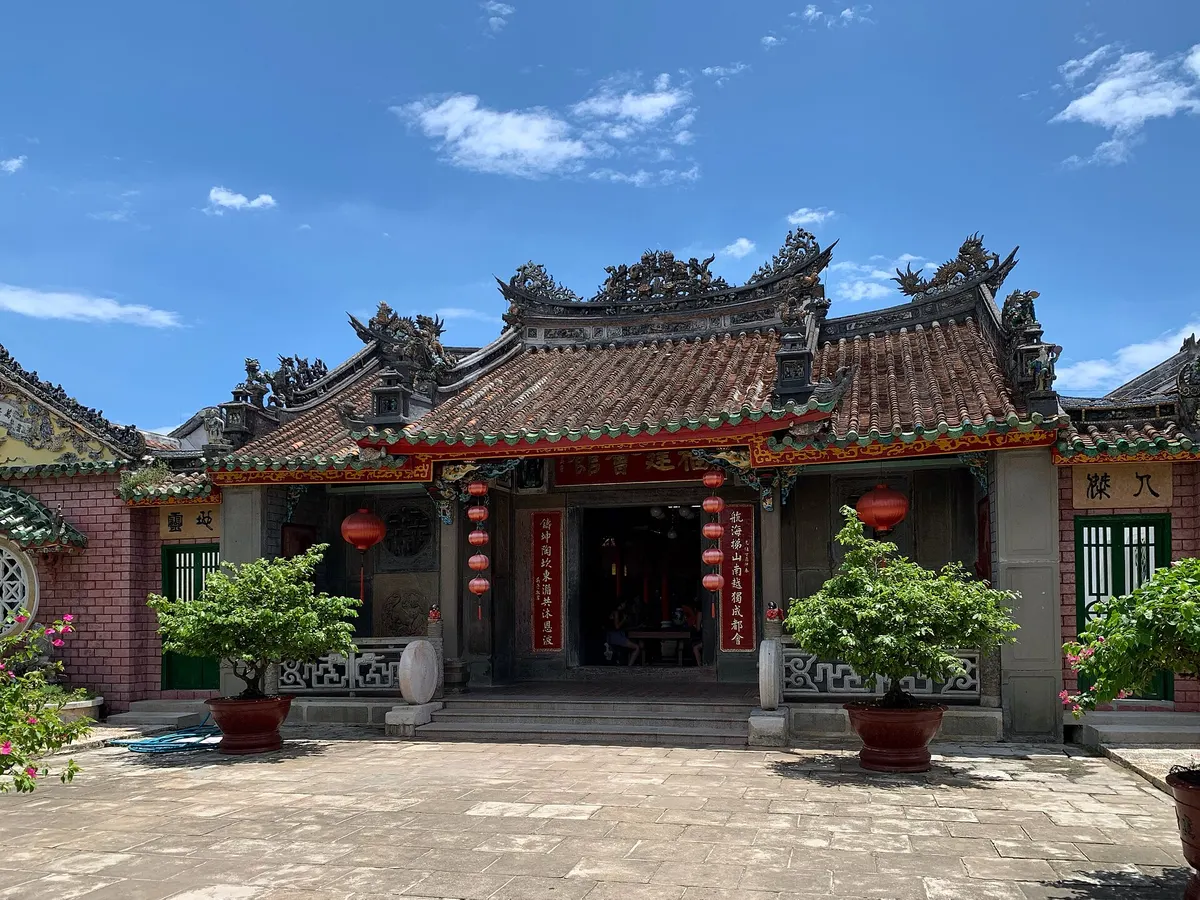
Phuc Kien Assembly Hall, also called the Fujian Assembly Hall, is the meeting hall and temple of Hoi An's Fujian Chinese community, on Tran Phu Street in Hoi An Ancient Town. The Hoi An heritage center says it was established in 1697. When the Chinese took it over in 1757, they rebuilt it and put on a tiled roof. The two biggest restorations came in 1971 and 1974.
The center's Vietnamese page tells the founding story: the hall began as a small shrine for a statue of Thien Hau Thanh Mau, the sea goddess who protects merchants, found on the Hoi An shore in 1697. It was certified as a national historical and cultural relic on 17 February 1990.
What you walk through
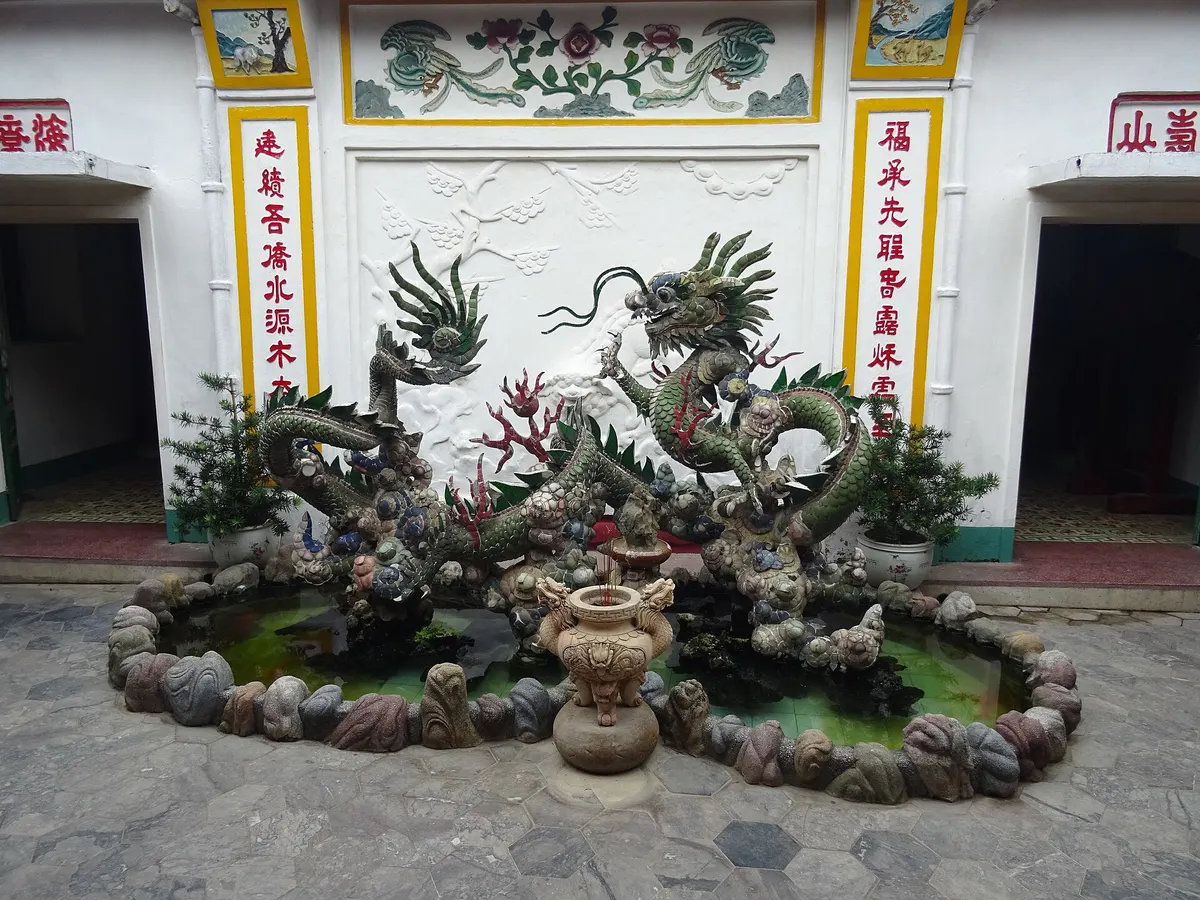
The center describes the layout in order. After the main gate comes a large triple gate, carved by craftsmen from Kim Bong carpentry village. Then a vestibule with two reliefs, a worship space that was once open to the sky and now has a roof, and finally the main hall, the largest building. Thien Hau Thanh Mau sits on the middle altar there, and a model sailboat is worshipped in the same hall.
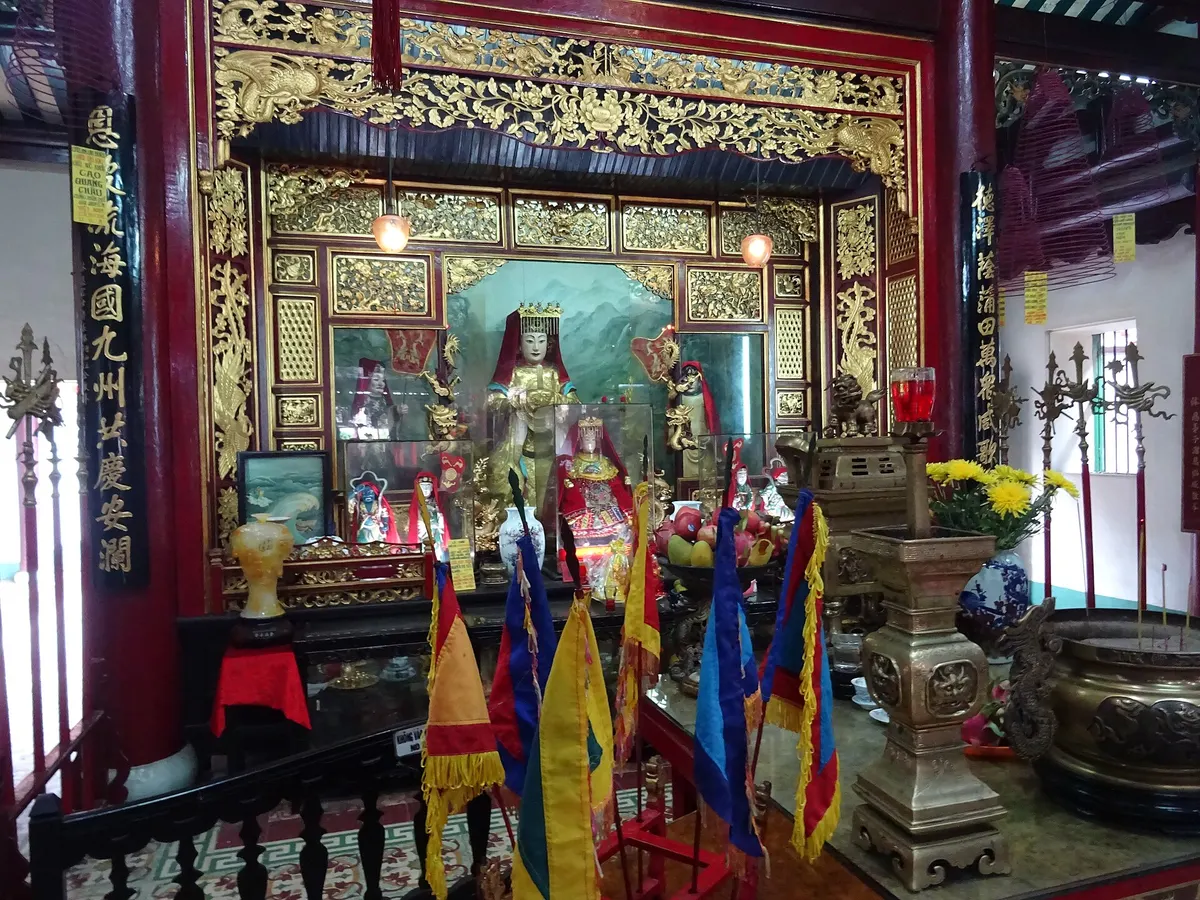
The main hall also honours Quan The Am, the god of wealth, 3 birth goddesses and 12 midwives, according to the center, and holds 14 lacquered boards. Vietnam Tourism notes that Vietnamese women come to pray for fertility among the statues of midwives.
There are four Chinese community halls in Hoi An, says the center: Cantonese, Fujian, Hainan and Chaozhou, plus one common hall. The Fujian hall is the one Vietnam Tourism calls the most famous.
Festival days
The center lists three yearly festival days, all on the lunar calendar: Nguyen Tieu on the 15th day of the first month, Luc Tanh on the 16th day of the second month, and the Thien Hau festival on the 23rd day of the third month. The dates move against the Western calendar each year, so convert them for your trip year.
Hours and fees
There is no separate ticket for the hall. Two official sources give different prices for the Ancient Town buildings:
| Source | Price | What you get |
|---|---|---|
| Da Nang city council, Resolution 98/2026/NQ-HĐND, from 10 August 2026 | VND 20,000 per person per building | Entry to each building you choose, the same price for Vietnamese and foreign visitors |
| Heritage center ticket notice, still posted on 12 October 2026 | VND 80,000 | Two sites from the assembly halls, old houses and family chapels, plus the Japanese Covered Bridge or Quan Cong Temple |
| Heritage center ticket notice, still posted on 12 October 2026 | VND 120,000 | Three such sites, plus a pick from the museums and the bridge or temple |
The city's portal and the newspaper Nhan Dan both reported the resolution, but neither says whether the ticket bundles are still sold. Ask at the booth which price applies. On the center's notice, the ticket is valid throughout your stay, up to three days, and children under 16 do not pay. An older VnExpress guide names Phuc Kien among the ticket sites, as does the Hoi An Vibes tour guide.
The heritage center does not publish hours for the hall. Two guides agree on 7:00 to 17:00 every day: the Hoi An Vibes tour guide and VinWonders' travel guide. Other sites give slightly different times, so treat these as a guide.
Getting there
The hall is at 46 Tran Phu, according to both guides. It is about 0.3 km in a straight line from the Ancient Town's map point and about 0.6 km from the Japanese Covered Bridge, at the other end of Tran Phu. Da Nang's airport is about 23 km away in a straight line.
Our take
If you only go into one assembly hall, make it this one. Vietnam Tourism calls it the most famous, and the heritage center gives it its own English page. Guides put the opening at 7:00, earlier than the 08:30 they give for Tan Ky Old House, so we'd make it the first stop of the day. In town on one of the three lunar festival days? Go then.
Nearby
- Tan Ky Old House: about 0.4 km in a straight line.
- Hoi An Ancient Town: about 0.3 km in a straight line.
- Japanese Covered Bridge: about 0.6 km in a straight line.
- Hoi An Museums: the Trade Ceramics museum is about 0.2 km in a straight line.
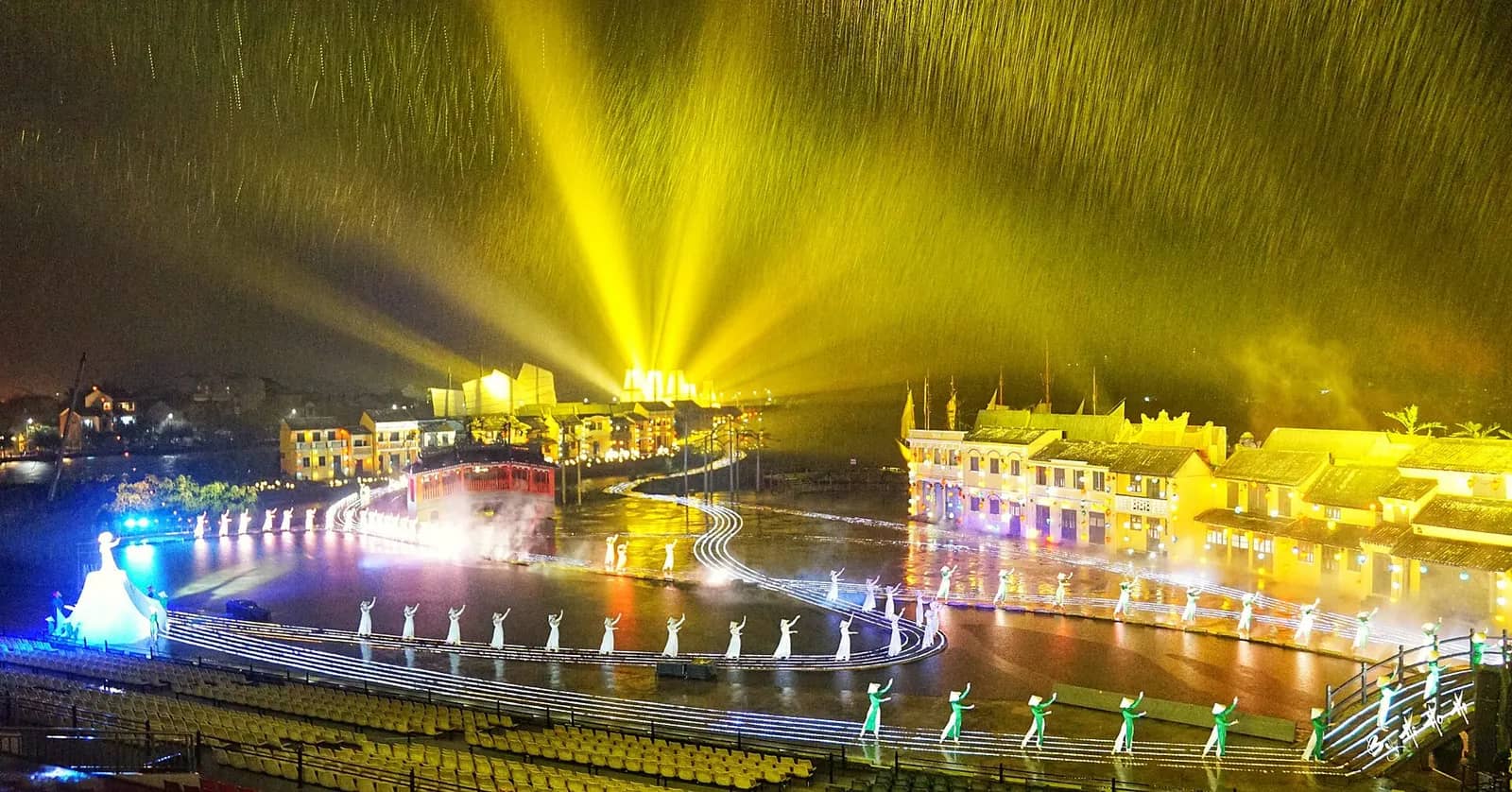
- Hoi An Memories Show: about 1.0 km in a straight line.
Questions travelers ask
Why are there Chinese halls in a Vietnamese town? Replying to a visitor who found Hoi An too commercial, one user pointed to its past:
"its history is that of a port town for trading, and has been for hundreds of years"
u/davidsigura on r/VietNam
Are the temples worth the time? In a thread on things to do in and around Hoi An, one user listed them first:
"I love the temples, riding on the boat at night with the lanterns is super cool."
u/ReadingReaddit on r/VietNam