Vietnam typhoon warning: which official sources to follow
When a storm is coming, start with Vietnam's own forecast centre, then cross-check the track.
VerdictFollow the NCHMF first and Japan's JMA page for a second track; learn the bulletin terms before a June to December trip.
A Vietnam typhoon warning comes from the country's own weather service, the National Center for Hydro-Meteorological Forecasting (NCHMF). Japan's regional typhoon centre says on its own page that its tropical cyclone information is not an official warning for the countries concerned, and that official warnings come from each national service. The US Embassy tells its citizens to follow the NCHMF and the US Joint Typhoon Warning Center during a storm. This page lists what we could read on 1 October 2026. It is a guide to where to look, not a live feed.

Four places to look
| Source | What it is | What we saw on 1 October 2026 |
|---|---|---|
| NCHMF, English site | Vietnam's national forecast centre | The English menu has Severe Weather, Tropical cyclone and Cold Surge pages. The forecast text on the home page and on the Tropical cyclone page was in Vietnamese, and no cyclone bulletin was showing. |
| RSMC Tokyo, Japan Meteorological Agency | A regional centre for tropical cyclones | It gives positions, movement and intensity for the western North Pacific and the South China Sea, and says this is not an official warning for the areas concerned. |
| Joint Typhoon Warning Center | A US Navy centre named by the US Embassy | The page showed only its title to our server, so we could not read what it offers. |
| WMO Severe Weather Information Centre | A map run for the World Meteorological Organization by the Hong Kong Observatory | The menu lists tropical cyclone tracks, warnings and advisories, and CAP warnings. The map is built by script, so we could not check what it shows for Vietnam. |
The link the US Embassy gives for the NCHMF, kttv.gov.vn, opens a page with the same menus.
English menu, Vietnamese text
The NCHMF pages have an English menu, but the forecast text we saw was Vietnamese. A browser translation tool can translate that text. We have not tested how well it handles a storm bulletin, so treat a translated bulletin as a first read, and ask your hotel or tour operator when an official instruction matters.
How to read a Vietnam typhoon warning bulletin
A bulletin uses a handful of Vietnamese terms, and one real example shows most of them. On 12 November 2024 the government's policy portal ran the national forecast centre's bulletins on storm No. 7, Yinxing, as it weakened off the central coast.
The storm appears as "Bão số 7 (YINXING)", a number followed by the international name in brackets. "Áp thấp nhiệt đới" means a tropical depression, and the page says storm No. 7 "đã suy yếu thành áp thấp nhiệt đới", had weakened into one. Wind comes as a level, "cấp", with "giật" for gusts: "mạnh cấp 6 (39-49km/h), giật cấp 8" is level 6 wind of 39 to 49 km/h, gusting to level 8.
"Vùng nguy hiểm" is the danger zone, drawn by latitude and longitude, and the page notes that it is adjusted with each forecast bulletin. "Cấp độ rủi ro thiên tai" is the disaster risk level; that day the heavy rain, whirlwinds and lightning were rated level 1. The same page says forecasts and warnings follow Decision 18/2021/QĐ-TTg, the Prime Minister's rules on disaster warnings and risk levels.
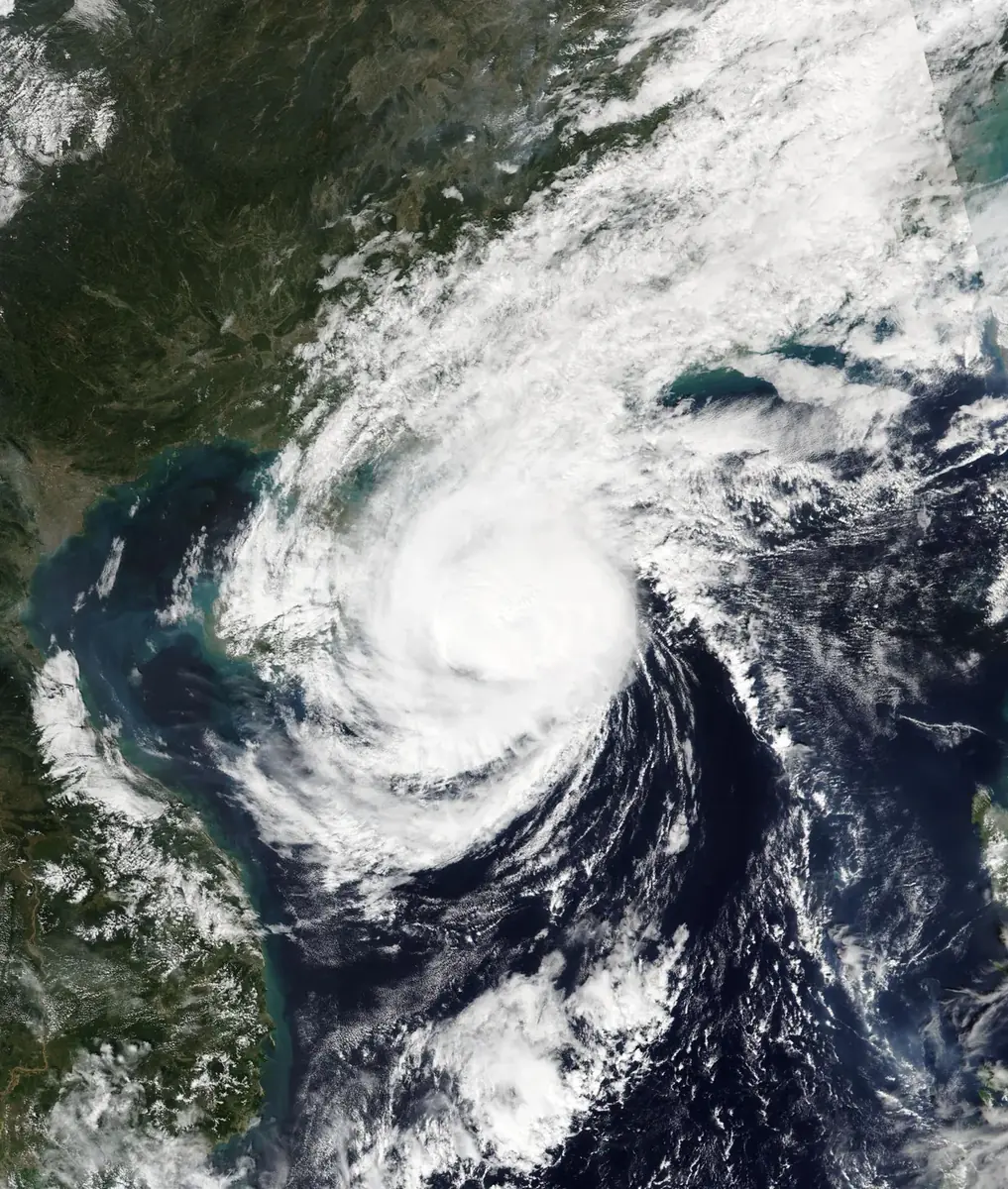
This Vietnam Today report shows northern Vietnam preparing for Typhoon Narra.

When storms come
The two governments we read give different seasons. The US Embassy says typhoon season runs from June to the end of November, with a risk from southern hemisphere cyclones from 1 November to 30 April. The UK Foreign Office says the season normally runs from May to November, but that storms can happen at other times.
Our own storm-track count for 1991 to 2025 sits between the two. It found no storm within 150 km of any of our places in January, February or May, and at least one in every month from June to December. March had storms near three places (Quy Nhon, Nha Trang and Da Lat) and April near Ho Chi Minh City. That is our own counting rule, not an official figure; the typhoon season guide explains it.
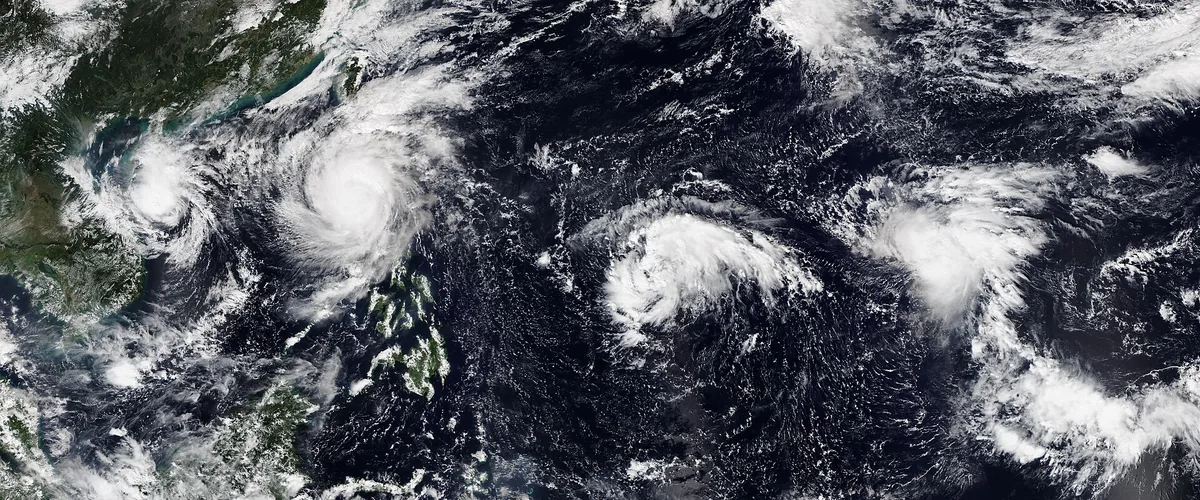
Asked whether El Niño would make the coming storm season easier to predict, one r/VietNam user replied:
"At this point when typhoon season come people can only wait and watch, predictability is out of the windows for years now."
u/wuanlai65 on r/VietNam
What the embassy tells people to do
The US Embassy's alert of 17 June 2026 says areas far from the coast can still see dangerous winds, tornadoes, landslides and flash floods, and that flooding can reach a long way downstream. It says not to walk or drive across flooded areas, that forecast paths can change with little notice, and to follow every official instruction, including an order to evacuate. Its checklist is to keep travel documents on you or in a waterproof place, charge phones, keep a three-day supply of bottled water and dry or canned food, have a torch and batteries, check first-aid supplies and prescription medicines, and tell family where you plan to wait out the storm.
The safety guide for Americans has the rest of the embassy's advice, the rainy season guide shows which months are wettest at each place, and the health and safety page has the UK government's advice on storms and floods. The UK advice names two places to watch an approaching storm: the national forecast centre and the Japan Meteorological Agency.
Our take
Start with the NCHMF. Both governments name it, and Japan's centre points back to national services for official warnings. For a second view of the track, the US names the Joint Typhoon Warning Center and the UK names the Japan Meteorological Agency, and of those two only the Japanese page was readable to us. Learn the five bulletin terms above before a trip between June and December, the months when our count found storms near at least one place every month. When a hotel, tour operator or local official gives an instruction, follow it over any website; the US Embassy says the same.
How we checked this
On 8 October 2026 we reopened every page this article quotes: the NCHMF English site and its Tropical cyclone page, the RSMC Tokyo page, the WMO centre, the US Embassy alert of 17 June 2026 and the UK travel advice. We matched each claim to the page's own wording. The bulletin terms come from the government page dated 12 November 2024, read the same day. The storm counts are our own rule run on NOAA's IBTrACS archive for 1991 to 2025, and we rechecked the monthly totals against our data file. Photo credits come from each photo's Wikimedia Commons or Unsplash page.
What this does not tell you
We could not read the Joint Typhoon Warning Center page, and we did not check whether the NCHMF publishes warnings in English, or whether Vietnam has a phone alert system. We found no app names or hotline numbers we could verify, so we list none. These pages change by the hour, so read the live page, not this one. We also did not look at insurance cover, flight changes or hotel policies in a storm.
References
- Vietnam National Center for Hydro-Meteorological Forecasting, English site: https://www.nchmf.gov.vn/kttv/en-US/2/index.html, and its Tropical cyclone page: https://www.nchmf.gov.vn/kttv/en-US/2/tropical-cyclone-2032-15.html. Read 2026-10-01, reopened 2026-10-08.
- RSMC Tokyo - Typhoon Center, Japan Meteorological Agency: https://www.jma.go.jp/jma/jma-eng/jma-center/rsmc-hp-pub-eg/RSMC_HP.htm. Read 2026-10-01, reopened 2026-10-08.
- Joint Typhoon Warning Center: https://www.metoc.navy.mil/jtwc/jtwc.html. Page content not readable, 2026-10-01.
- WMO Severe Weather Information Centre 3.0: https://severeweather.wmo.int/. Read 2026-10-01, reopened 2026-10-08.
- US Embassy and Consulate in Vietnam, weather alert on typhoon and tropical cyclone seasons, 17 June 2026: https://vn.usembassy.gov/weather-alert-typhoon-and-tropical-cyclone-seasons-in-vietnam/. Checked 2026-10.
- UK FCDO travel advice for Vietnam, safety and security: https://www.gov.uk/foreign-travel-advice/vietnam/safety-and-security. Checked 2026-10-24.
- Xây dựng chính sách, pháp luật (Government of Vietnam portal), storm No. 7 Yinxing bulletins and response, 12 November 2024: https://xaydungchinhsach.chinhphu.vn/canh-bao-thoi-tiet-nguy-hiem-va-cac-chi-dao-ung-pho-119241101095043922.htm. Read 2026-10-08.
- NOAA NCEI, International Best Track Archive for Climate Stewardship (IBTrACS): https://www.ncei.noaa.gov/products/international-best-track-archive. Checked 2026-10.
Photo (cover): martin bennie / Unsplash
Data checked: October 2026.
About the author

Pen name for the weather and climate beat: rain, temperature, typhoons and when to go. Every comparison is built from official station records.
Keep reading
Vietnam typhoon season 2026: which months hit which coast
Guides · 5 min

Ha Giang loop weather in autumn: rain, cold snaps, storms
Guides · 5 min
North vs south Vietnam weather: Hanoi and the Mekong Delta
Guides · 5 min

The coldest places in Vietnam, and when nights turn cold
Guides · 5 min

Vietnam rainy season: the wettest month in each place
Guides · 5 min
Phong Nha rainy season: October rain, floods and the caves
Guides · 5 min
Best time to visit Hoi An: the dry half and the wet autumn
Guides · 5 min
Ha Long Bay weather in winter: temperatures and fog months
Guides · 5 min
Disclaimer
This article is general information, not legal, immigration, medical or financial advice. Prices, visa rules and transport schedules change, and each figure shows the month we last verified it. Confirm anything that affects your trip (entry requirements, fees, health rules) with the official government or provider source before you book or travel. The site has no affiliate links today; our affiliate disclosure explains what we will do if that changes.